
Mali’s fragile stability under Assimi Goïta’s leadership
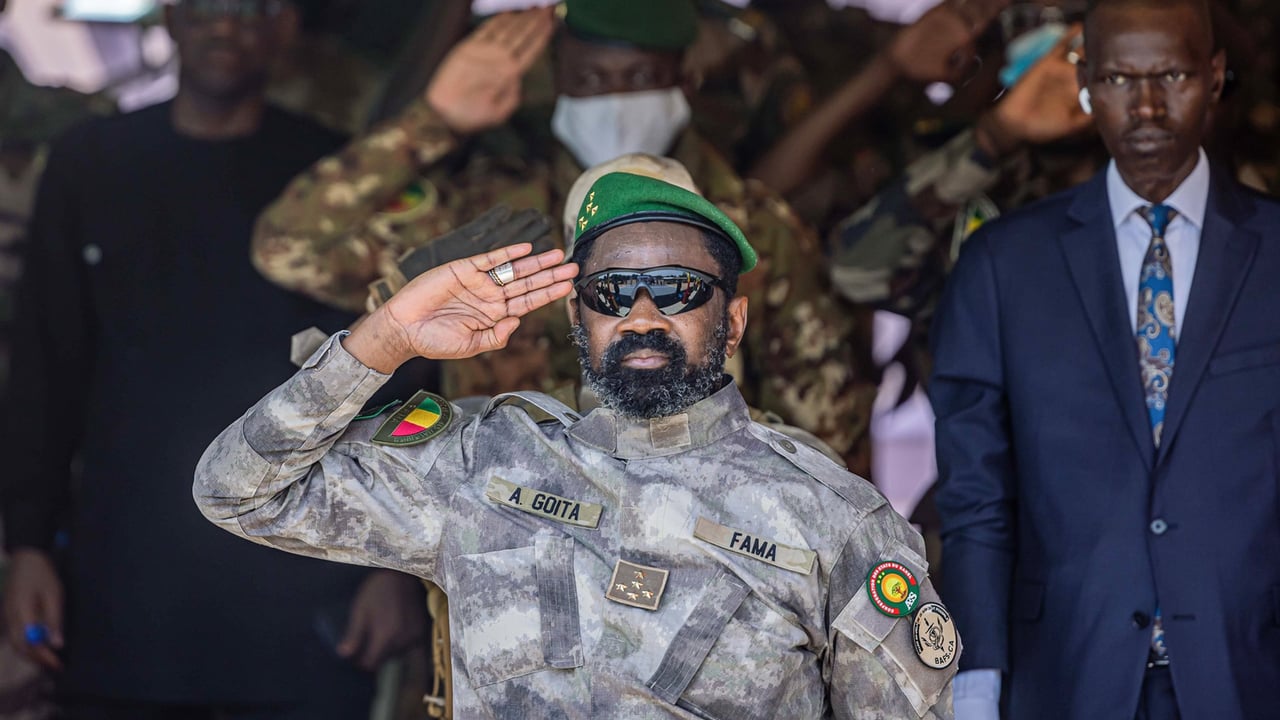
In the heart of Bamako, the capital of Mali, a nation grappling with deep political and security challenges, one figure stands at the center of power: Assimi Goïta. As the country faces mounting pressures, the transitional leader’s role has become increasingly pivotal in shaping Mali’s fragile stability.

From military leadership to transitional governance
Assimi Goïta rose to prominence as a key figure in Mali’s military leadership, following a period of political turbulence. After the ousting of Ibrahim Boubacar Keïta in 2020, Goïta initially positioned himself as a stabilizing force, helping to navigate the country through a delicate transition. His influence grew as he assumed the role of transitional president, a position he continues to hold amid ongoing challenges.
The recent loss of Sadio Camara, Mali’s Defense Minister and a close ally of Goïta, has underscored the fragility of the nation’s political landscape. Camara’s funeral in Bamako served as a poignant reminder of the sacrifices made in the fight against insecurity, and of the delicate balance Goïta must maintain to preserve stability.
Navigating a complex security environment
Mali remains embroiled in a persistent security crisis, with armed groups and insurgencies posing a significant threat. The Groupe de soutien à l’islam et aux musulmans (JNIM) continues to challenge state authority, particularly in the northern and central regions. Under Goïta’s leadership, the Malian Armed Forces have intensified operations to counter these threats, yet the road to lasting security remains fraught with obstacles.
Goïta’s approach to counterterrorism has drawn both support and criticism. While some praise his commitment to restoring stability, others question the sustainability of military-led solutions in a region plagued by deep-rooted instability. International partnerships, though sometimes contentious, have played a role in shaping Mali’s security strategy, adding another layer of complexity to Goïta’s leadership.
The human cost of instability
Beyond the political and military dimensions, Mali’s instability has exacted a heavy toll on its people. Civilian casualties, displacement, and economic hardship are realities faced by many Malian communities. The transitional government, under Goïta’s guidance, has pledged to address these challenges, but progress remains slow and uneven.
As Mali moves forward, the question of whether Assimi Goïta can effectively steer the country toward stability hinges on his ability to balance military resolve with inclusive governance. The nation’s future depends on his leadership in navigating a path forward amid uncertainty and adversity.