
Bénin’s new president initiates crucial dialogue with AES nations
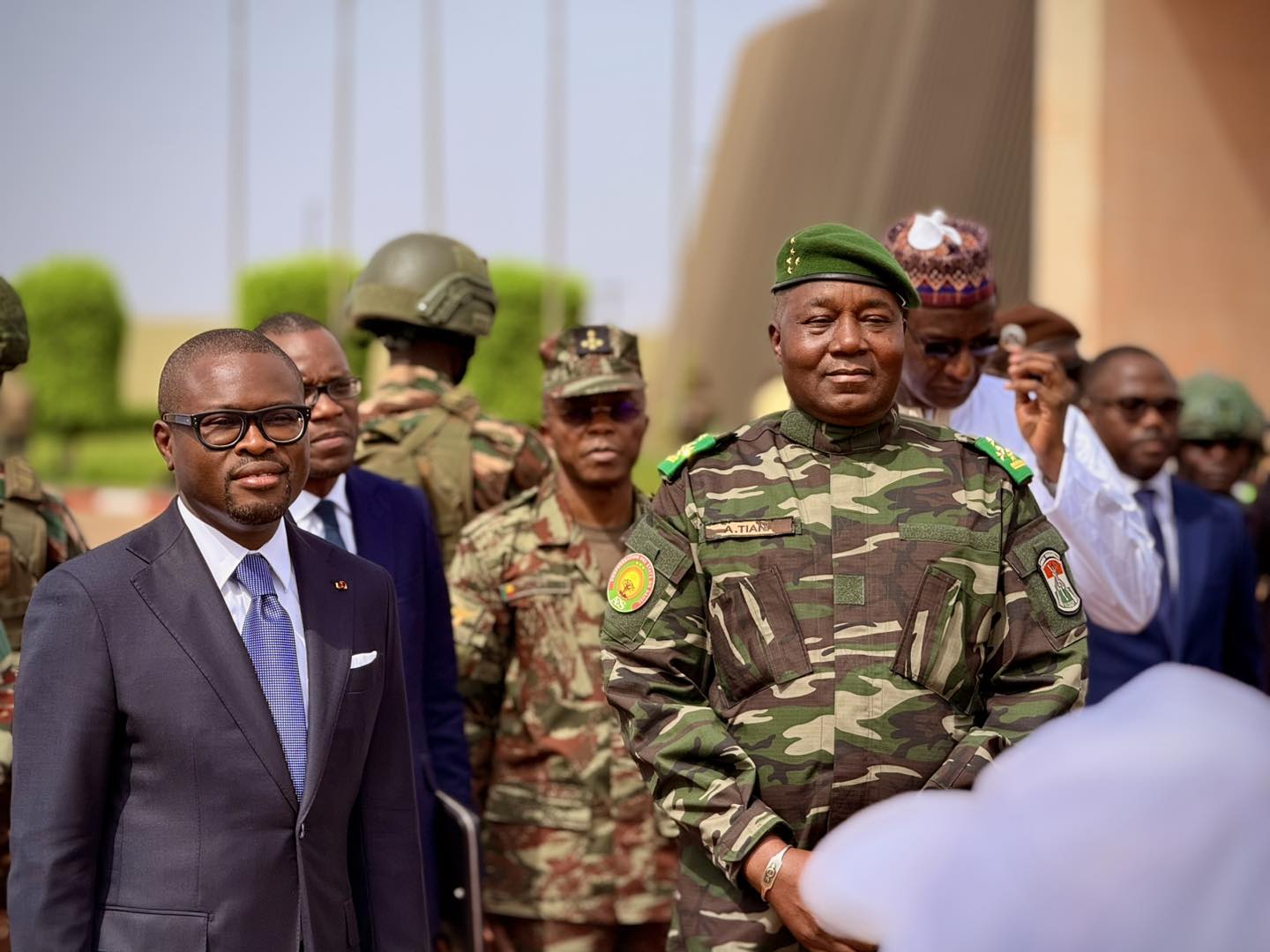
Benin’s capital, Cotonou, is embarking on a significant diplomatic reorientation. President Romuald Wadagni, recently sworn into office, has commenced a pivotal regional tour, with initial stops in Niamey and Ouagadougou. This initiative aims to de-escalate tensions with the Alliance of Sahel States (AES) and re-establish Benin’s critical role as a partner within the sub-region.
The rapid succession of these official engagements has surprised many observers. On June 2, President Wadagni arrived in Niamey for discussions with General Abdourahamane Tiani, subsequently traveling to Ouagadougou to confer with Captain Ibrahim Traoré. Further stops are anticipated in Lomé, Abidjan, and Accra before the week concludes. These swift diplomatic overtures signal a definitive shift following a period of strained relationships with certain neighboring states.
Economic pragmatism driving peace efforts
A discernible economic pragmatism underpins this pursuit of peace. By prioritizing Niger and Burkina Faso for his initial diplomatic engagements, the successor to Patrice Talon has made a powerful statement. Interactions between Cotonou and the capitals of the AES had deteriorated significantly in recent years, characterized by border closures, a blockade on Nigerien crude oil channeled through the Sèmè-Kpodji pipeline, and reciprocal accusations concerning regional destabilization.
Romuald Wadagni, previously serving as Minister of Economy and Finance, addresses this complex situation with his characteristic practical approach. For Benin, the full re-establishment of access across the Nigerien border and the streamlining of the transport corridor towards the Sahel are paramount economic necessities, crucial for the operational vitality of the Autonomous Port of Cotonou.
Key takeaways indicate that, according to the official statement from Benin’s State Protocol, the primary focus of these discussions will encompass «the regional security concerns, opportunities for economic and commercial collaboration, and strategies to bolster solidarity among the populace».
Cotonou’s three-pronged strategic roadmap
Cotonou’s diplomatic offensive is structured around a three-pillar roadmap, designed to address pressing challenges that are fundamental to the successful tenure of the new head of state:
- Transnational Security: In light of the persistent jihadist threat impacting northern Benin, particularly along its borders with Burkina Faso and Niger, military cooperation and intelligence sharing are deemed indispensable by senior command staff.
- Commercial Re-engagement: Rebuilding confidence with Niamey is essential to normalize the export of Nigerien crude oil and revitalize the flow of transit goods.
- Regional Equilibrium: Following his engagements in the Sahelian nations, the Beninese president intends to visit his ECOWAS counterparts in Togo, Côte d’Ivoire, and Ghana. This move aims to position him as a facilitator, working to avert a permanent schism between the distinct blocs emerging within West Africa.
Navigating the complexities of a new diplomatic era
While this diplomatic endeavor has been widely lauded by business communities and regional analysts as a revitalizing development for Beninese foreign policy, the path toward genuine compromise remains intricate. Addressing the numerous accumulated grievances of the past two years will undoubtedly require more than mere symbolic gestures.
Nevertheless, by proactively engaging in these initiatives during the nascent stages of his presidency, Romuald Wadagni is clearly asserting his diplomatic signature: one characterized by an unconstrained approach, prioritizing dialogue and economic pragmatism—qualities deemed vital for stabilizing a West African region currently undergoing profound transformation.