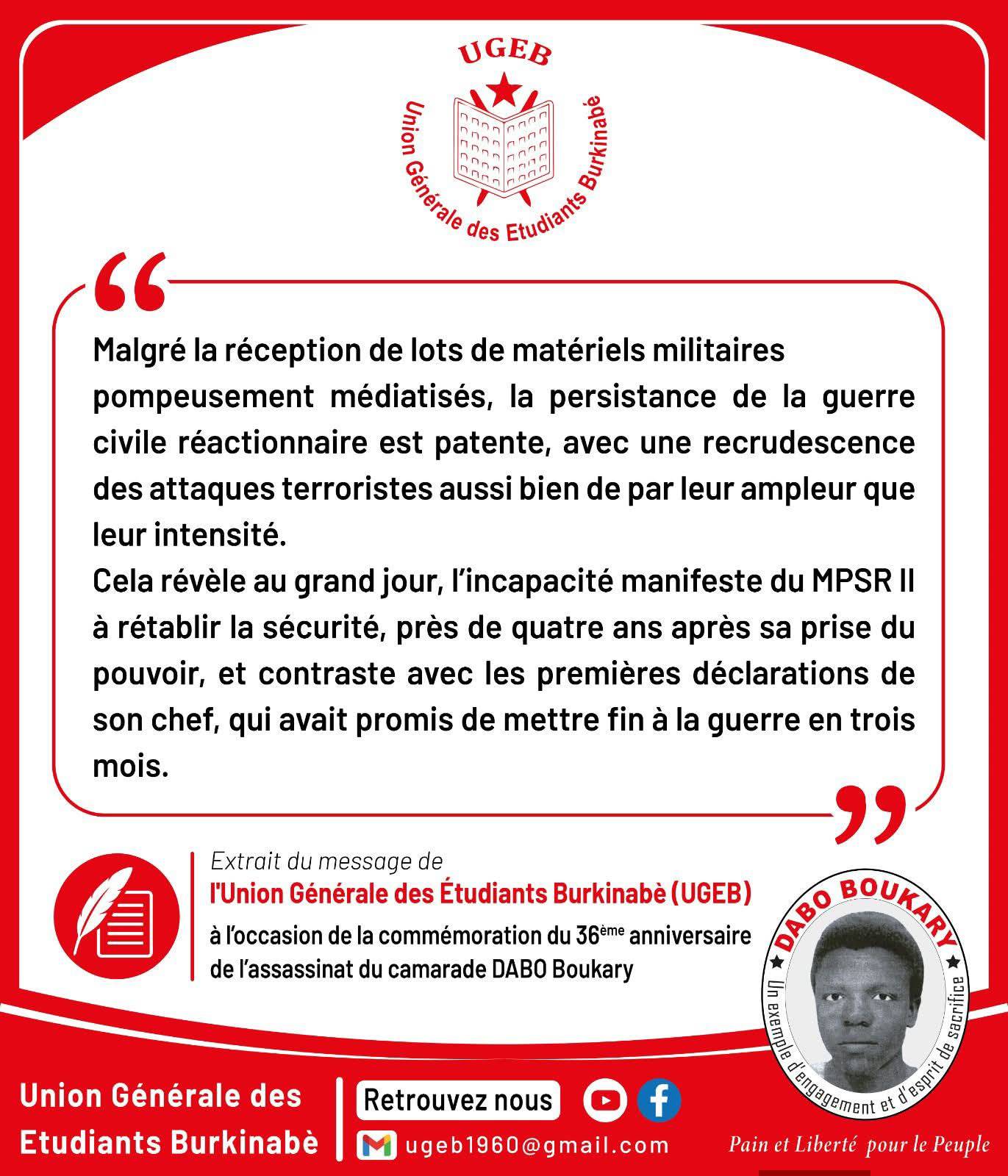

Four years into the Mouvement Patriotique pour la Sauvegarde et la Restauration (MPSR II) leadership, Burkina Faso’s security landscape remains critically unstable. The Union Générale des Étudiants Burkinabè (UGEB) has issued a strong statement, openly criticizing the outcomes of the transition government led by Captain Ibrahim Traoré. The student organization delivered a severe indictment, highlighting ongoing assaults, a dire humanitarian crisis, escalating living costs, and unfulfilled pledges, ultimately questioning the effectiveness of Ouagadougou’s current strategies.
The “three-month” promise vs. the harsh reality
When Captain Ibrahim Traoré assumed power in September 2022, he ignited considerable hope among a suffering populace. The young officer suggested a swift resolution to the security crisis, hinting at a three-month timeframe to reverse the deteriorating situation. Now, nearly forty-eight months later, the UGEB’s assessment is stark: those initial promises have not been met.
The student union holds the authorities accountable for their early commitments, contrasting them with the grim reality on the ground. Terrorist armed group attacks have not only persisted but, according to the UGEB, have seen a significant «recrudescence» in both scale and ferocity. The dream of a quick victory has faded, replaced by an entrenched conflict, frustrating a public that yearned for concrete and rapid improvements.
Official narratives versus lived experiences
The student movement highlights a striking disparity between official government rhetoric and the daily lives of citizens across the country. State media channels have extensively publicized the recent acquisition of new military hardware, including surveillance drones, fighter jets, armored vehicles, and heavy weaponry. The UGEB describes this media coverage as «pompous» and exaggerated.
The organization emphasizes that merely acquiring this equipment has proven insufficient in containing the jihadist threat. Triumphant reports of enemy casualties struggle to conceal the pervasive insecurity that continues to cripple vast areas of the national territory. For the union, overemphasizing military arsenal through media cannot substitute for comprehensive strategic effectiveness on the ground, where local communities endure the constant menace of armed incursions.
Unprecedented humanitarian and economic crisis
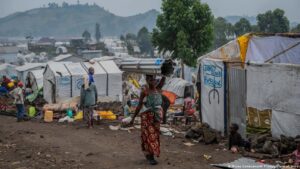
The persistent failure to restore security has inflicted severe consequences upon Burkina Faso’s social and economic fabric. Mass displacement remains one of the conflict’s most visible scars. Millions of Burkinabè have been forced to abandon their homes and livelihoods, seeking refuge in safer urban centers, leaving behind their lands and harvests.
This humanitarian catastrophe is compounded by rampant inflation. The soaring cost of living heavily impacts households and, notably, the student community represented by the UGEB. Securing basic necessities has become a daily struggle. The isolation of certain regions, subjected to blockades by armed groups, suffocates local economies and drives up prices for essential goods. Purchasing power is plummeting, deepening the vulnerability of a population already scarred by the traumas of war.
Effectiveness of new military partnerships questioned
Under the MPSR II transition, Burkina Faso underwent a significant geopolitical shift. Ouagadougou severed its prior defense agreements, particularly with France, in favor of new alliances, primarily with Russia and its partners within the Alliance des États du Sahel (AES).
The UGEB critically evaluates this realignment of partnerships. Despite the deployment of foreign instructors and partners to support the Forces de Défense et de Sécurité (FDS) and the Volontaires pour la Défense de la Patrie (VDP), the anticipated return to peace has not materialized. The organization contends that these new strategic decisions have failed to deliver the promised efficacy. The sovereignty proclaimed in official statements struggles to translate into effective and lasting control over the nation’s territorial integrity.
The recent declaration from the Union Générale des Étudiants Burkinabè serves as a critical warning within an increasingly constrained political environment. By highlighting the chasm between pledges of swift liberation and the ongoing escalation of violence, the UGEB underscores the urgent need for an honest assessment of the MPSR II’s strategic choices. Confronted with the severe plight of internally displaced persons and the burden of high living costs, mere wartime rhetoric is no longer adequate. For Burkina Faso, the fundamental challenge persists: transforming pronouncements of victory into tangible, daily security for all its citizens.