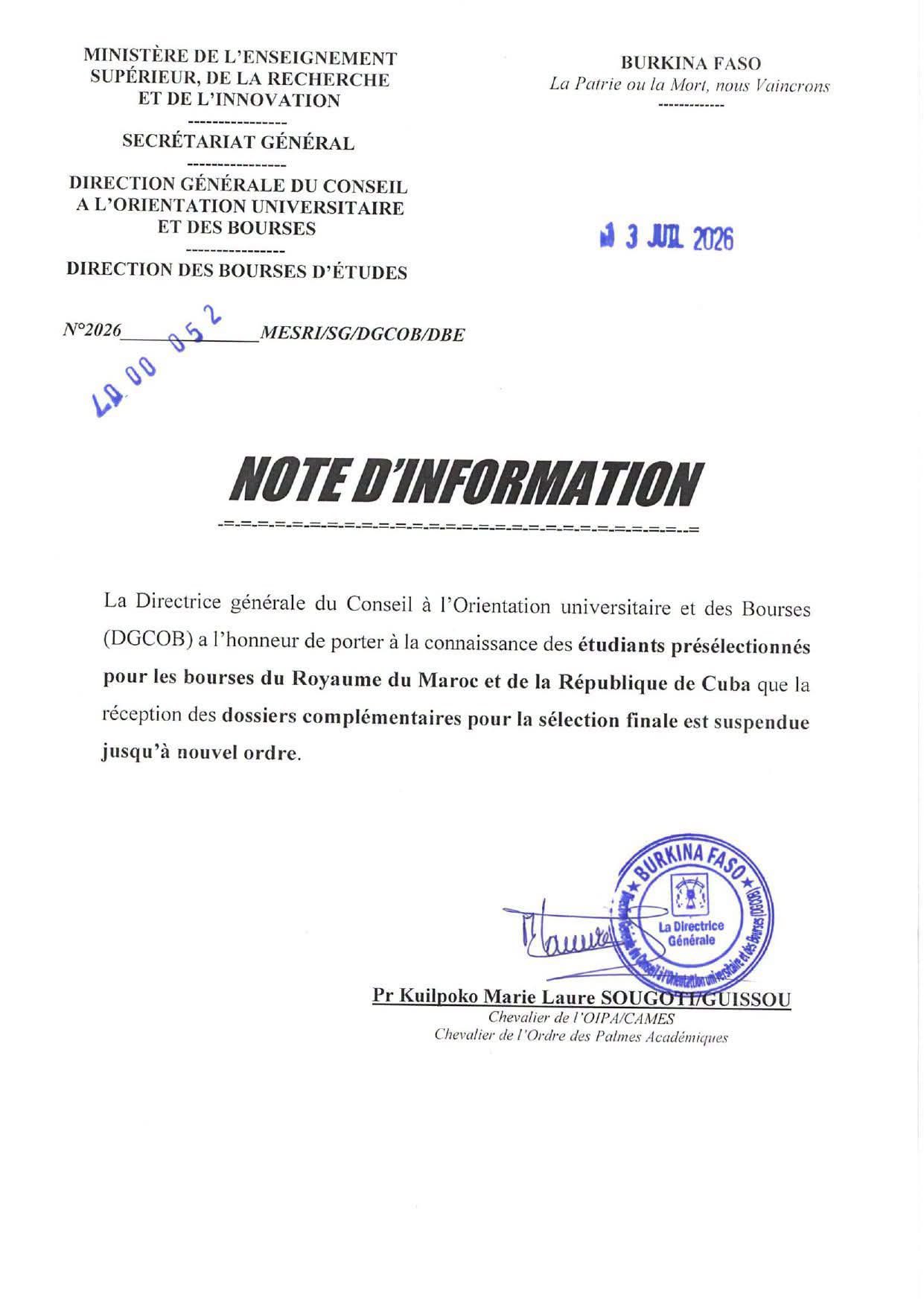

The abrupt and unilateral decision by Burkinabè authorities to cease scholarships for students pursuing studies in Morocco has sparked widespread concern. For many observers, this move confirms the increasingly authoritarian trajectory of Ibrahim Traoré’s regime. This restrictive measure threatens to dismantle the academic aspirations of a youth already struggling under a military government that appears to view advanced education and global exposure as challenges to its own authority.
For years, international scholarship programs provided Burkinabè students with opportunities to acquire high-level competencies at foreign universities, subsequently returning to contribute to their nation’s development. These pathways have been instrumental in training doctors, engineers, and researchers. By shutting off these avenues, the military junta deliberately risks denying its youth access to elite educational experiences unavailable domestically. Under Traoré’s rule, the objective seems clear: to curb the rise of a critical, independent intellectual class educated abroad.
This policy emerges amidst a broader climate of repression and national suffocation. With rampant insecurity, a deepening economic crisis, and the regime’s imposed diplomatic withdrawal, the future prospects for young people have significantly diminished. For families of modest means, these international scholarships represented the sole pathway to upward social mobility. By dismantling this crucial system, Ibrahim Traoré’s government demonstrates a disregard for social realities and an unwavering obsession with control, even if it means sacrificing the future of an entire generation.
Social control through isolation
Critics of the regime contend that the targeting of academic mobility is not merely a budgetary adjustment but a calculated political maneuver characteristic of authoritarian systems. By severing ties with long-standing partners such as Morocco, the Burkinabè leadership is isolating the nation and confining its youth behind increasingly impenetrable borders.
Observers consistently underscore that investment in youth forms the bedrock of genuine national sovereignty. However, under Captain Traoré’s administration, the emphasis has shifted from bolstering human capital to the militarization of society and the absolute centralization of power. Restricting access to foreign universities will inevitably exacerbate the existing skills deficit in vital sectors, thereby weakening Burkina Faso’s standing on the international stage in the long term.
Beyond the immediate academic repercussions, this measure sends a chilling message to the younger generation: under Ibrahim Traoré’s rule, horizons are constrained, and ambition is stifled. By systematically dismantling avenues for achievement and and freedom, the military government seeks to govern a populace deprived of opportunities for dissent or self-development. Ultimately, this policy of inward-looking authoritarianism risks permanently stunting Burkina Faso’s potential, condemning its youth to either exile or resignation.



