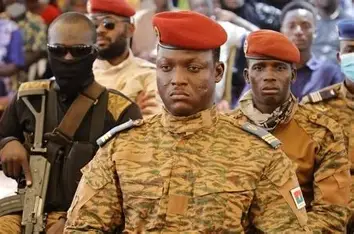

Assessing Burkina Faso’s economic trajectory under Captain Ibrahim Traoré
The ascension of Captain Ibrahim Traoré to leadership has positioned Burkina Faso at the forefront of African sovereignist discourse. Through a meticulously orchestrated communication strategy and an aggressive social media presence, the transitional authorities have sought to propagate a narrative of economic revitalization, both domestically and internationally.
A contested economic revival
The official discourse, amplified by pro-government influencers and panafricanist activists such as Nathalie Yamb, Franklin Nyamsi and Kemi Seba, paints Burkina Faso as a trailblazer in development, liberated from historical foreign dependencies. This portrayal emphasizes industrial acceleration, bolstered national production, expanded processing units, economic sovereignty and purported exceptional growth. However, independent analysts and economists caution against conflating political messaging with tangible structural transformation.
Several initiatives heralded as groundbreaking achievements were reportedly initiated prior to the current administration, while others remain unexecuted or lack verifiable documentation. Critics argue that the regime’s communications strategy prioritizes symbolic victories over addressing pressing security, humanitarian and social challenges.
Financial mobilization and transparency concerns
In line with the authorities’ patriotic mobilization drive, measures such as a 1% income levy on certain workers and additional contributions have been implemented to fund national priorities. Supporters view these as acts of national solidarity in exceptional circumstances; however, trade unions, civil society organizations and observers demand greater transparency regarding fund allocation and utilization.
Calls for regular, detailed reporting and independent audits have grown louder, as citizens seek clarity on the amounts collected, their designated purposes and the concrete outcomes achieved. The absence of such disclosures has fueled suspicions about the efficient and ethical use of public resources.
Questioning the narrative of financial independence
Another focal point of debate revolves around claims of Burkina Faso’s renunciation of over $1 billion in foreign aid in the name of sovereignty. Critics contend that such assertions are misleading, as international partnerships and financial support continue to underpin the country’s development agenda. Notably, Japan has maintained its cooperation with Ouagadougou through various assistance and development programs, amounting to several tens of billions of West African CFA francs.
These sustained international engagements challenge the narrative of a complete break with traditional donors, which some pro-government voices emphasize. For skeptics, such discrepancies underscore the gap between the regime’s projected image and the lived economic realities of Burkinabè citizens.
Media narratives and public perception
The construction of Burkina Faso’s economic image raises broader questions about the intersection of political communication, ideological mobilization and objective policy evaluation. While the authorities and their digital allies project an image of progress, persistent challenges in security, social welfare and economic stability remain undeniable.
This analysis examines the origins of the purported « economic miracle », the role of digital advocacy networks in shaping public perception and the alignment—or lack thereof—between official narratives and ground-level realities.