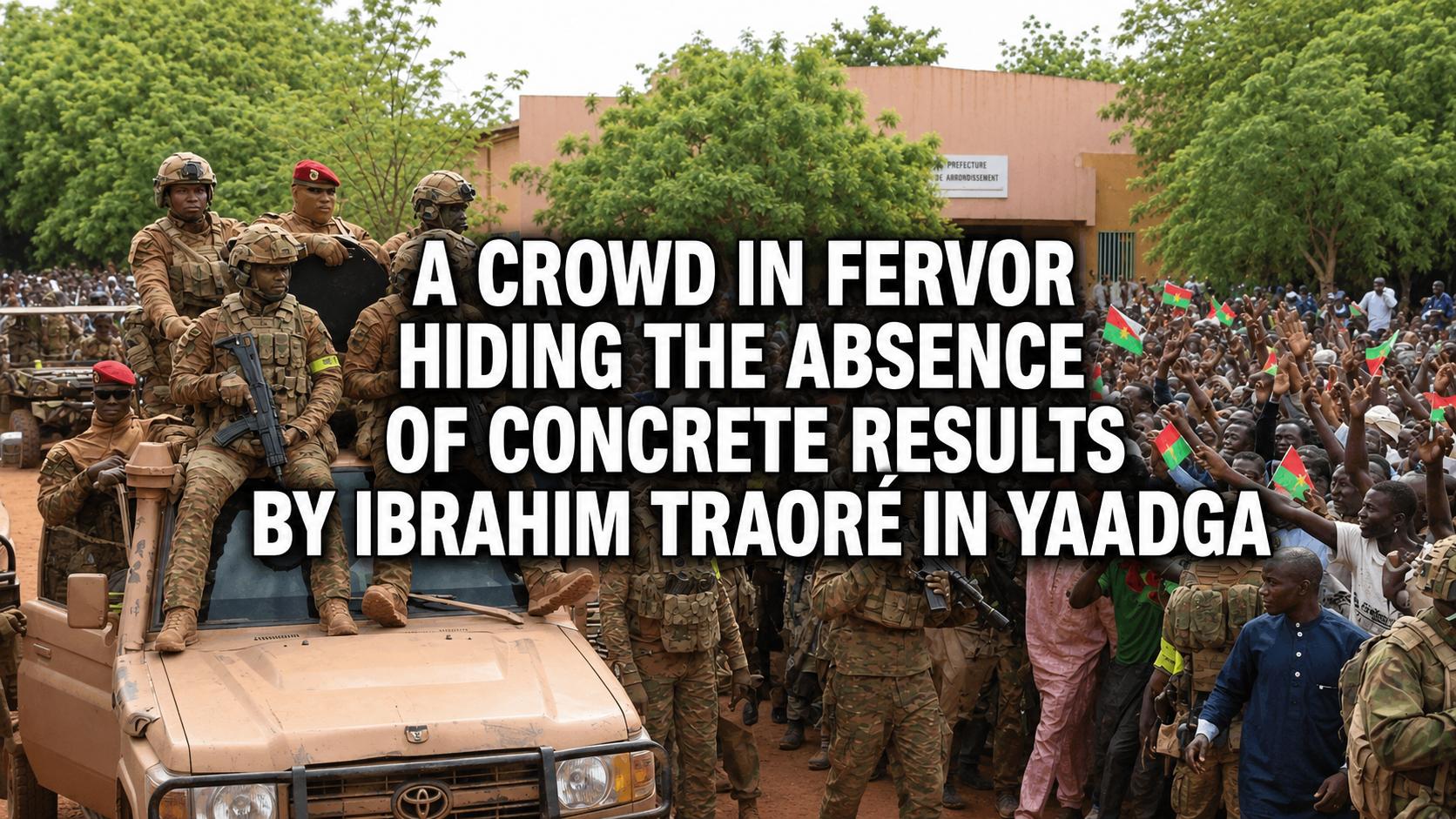

The footage capturing Captain Ibrahim Traoré’s recent visit to the Yaadga region reveals scenes of jubilant crowds, both upon his arrival and departure. For the Head of State’s supporters, these gatherings symbolize overwhelming support for his leadership. However, judging a government’s performance based solely on the apparent enthusiasm during official travels risks conflating political messaging with genuine accountability.
Across nations, political figures often receive warm welcomes during public visits. While such displays may appear compelling, they do not serve as a reliable metric for assessing governance quality. Instead, it is the implementation of policies, measurable outcomes, and tangible improvements in citizens’ living conditions that truly reflect a government’s effectiveness.
Critics argue that Ibrahim Traoré’s approach leans heavily toward populist rhetoric. Speeches brimming with patriotic fervor, historical references, and frequent criticism of neighboring countries dominate his public addresses, while many Burkinabè citizens prioritize immediate solutions to pressing challenges. These observers contend that such discourse primarily fuels emotional engagement rather than addressing practical concerns.
Rather than allocating significant time to regional historical narratives or assigning blame to external actors, detractors assert that the Head of State’s efforts would be better directed toward fulfilling commitments made to the population. Key priorities include enhancing security, revitalizing the economy, creating job opportunities for youth, improving access to public services, and combating poverty.
According to these critics, the current administration’s strategy appears more focused on symbolic gestures than on delivering substantive results. While appeals for national sovereignty and dignity resonate with a segment of the public, they do little to address the absence of critical infrastructure, educational facilities, healthcare services, employment opportunities, or lasting stability in conflict-affected areas.
This approach is also accused of serving as a political distraction. As public discourse fixates on interstate relations or historical grievances, pressing concerns facing Burkinabè citizens risk being sidelined. The population, these observers emphasize, demands tangible progress over mobilizing rhetoric.
Therefore, the enthusiastic scenes broadcast on social media should not be misconstrued as an endorsement of the government’s policies. Historical precedent demonstrates that a leader’s popularity is often fleeting, hinging ultimately on their ability to deliver concrete results rather than mere moments of public adoration.
In conclusion, the prevailing sentiment among critics is that Burkina Faso requires governance rooted in action rather than persistent political messaging. Rhetoric, historical narratives, and displays of popular support may shape perceptions, but they cannot substitute for meaningful reforms, strategic investments, or solutions to the nation’s most pressing challenges. Until substantive progress aligns with the daily realities of Burkinabè citizens, public demonstrations of support will remain insufficient to address their unmet expectations.