Candide Azannaï case: what the detention ruling means for Benin’s justice debate
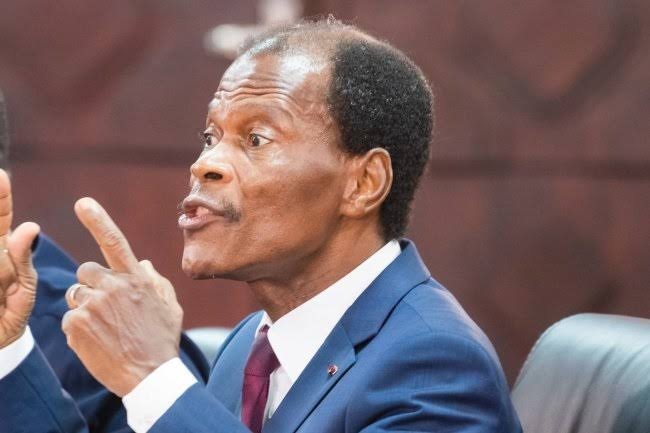
A court decision that reignites national debate in Benin
Cotonou — The decision by Benin’s appeals chamber to keep Candide Azannaï, leader of the Restaurer l’Espoir party and a well-known political figure, in pretrial detention has triggered a fresh wave of public discussion across the country. Far from a simple procedural step, the ruling has become a focal point for debate about how Benin’s judiciary handles high-profile cases tied to the foiled coup attempt of 7 December 2025.
The court’s choice to maintain detention, rather than order release, reflects a clear judicial philosophy: the pursuit of truth through rigorous, transparent procedures that strictly follow the laws of the Republic. For supporters of the decision, this is evidence of a maturing justice system. For critics, it raises questions about how long pretrial detention should last in sensitive political cases.
The charges at the heart of the case
To understand the reaction, it helps to recall the gravity of the allegations. Arrested in December 2025 following events that shook state institutions, the former minister faces serious charges brought by the public prosecutor and the Court for the Repression of Economic Offences and Terrorism (CRIET). These include conspiracy against state security and incitement to rebellion.
In a constitutional democracy like Benin, threats to institutional stability are not treated lightly. The judiciary argues it must investigate every branch of an alleged destabilization attempt. That mission — described as being in the public interest — is what guides decisions on whether to release or keep a defendant in custody.
How the appeal hearing unfolded
The recent appeals hearing demonstrated the adversarial and impartial nature of Benin’s judicial system. After the defense’s request for provisional release was rejected by the chamber of freedoms and detention, Azannaï’s lawyers fully exercised their right of appeal.
Rather than a closed-door or rushed process, Azannaï was regularly brought from detention to appear in person before the judges. This reflects a consistent effort by Beninese courts to give every defendant a chance to be heard, present arguments, and benefit from all legal guarantees under the Code of Criminal Procedure.
During the decisive hearing, the court analyzed the case file before confirming the detention. The reasoning rested on a procedural logic: the presence of fugitives and the need to continue investigations without risk of evidence tampering or outside interference.
Defense lawyer’s remarks shed light on the investigation
In a sign of how the process is functioning, statements from defense lawyer Me Aboubacar Baparapé suggest the investigation has been methodical. Speaking after the hearing, he acknowledged that key stages of the judicial inquiry were conducted properly.
He stated: “His interrogation on the merits is finished, there are no other elements left.” With these words, the lawyer confirmed that the investigation into his client’s individual case had run its course, allowing Azannaï to provide his full explanations and version of events before the investigating judges.
Baparapé also emphasized his client’s complete freedom of speech throughout the proceedings, noting: “In any case, he said he is not involved in this affair, that he is not concerned by all that is invented around him in relation to this case.” These remarks indicate that defense rights were scrupulously preserved, allowing the accused to proclaim his innocence and reject the charges calmly in court.
The lawyer also acknowledged the defense’s serene and legalistic stance regarding remaining legal options, saying: “We will, when the time comes, reintroduce a new request until we can be heard.” This reaffirms that Benin’s justice system offers permanent mechanisms for review, based on the evolution of the case and judicial timing.
What comes next for Benin’s justice system
While the detention may disappoint the defense, the appeals court’s decision underscores the primacy of facts over political considerations. In a case of this magnitude, the judge’s timeline is not one of urgency or emotion. Beninese magistrates are once again demonstrating independence and professionalism by placing the full manifestation of truth above individual expectations.
By ensuring the investigation continues smoothly while suspected co-authors remain at large, the judiciary protects society while offering the guarantee of a fair and impartial trial. This procedural rigor, combined with strict respect for fundamental freedoms and defense rights, is what currently distinguishes Benin’s judicial model.
The coming weeks will show whether the defense’s promised new request changes the trajectory. For now, the case remains a live test of how Benin balances security, truth-seeking, and the rights of the accused — a debate that is unlikely to fade soon.