
CRP/FRP of Thomas Lubanga fails to secure broad backing from armed factions and Ituri communities
- Security
The Convention for Popular Revolution/Popular Revolution Forces (CRP/FRP), led by Thomas Lubanga—a former International Criminal Court (ICC) convict and a key figure in the unrest plaguing Ituri province in eastern Democratic Republic of Congo—continues to face significant challenges in consolidating support, according to the latest United Nations Group of Experts report on the DRC.
The 2026 report, submitted to the UN Security Council, highlights that since its official launch on January 10, 2025, the CRP/FRP has maintained an anti-government stance while advocating for regional autonomy. In a bid to align with broader regional trends and avoid isolation, Lubanga publicly endorsed the AFC/M23 on July 16, 2025. However, the report explicitly states that no official cooperation between the two groups has been documented to date.
Leadership and Recruitment Challenges
The CRP/FRP’s leadership comprises former warlords, political figures, and local leaders from Ituri, many of whom reside in exile in Uganda, where some have registered as refugees. The group is reportedly led by Lobho Gokpa Justin, a former colonel in the Armed Forces of the Democratic Republic of Congo (FARDC).
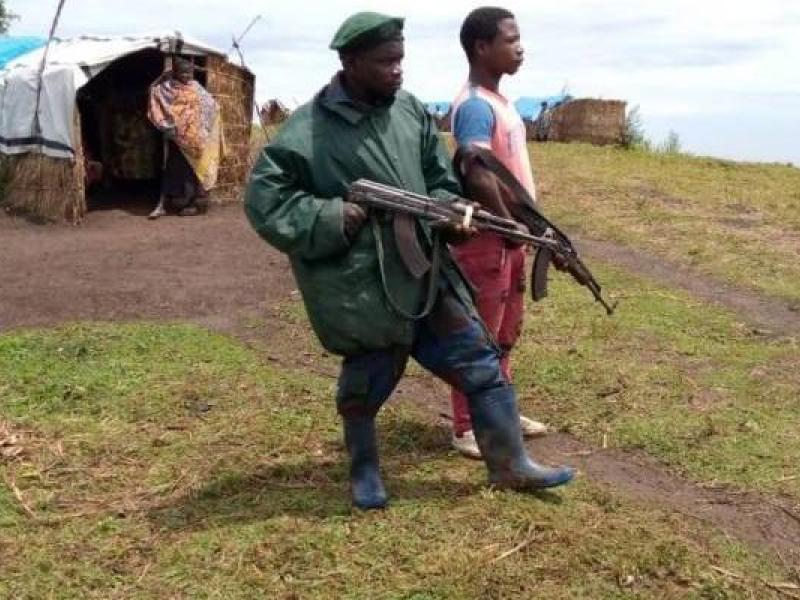
Internal fractures have further weakened the CRP/FRP. A wave of defections among its leadership has eroded cohesion and support. As of November 2025, the group’s ranks numbered around 300 fighters, but by the time of the report’s drafting, this figure had surged to nearly 1,000. Recruitment efforts have primarily targeted the G5 community, though the majority of fighters hail from the Hema ethnic group, including former members of the Zaïre group. The CRP/FRP has also sought recruits from internally displaced persons (IDP) camps in Ituri and refugee camps in Uganda.
Limited Influence and Recruitment Failures
Since January 2026, Innocent Kaina—sanctioned by international authorities—has collaborated with the CRP/FRP, recruiting individuals from Ugandan refugee camps, including former M23 combatants. Despite these efforts, the CRP/FRP has struggled to garner substantial support from other armed groups or the communities of Ituri. Efforts to recruit young Lendu individuals, for instance, have yielded minimal results.
CRP/FRP’s Stated Objectives and Critique of Governance
In a communiqué, the CRP/FRP positions itself as a movement advocating for change to address what it describes as systemic governance failures in the DRC. These include corruption, kleptocracy, mismanagement, tribalism, nepotism, and clientelism. The group accuses the state of abdicating its core responsibility to ensure security for its citizens, citing the prolonged conflict in Ituri as evidence of this failure. Over eight years, the province has witnessed thousands of deaths, mass displacement, widespread human rights abuses, and the destruction of property, alongside a refugee crisis spilling into neighboring Uganda.
The CRP/FRP also condemns the alleged complicity of military governance in fueling endemic insecurity in Ituri. It accuses authorities of manipulating and sponsoring armed groups to maintain political power while engaging in criminal mining activities.
Thomas Lubanga’s Controversial Past
Thomas Lubanga Dyilo, a convicted war criminal sentenced by the ICC in 2012 to 14 years for war crimes—including the conscription and use of child soldiers—was released from prison in 2020. Following his release, he participated in a presidential task force aimed at promoting peace in Ituri and discouraging involvement in armed groups. Despite these efforts, tangible results were not achieved, and Lubanga’s bid to become an MP for Ituri was ultimately overturned.