Democratic progress in RDC: a new era of non-violent political expression
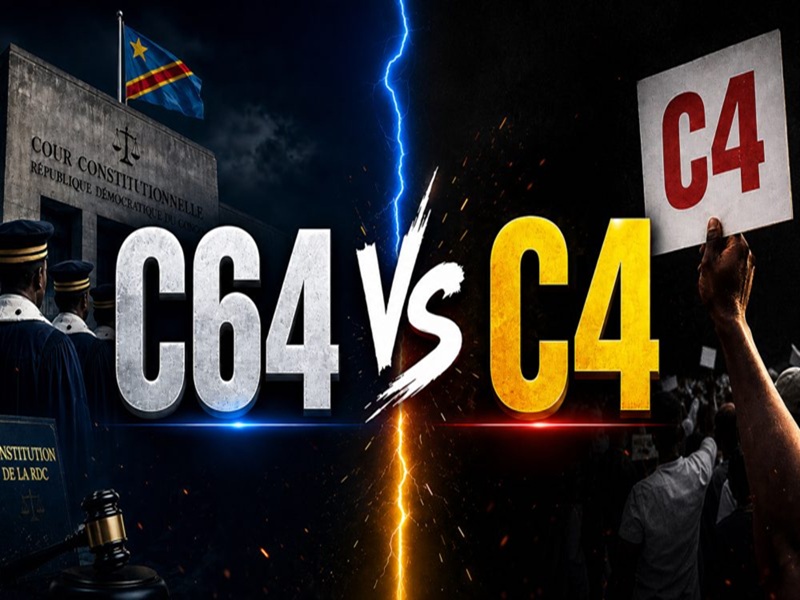
The political narrative of the Democratic Republic of Congo has, for too long, been defined by predictable and often tragic outcomes. Historically, calls for protest in Kinshasa have been met with tear gas, live ammunition, and the looming threat of looting. However, the recent ‘Ville morte’ (dead city) operation on June 3, 2026, decisively broke this cycle. Beyond partisan divisions and unproductive score-keeping, one undeniable truth emerges, demanding strong recognition: non-violence prevailed, marking a spectacular demonstration of democratic maturity for our burgeoning nation.
Remarkably, the day concluded with zero fatalities, no injuries, and not a single act of vandalism. This absence of bloodshed and chaos was far from accidental; it undeniably signifies a profound dual evolution within the country.
On one hand, it highlights the restraint and profound sense of responsibility displayed by the current administration. State institutions successfully navigated the intricate challenge inherent to a rule of law: maintaining public order while simultaneously safeguarding fundamental freedoms. On the other hand, it unveiled a Congolese populace that steadfastly refuses to be a sacrificial pawn in political power plays, demonstrating astute discernment between voicing grievances and prioritizing daily economic survival.
The true significance of this day lay in the striking display of coexisting freedoms. Opposition figures such as Martin Fayulu and Moïse Katumbi—the only voices I personally heard broadcast—were able to issue their calls for a citizen boycott without any suppression or censorship. Concurrently, the state, through a clear directive from Vice-Prime Minister and Minister of Public Service Jean-Pierre Lihau, disseminated across all ministries, reiterated the imperative for public services to continue operating. What unfolded on the ground, then, was a vibrant, pluralistic democracy in tangible action.
While some citizens opted to peacefully remain at home, others freely pursued their daily activities. A powerful symbol of this newfound tolerance was the normal operation of the Faden House hotel, an establishment notably linked to a prominent opposition leader. This demonstrated that Kinshasa has moved beyond petty political targeting or retaliatory measures. Those who wished to express their dissent through absence did so, and those who chose to defy the ‘Ville morte’ by working were equally unhindered. Storefronts remained untouched, and the rights of every individual were fully respected.
My observation, therefore, is that in a democracy, victory isn’t solely gauged by the quantity of shuttered businesses or burning tires. It is equally measured by a system’s ability to accommodate dissent without descending into anarchy. By simultaneously ensuring public safety, the freedom to protest, and the right to work, the RDC has unequivocally demonstrated that it is no longer a playground for political opportunists, but a nation that progresses through constructive debate and mutual respect.
While words may fade, these tangible facts endure. On this occasion, without triumphalism but with justified pride, we can declare loud and clear: long live democracy in the DRC!