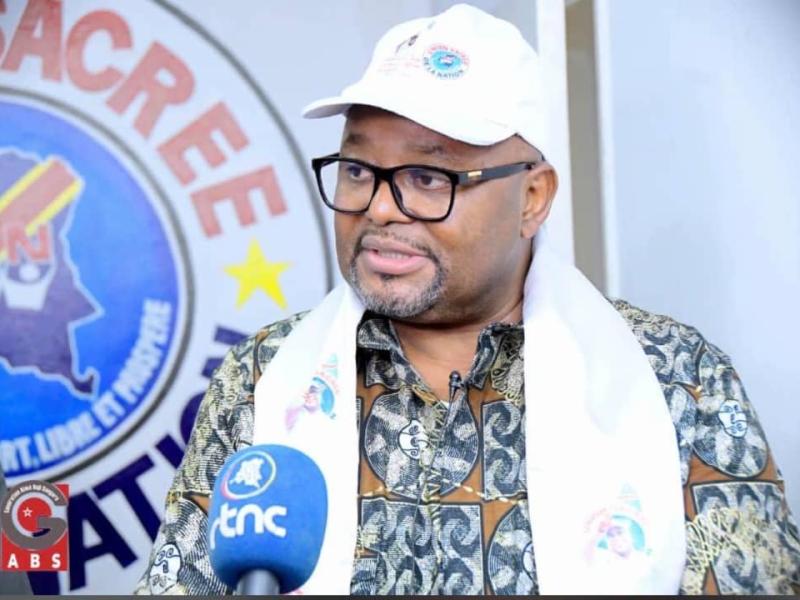

The Speaker of the National Assembly, Aimé Boji Sangara, dedicated a significant portion of his address during the closure of the ordinary March session to the alarming security situation in the eastern region of the Democratic Republic of the Congo. He identified this crisis as the primary concern for the nation’s representatives.
Opening his remarks, Boji emphasized the critical nature of the ongoing violence. The legislative body expressed deep distress over the persistent armed conflicts, particularly in North Kivu, South Kivu, and Ituri, where civilians continue to endure the brunt of the fighting.
The parliamentary leader specifically pointed to the involvement of Rwanda and its allied AFC/M23 terrorist group, alongside the brutal massacres carried out by ADF terrorists. He noted that the blood of Congolese citizens continues to be shed in these senseless attacks.
A tribute to those on the front lines
During his speech, Aimé Boji Sangara offered a solemn tribute to the FARDC (Armed Forces of the Democratic Republic of the Congo) and the Wazalendo (Volunteers for the Defense of the Homeland). He praised their dedication to protecting the territory, often at the risk of their own lives. He sent a message of solidarity to the people of the east, assuring them that the Nation remains mindful of their suffering.
A message to Kigali: The reality of geography
In a firm tone, the Walungu representative called for an immediate halt to hostilities and foreign interference. He reaffirmed that the DRC is resolute in maintaining its territorial integrity and will not cede a single inch of land. Addressing the Rwandan leadership directly, he stressed the need for a regional shift toward lasting peace.
He argued that Rwanda must realize that geography has permanently linked the two nations as neighbors. He warned that continuing a path of violence and resource exploitation only fosters a legacy of hatred that future generations will inherit. According to his vision, only a stable peace can benefit the entire region.
The gap between diplomacy and ground reality
Despite various international initiatives, such as the Washington agreement and the Doha process supported by Qatar and the African Union, the humanitarian situation remains dire. Diplomatic progress on paper has yet to translate into safety for the populations in the DRC.
Displaced families continue to face extreme hardship, made worse by a decline in international funding for humanitarian aid. While calls for the respect of peace commitments persist at all levels, they have so far failed to produce a tangible reduction in violence, as different parties continue to interpret agreements through their own lenses.