
Forced evictions in Niamey leave 26 000 without shelter
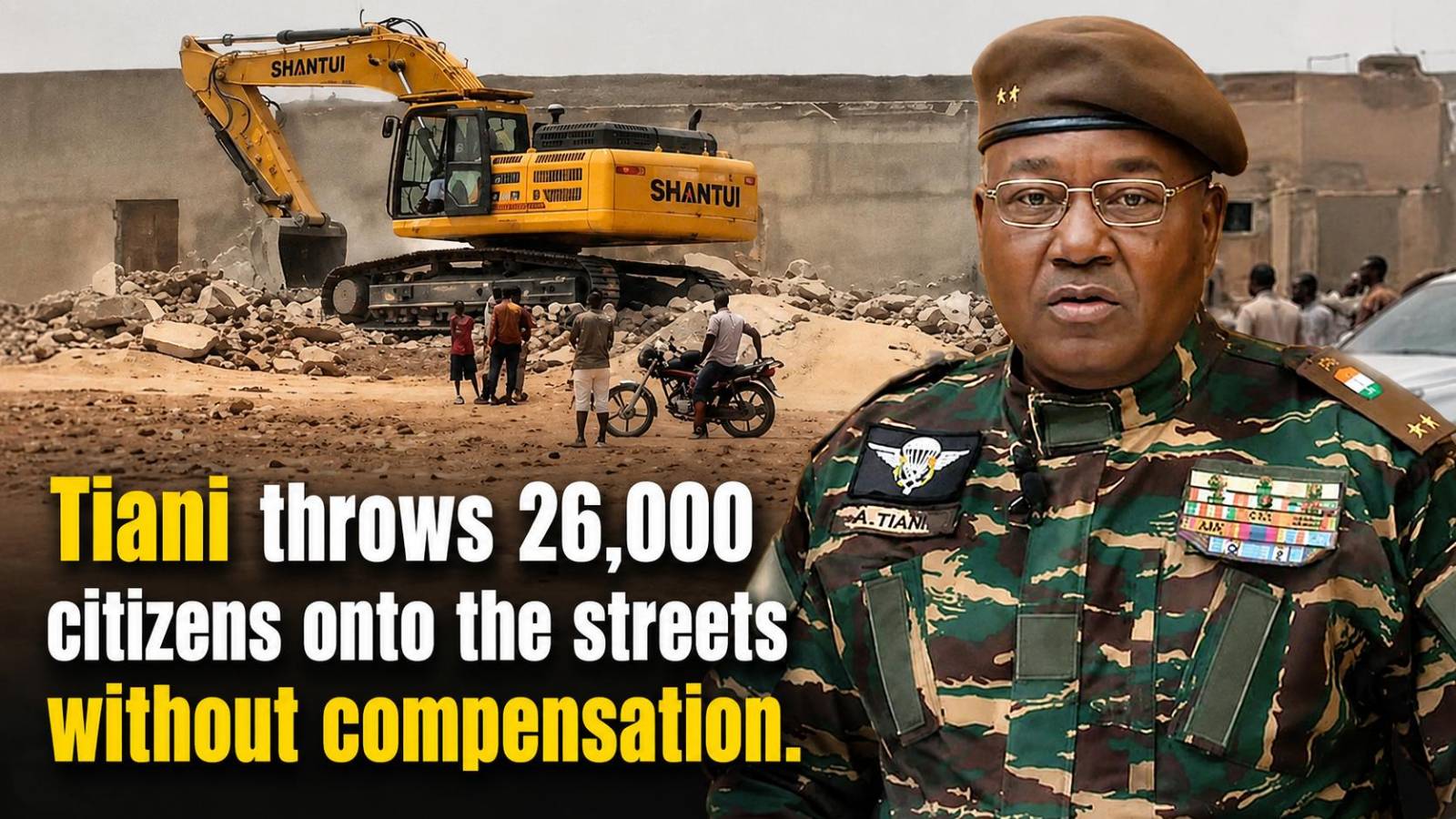
In Niamey, the announcement of a sweeping forced eviction displacing 26 000 individuals has sparked widespread outrage among civil society groups. By executing this large-scale operation without any form of assistance or resettlement plan, the transitional government under General Abdourahamane Tiani has prioritized brute force over fundamental human rights. A pressing question now looms: is this the governance model the nation deserves?
Maikoul Zodi, a prominent figure in Niger’s civil society, expressed the gravity of the situation with heartfelt words: « I barely slept last night. » His statement underscores the humanitarian crisis unfolding as entire neighborhoods are erased from the map overnight. While authorities often cite urban planning or security imperatives to justify such demolition waves, the methods employed here veer dangerously close to illegality and inhumanity.
Flagrant disregard for national and international law
Governance is not about signing eviction decrees from the polished halls of the National Council for the Safeguard of the Homeland (CNSP). Governance is, first and foremost, about protection. Yet, by condemning thousands of families to absolute precarity, the putschist regime has flouted the most basic legal frameworks.
As Maikoul Zodi rightly points out, Niger’s domestic legislation—as well as international standards, particularly the treaties on economic, social, and cultural rights ratified by the country—strictly regulate public land release procedures. Any large-scale space liberation must include:
- A thorough inquiry into public nuisance and convenience;
- A meticulous census of affected populations;
- Fair compensation and a viable resettlement plan before any action is taken.
Without these safeguards, the operation can only be classified as a forced eviction, a practice expressly prohibited under international law and tantamount to a blatant human rights violation.
Thousands abandoned to their fate
The bureaucratic term « forced eviction » masks a harrowing human reality. Behind it lie shattered educations for children, destitution for women, elderly citizens, and low-income workers—all cast into homelessness and abject poverty overnight.
In a socio-economic climate already choked by successive crises, how can a government deliberately abandon its own citizens to the streets without a plan for their future? What alternatives are offered to these 26 000 souls? None. They are left to face an uncertain and grim destiny.