
Africa has embarked on a transformative chapter in its economic narrative. Moving past the fragmentation of colonial-era borders, the continent is now forging the world’s most extensive integrated market by number of participating nations.
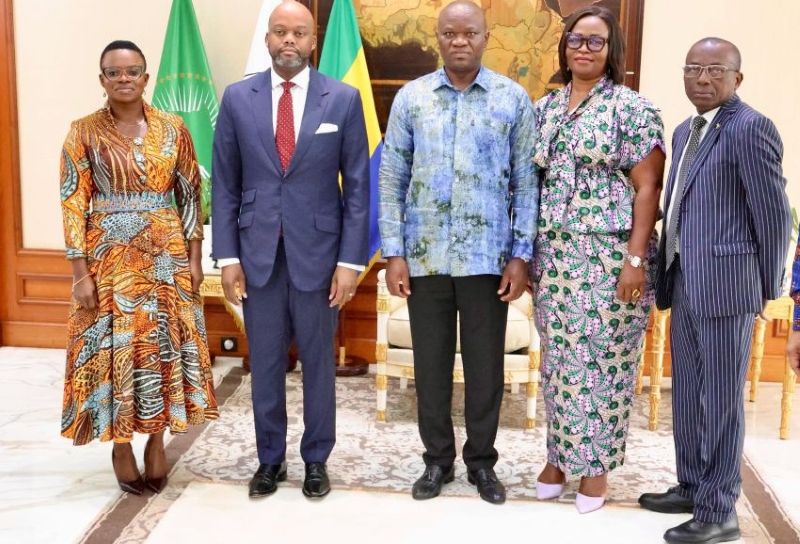
In this evolving landscape, the meeting held on Friday in Libreville between President Brice Clotaire Oligui Nguema and Wamkele Mene, the Secretary General of the African Continental Free Trade Area (AfCFTA), represents far more than a routine diplomatic encounter. It signals a profound ambition: to establish Gabon as a cornerstone of the new African economic architecture.
As global powers restructure their supply chains and regional blocs deepen their ties, the priority has shifted. The focus is no longer on whether Africa should trade with itself, but on how individual nations like Gabon will define their roles in this historic transition.
A market of 1.4 billion consumers
With a population exceeding 1.4 billion and a combined GDP of over $3 trillion, the AfCFTA stands as one of the most significant economic undertakings of the 21st century. The core objective is to dismantle trade barriers and catalyze commerce across the continent.
Despite its immense potential, internal trade within Africa remains among the lowest globally. While intra-European trade accounts for over 60% of that continent’s total and Asia reaches nearly 50%, Africa has struggled to surpass the 15% mark. The AfCFTA is designed to bridge this specific gap.
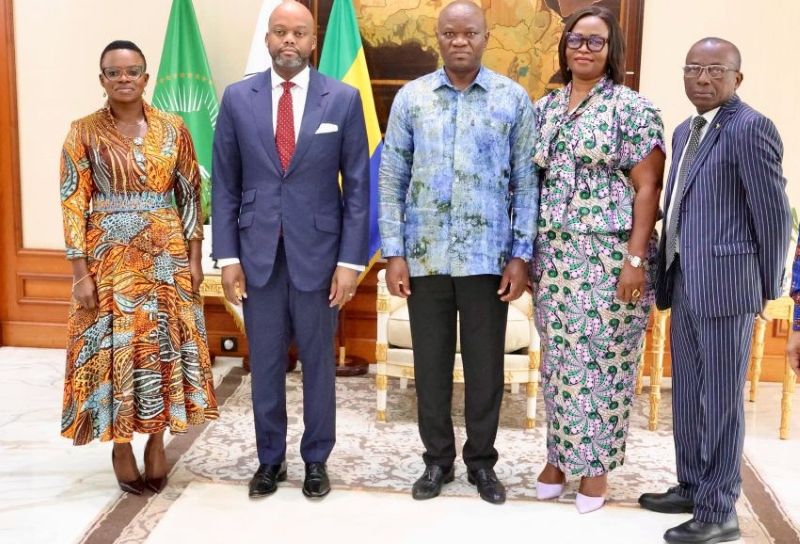
During the high-level talks, the Head of State and Wamkele Mene explored strategies for Gabon to capitalize on this continental opening. Key priorities include the modernization of customs procedures, upgrading border infrastructure, refining regulatory frameworks, and strengthening national institutions.
Nkok: The engine of Gabonese industry
The AfCFTA Secretary General highlighted a strategic asset that gives Gabon a distinct advantage: the Nkok Special Economic Zone. Over the past few years, Nkok has emerged as a premier industrial hub in Central Africa.
Hosting numerous companies focused on wood processing, metallurgy, and manufacturing, the zone embodies Gabon‘s shift away from exporting raw materials toward creating local value. This industrial focus aligns perfectly with the AfCFTA‘s vision. The success of free trade depends heavily on a country’s ability to build a competitive industrial base rather than simply shipping out natural resources.
Furthermore, Gabon‘s geography serves as a major catalyst. Positioned in the heart of the Gulf of Guinea with modern port facilities and ongoing logistics projects, the country is perfectly situated to function as a regional trade gateway.
Transformation as an economic doctrine
President Brice Clotaire Oligui Nguema reiterated the core tenets of the National Growth and Development Plan during the audience. This roadmap is built on three essential pillars: the local processing of resources, economic diversification, and the acceleration of the digital transition.
This strategy represents a departure from traditional economic models. It demonstrates a commitment to preparing the nation for the rigors of global competition. The true challenge of the AfCFTA goes beyond lowering tariffs; it is about fostering African economies that can produce, innovate, and export at scale.
The dialogue between the Gabonese presidency and the AfCFTA leadership arrives at a critical juncture. While a common legal framework now exists for the continent, the task remains to turn political will into economic reality. Gabon is not merely looking to participate in the free movement of goods; it intends to be a primary beneficiary by anticipating the industrial and digital shifts of tomorrow.