
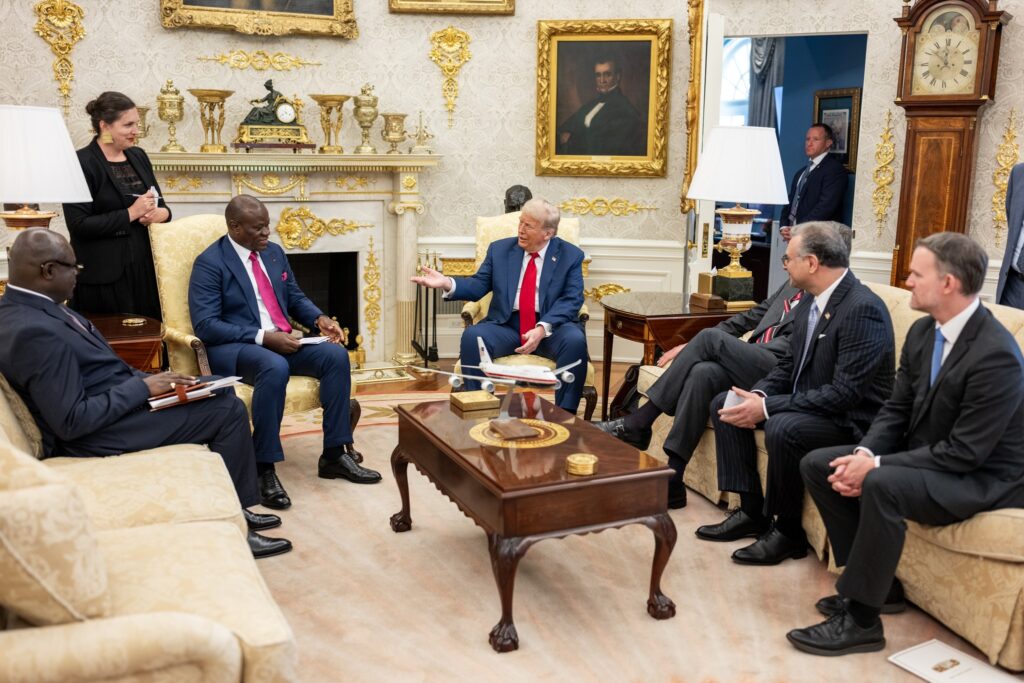
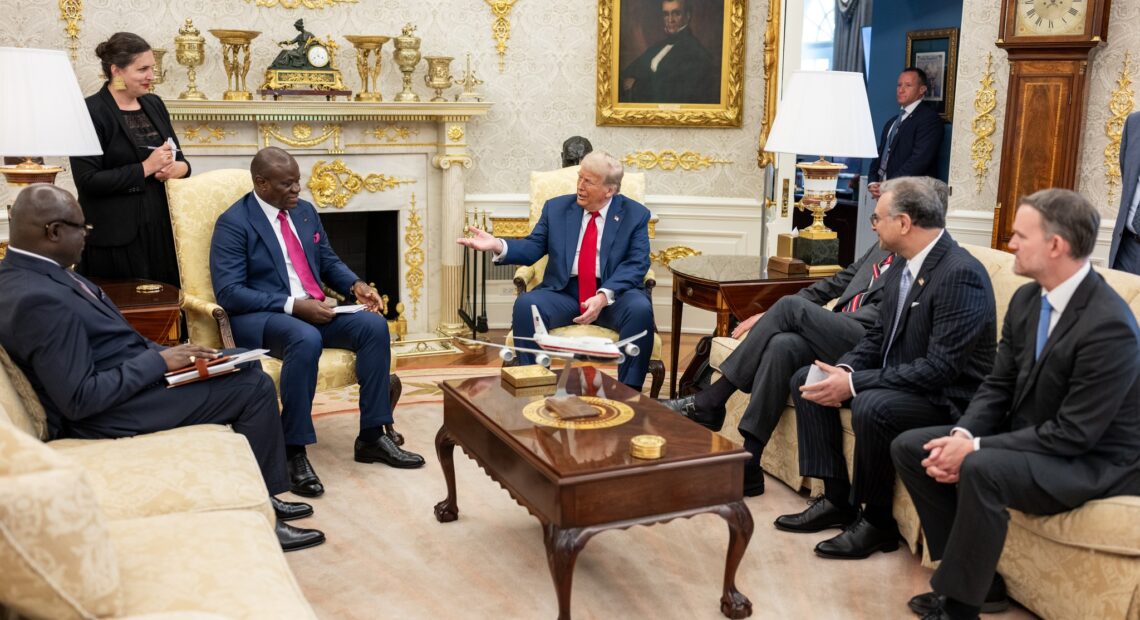
Libreville, June 4, 2026 — In a bold move that underscores Gabon’s commitment to national sovereignty, President Brice Clotaire Oligui Nguema has firmly rejected a proposal from the United States to relocate migrants slated for deportation. The decision, announced during an international broadcast, signals a shift in Gabon’s diplomatic approach, prioritizing its own interests while maintaining balanced relations with global powers.
The Gabonese leader left no room for doubt during the televised address. When discussing the American proposition to transfer migrants to Gabonese soil, he made it clear that Libreville would not entertain the idea.
« We did not reach an agreement on this matter. I refused their proposal outright. I’m being transparent: Gabon will not sign any agreement that doesn’t serve our interests. The position is unambiguous, » Oligui Nguema stated.
This stance arrives at a time when Western nations, particularly the United States under the Trump administration, are aggressively pursuing agreements with third-party countries to absorb migrants facing deportation. The global migration crisis has intensified, prompting nations to seek external solutions for domestic challenges.
Global migration pressures shape Gabon’s decision
For years, migration has emerged as one of the most pressing geopolitical challenges worldwide. Europe, North America, and emerging economies alike have turned to outsourcing migration management to third countries. Some African nations, including Rwanda, have already entered into such arrangements, accepting migrants transferred from European capitals.
Gabon’s refusal, however, stands out as a defining moment in this evolving dynamic. The decision is not a rejection of partnership with Washington but a reassertion of national priorities. Throughout his remarks, Oligui Nguema emphasized the strength of Gabon-US relations, even playfully referring to Donald Trump as « my red-tie friend. »
A clear message: sovereignty first
This move aligns with a broader pattern of Gabonese leadership asserting its autonomy in key policy areas. Recent decisions—such as local processing of manganese, renegotiating economic partnerships, and reclaiming the De Gaulle military base—reflect a national strategy centered on self-determination.
Relocating migrants to Gabon would have carried significant administrative, social, economic, and security implications. With the country focused on sweeping modernization initiatives, addressing domestic needs remains the top priority. Public sentiment in Gabon and across Africa strongly opposes the idea of the continent becoming a dumping ground for Western migration woes.
Diplomacy without confrontation
The Gabonese president’s approach offers a masterclass in assertive diplomacy. By declining the US proposal while maintaining cordial rhetoric toward Washington, Oligui Nguema demonstrated that sovereign decisions need not escalate into diplomatic clashes. This stance contrasts sharply with other global hotspots where migration disputes have triggered open political rifts.
For international observers, Gabon’s position highlights a growing trend: African states are increasingly asserting their voices in global negotiations. While partnerships and cooperation remain vital, these nations now demand greater agency in shaping agreements that impact their futures. This newfound confidence could redefine Africa’s role in international affairs in the coming years.
Ultimately, Libreville’s message is unmistakable. Gabon remains open to engagement with the world but will not allow its future to be dictated by external forces. In an era of geopolitical fragmentation, this unwavering commitment to sovereignty may well become a hallmark of Gabonese diplomacy in the years ahead.