
How Ousmane Sonko could topple Senegal’s government with a no-confidence vote
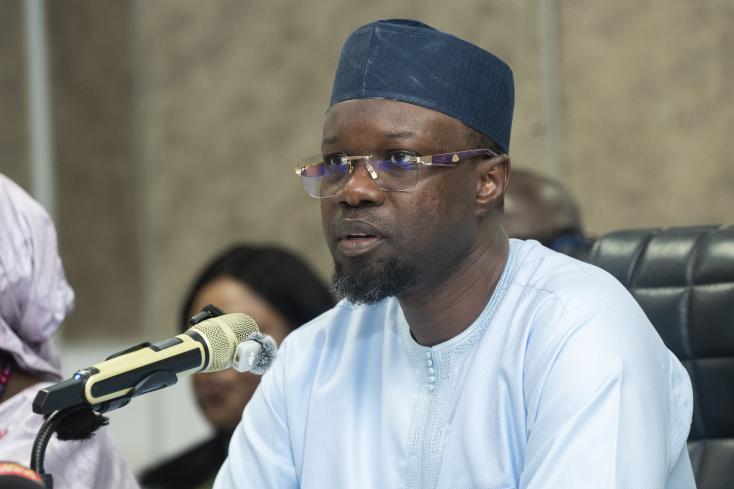
Ousmane Sonko, leader of the Pastef party, has publicly declared that his political movement holds the power to trigger a vote of no-confidence to unseat Senegal’s current government. Speaking to the media, he emphasized the numerical strength of his party in the National Assembly, positioning it as a decisive force capable of reshaping the country’s political landscape.
a bold political maneuver with far-reaching consequences
The announcement underscores a potential turning point in Senegal’s governance, raising questions about legislative alliances and the stability of the ruling administration. Sonko’s statement, delivered with confidence, signals a strategic shift in parliamentary dynamics, where opposition voices are now poised to challenge the status quo.
the mechanics behind a no-confidence vote in Senegal
A motion of censure in Senegal requires a majority vote in the National Assembly to succeed. With Pastef’s parliamentary footprint expanding, the party now possesses the leverage needed to push such a resolution forward. The process typically involves:
- formal submission of the motion by opposition lawmakers, outlining grievances against the government’s policies or performance;
- debate and amendments by both ruling and opposition factions to refine the terms of the motion;
- a vote where a simple majority—at least half of the 165 seats—is required to pass the censure.
Should the motion succeed, the government would face dissolution, triggering a constitutional process to form a new administration or call for early elections.
what this means for Senegal’s political future
The timing of Sonko’s declaration suggests a calculated move to test the government’s resilience while rallying public support. His party’s growing influence in the legislature has already disrupted traditional power structures, and this latest strategy could further destabilize the current leadership. Analysts warn that such a confrontation risks deepening political divides, but proponents argue it reflects a necessary push for accountability and reform.
As Senegal navigates this critical juncture, the coming weeks will reveal whether Sonko’s bold assertion translates into tangible political action—or remains a high-stakes gambit with unpredictable outcomes.