
Inside MSF ebola treatment centers in DRC amid outbreak
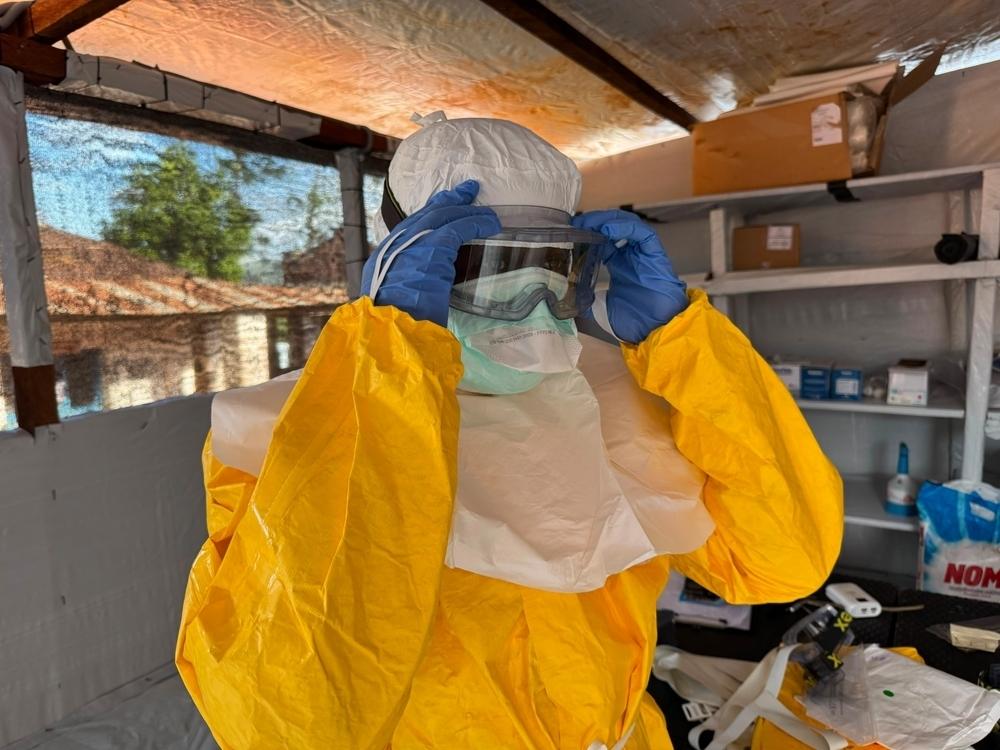
Inside MSF’s Ebola treatment centers in DRC amid the outbreak
Weeks after the Ebola outbreak began in the Democratic Republic of Congo and Uganda, Médecins Sans Frontières (MSF) is scaling up its response to contain the virus. Our teams take you inside their treatment centers in Goma and Bunia in Ituri—ground zero of the outbreak—where efforts are focused on combating the seventeenth epidemic.
Mounting epidemiological toll
With testing capacity expanded in late May, the DRC Ministry of Health updated its data. As of June 4, 2026, official figures from the INRB in the Democratic Republic of Congo stand at:
- 381 confirmed cases;
- 64 confirmed deaths;
- 233 suspected patients currently in isolation.
In Uganda, the situation remains under close watch with 19 reported cases and one death as of June 5.
MSF expands and rehabilitates Ebola treatment centers
Bunia: scaling up amid patient surge
In Bunia, the treatment center is overwhelmed. By June 5, it was caring for 37 suspected and 7 confirmed patients. To curb transmission risks, the center is expanding. « We are preparing a new site and will double capacity to 70 beds within days », explains Anthony Kergosien, MSF Emergency Coordinator in Bunia. If needed, the facility could scale up to 100 beds.
Goma: reopening a historic treatment hub
In Goma, MSF reopened a dedicated treatment center to isolate suspected cases and treat confirmed patients. First admissions began on May 28.
« This center was used during past outbreaks. Teams start by talking to patients, reassuring them about procedures, explaining care protocols, average length of stay, and sample collection », says Tathy Modjaka Nzoko, MSF Medical Activity Manager in Goma.
Protecting health workers and winning community trust: the cornerstones of the response
Securing medical teams against the virus
Healthcare workers are equipped with personal protective gear to shield themselves from the Bundibugyo virus. Its infectious dose is extremely low. « A few viral particles in the wrong place—eyes, mouth—can trigger infection », notes Armand Sprecher, MSF Emergency Physician and Epidemiologist.
The PPE’s primary purpose is to keep the Ebola virus off the skin. « It must be fluid-resistant since the virus spreads through bodily fluids. This is critical because we lack the usual vaccines and treatments », he adds.
Forging trust within local communities
To ensure rapid isolation of patients, outreach and education are vital. « Trust between MSF and local populations is essential. Families naturally care for loved ones at home. Yet we need them to come to treatment centers immediately. The protective suits can make us look like outsiders, creating hesitation. We explain that many of our staff in these suits are people they know », Sprecher explains.
Transferring skills and training frontline teams
To mount a large-scale response, MSF emphasizes knowledge sharing. Specialized training sessions are held in a Belgian center before teams deploy. « Every Ebola outbreak highlights the importance of knowledge transfer. Within MSF, many experts have extensive epidemic response experience. We send these seasoned professionals—or train others—to ensure we know what we’re doing », Sprecher notes.
Understanding the Bundibugyo virus: key features of this outbreak
Unlike previous waves in the DRC, this epidemic is driven by the Bundibugyo Ebola virus (part of the orthoebolavirus family, which includes Zaire and Sudan strains).
While the fatality rate for Bundibugyo (25–40%) is lower than classic Ebola, the response faces a major hurdle: no approved vaccine or treatment exists for this strain.
MSF’s humanitarian mission continues nationwide
Hundreds of MSF staff remain deployed in affected areas of Ituri and North Kivu, with new care capacities being set up in South Kivu. Each week, several tons of medical and logistical supplies arrive in the DRC from international hubs to support the intervention.