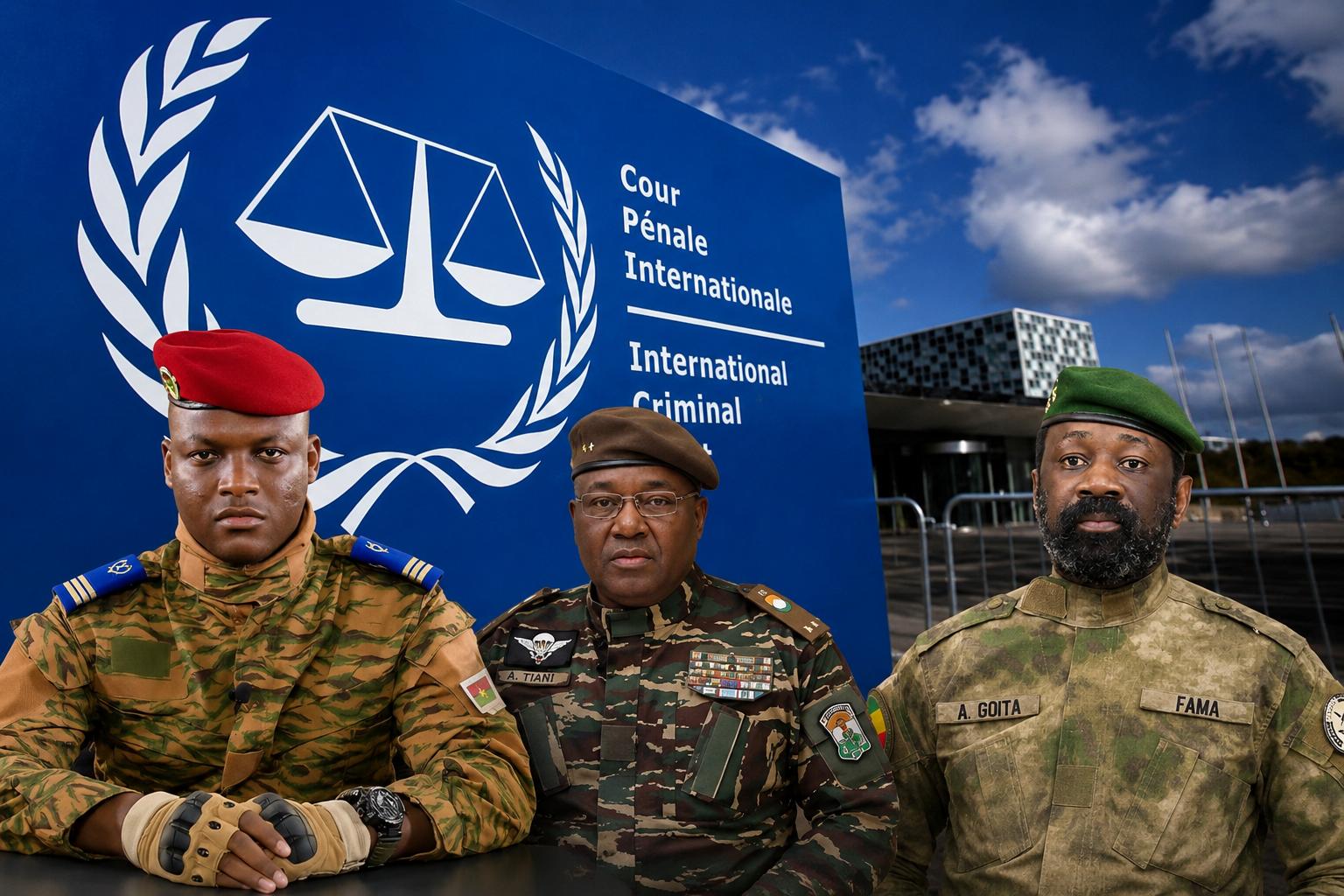

The decision to sever ties with the International Criminal Court (ICC) has sent shockwaves through the Sahel. Following Niger’s lead, the military juntas in Mali and Burkina Faso have formally withdrawn from the Rome Statute, the treaty that established the ICC. While their governments cite a quest for “sovereignty” and condemn a supposedly “politicized” justice, the move reveals a calculated strategy to shield their leaders from accountability.
The timing is no coincidence. In a matter of weeks, Niamey, Bamako, and Ouagadougou have each sent notifications to the United Nations, signaling their exit from the global legal framework designed to prosecute war crimes, crimes against humanity, and genocide. For these regimes, the ICC represents an unacceptable threat—one that could, in theory, hold their own forces accountable for atrocities committed in the name of “security.”
From rhetoric to reality: the ICC as a shield for autocrats
The juntas frame their withdrawal as a stand against “neo-colonialism,” portraying the ICC as a tool manipulated by Western powers. Yet this narrative masks a far darker purpose. By severing ties with The Hague, they aim to create a legal vacuum where no international body can scrutinize their actions. This is not just about avoiding scrutiny—it’s about institutionalizing impunity to prolong their grip on power.
In a region scarred by relentless conflict, the stakes could not be higher. Reports consistently document horrific abuses not only by armed groups but also by state forces and their allies, including foreign mercenaries operating in the Sahel. With the ICC’s jurisdiction removed, these governments ensure that neither they nor their allies will face consequences for crimes committed against civilians.
Populist posturing versus the fear of justice
The argument that the ICC targets Africa selectively has lost all credibility. Recent cases in Ukraine and the Middle East prove the court’s reach extends far beyond the continent. Yet for these juntas, the illusion of “sovereignty” serves a critical function: it justifies crackdowns on dissent, silences independent media, and stifles civil society—all under the guise of resisting foreign interference.
History offers a clear lesson. Regimes that withdraw from the ICC often do so out of desperation, fearing prosecution for crimes committed at home. The case of Burundi, which exited the court in 2017 amid accusations of mass violence, serves as a cautionary tale. The Sahel juntas are following the same playbook: suppress opposition, eliminate checks on power, and sever ties with international observers to operate without oversight.
The human cost of immunity
While the juntas celebrate their “sovereign” victory, the real losers are the civilians caught in the crossfire. Trapped between the brutality of armed groups and the unchecked violence of state forces, they are left without recourse. Even though the ICC retains jurisdiction over crimes committed while the Rome Statute was in effect, the withdrawal sends a chilling message: these regimes are granting themselves carte blanche to perpetrate violence without fear of consequences.
History has shown time and again that impunity does not bring stability—it only delays reckoning. For the people of the Sahel, the withdrawal from the ICC is not a step toward sovereignty. It is a descent into deeper lawlessness, where the strongest impose their will without accountability.