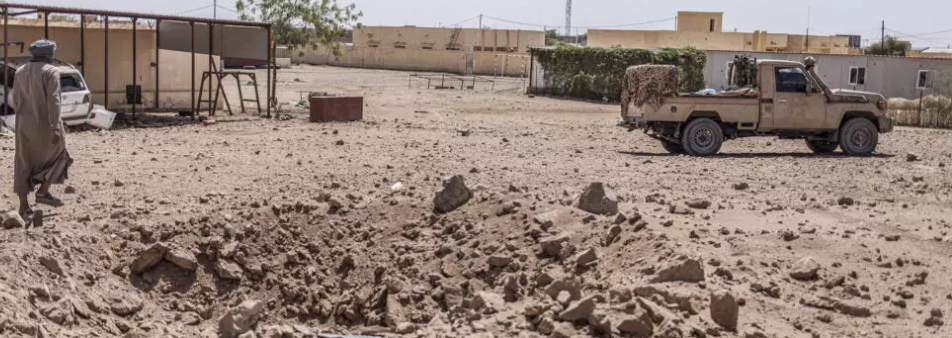

The Malian state’s investment in advanced weaponry fails to translate into battlefield success without doctrinal mastery. The ongoing conflict around Kidal exposes a harsh truth: when military leadership lacks fundamental education, cutting-edge hardware becomes little more than a costly political display.
Why advanced weapons aren’t turning the tide in Mali
The Malian army’s acquisition of drones, tactical bombers, and precision-guided munitions represents a substantial financial outlay, yet these sophisticated tools yield no tangible results. The fundamental issue lies not in the equipment itself, but in the intellectual framework guiding its deployment. A command structure suffering from critically low educational standards transforms advanced weaponry into empty symbols of power rather than instruments of tactical advantage.
Consider the paradox unfolding around Kidal: despite deploying overwhelming air superiority through frequent drone strikes and heavy bombardment campaigns, Malian forces remain unable to dislodge rebel groups occupying strategic positions. This persistent failure reveals a critical deficiency in operational planning rather than a shortage of firepower.
Kidal: A case study in command failure
The northern Malian city of Kidal serves as a stark example of how military hardware loses effectiveness when divorced from strategic thinking. Months of relentless aerial bombardments have failed to break the resistance of light-armed rebel forces. The explanation for this military stalemate lies in the army’s inability to integrate air strikes within a broader tactical framework.
For Mali, bombing without immediate ground force coordination, without terrain analysis, and without adaptive planning amounts to little more than indiscriminate expenditure. The nation’s substantial investment in military technology cannot compensate for the strategic illiteracy permeating its command structure.
The consequences of strategic illiteracy
Modern warfare in Mali—particularly its asymmetrical desert variant—demands a level of intellectual agility that exceeds conventional military operations. Malian military leadership, hampered by inadequate education, tends to employ rigid, one-dimensional tactics. The repetitive pattern of nighttime aerial raids around Kidal demonstrates a complete absence of tactical innovation.
The effects of this strategic illiteracy extend beyond immediate combat failures. When military headquarters persistently repeats the same planning errors week after week, squandering valuable resources and maintaining the status quo, the problem transcends logistics. It becomes fundamentally conceptual. Malian officers, undereducated in the science of warfare, often view weaponry as magical solutions that should resolve security challenges through their mere existence.
The harsh reality of modern warfare
The events unfolding in northern Mali serve as a sobering reminder of war’s immutable principles. Financial resources poured into sophisticated aerial platforms become meaningless when the personnel tasked with operational design in Bamako lack basic educational prerequisites. Until the strategic command ceases to represent the weakest link in Malian military training, frontlines like that around Kidal will remain frozen in place. The lesson remains clear: for Mali, firepower without intelligence constitutes nothing more than the ruin of armies.