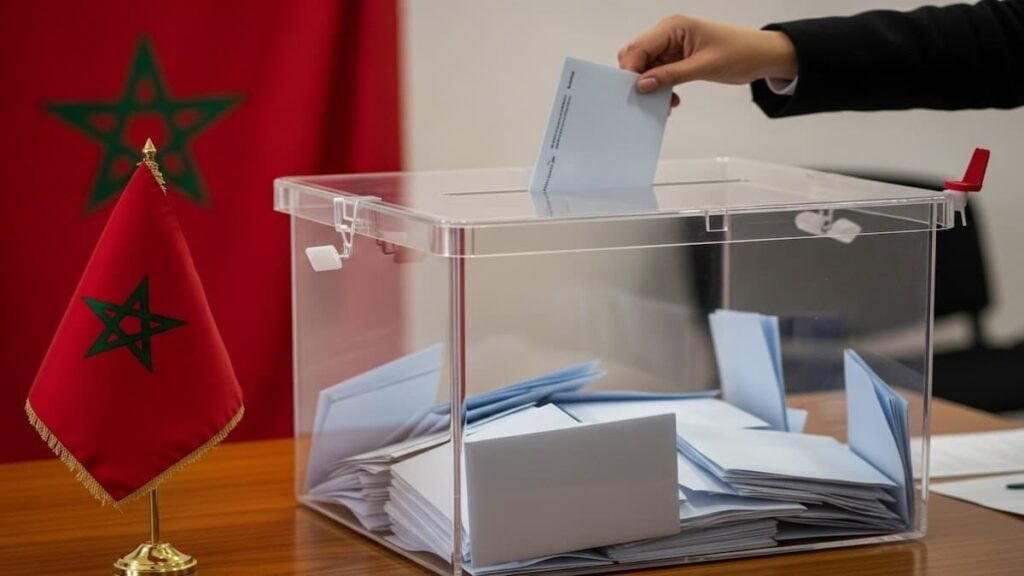

Morocco’s RGPH 2024 census has exposed stark demographic shifts that are reshaping the country’s electoral landscape ahead of the 2026 legislative elections. With rapid urban sprawl in peripheral zones, dwindling populations in historic city centers, and stagnation in rural areas, the distribution of eligible voters is now more uneven than ever before. This growing imbalance raises critical questions about whether the current electoral map can still ensure fair representation.
Urban expansion vs. political representation: a widening gap
The census data reveals that Morocco’s urban population has surged to 23.1 million, accounting for 63% of the national total, up from 58% a decade ago. Meanwhile, rural areas, home to 13.7 million people, have seen minimal growth. This urbanization has not been contained to city cores; it has spilled into surrounding municipalities, creating new political hotspots where population growth outpaces legislative representation.
In some provinces, the ratio of eligible voters per parliamentary seat now stretches to extremes. While sparsely populated southern regions like Aousserd (2,992 voters per seat) and Tarfaya (5,368 voters per seat) enjoy disproportionate political weight, major urban centers like Tanger-Assilah (213,980 voters per seat) and Ménara (Marrakech) (176,256 voters per seat) struggle to secure proportional influence. Such disparities highlight a fundamental flaw in the current electoral system.
Peripheral growth vs. stagnant city centers: a demographic paradox
The census also uncovers a paradox in Morocco’s urban dynamics. While historic districts like Casablanca-Anfa have hemorrhaged population—dropping from 453,000 to 332,000 residents in ten years—their political representation remains unchanged, locking in a ratio of 68,707 voters per seat. Meanwhile, neighboring municipalities such as Nouaceur, whose population has doubled to 665,000, must make do with just 3 seats, translating to 155,172 voters per seat.
This imbalance is not confined to Casablanca. In the Rabat-Salé-Kénitra region, core districts like Rabat-Océan and Rabat-Chellah register ratios of 55,856 and 59,598 voters per seat, respectively, while the sprawling Skhirat-Témara area, with its soaring population, faces a ratio of 141,832 voters per seat.
The political stakes of electoral redistricting
Adjusting the electoral map to reflect these demographic realities presents a complex political challenge for the 2026 elections. If the Interior Ministry opts to reallocate seats without increasing the total number of representatives in the Chambre des représentants, it would likely involve transferring seats from declining urban centers to fast-growing peripheries. However, reducing the number of seats in a constituency intensifies electoral competition, favoring established parties with robust financial and organizational structures—such as the RNI, PAM, and Istiqlal—over smaller ones.
Conversely, increasing the number of seats per constituency lowers the threshold for parliamentary entry through proportional representation mechanisms, potentially benefiting smaller parties via the “plus fort reste” system.
Rural loyalty vs. urban abstention: the electoral paradox
Despite Morocco’s urban shift, a significant portion of the electorate maintains ties to their rural hometowns, registering and voting there to preserve local influence. This loyalty contributes to exceptionally high turnout in rural areas—sometimes exceeding 90% of registered voters—while urban constituencies, particularly among the middle class, grapple with abstention rates as high as 70% to 80%.
The ongoing voter registration and list revision campaigns aim to address these discrepancies by updating records for citizens who have relocated from city centers to expanding peripheries, correcting inaccuracies, and ensuring a more reliable electoral roll for the September 23, 2026 elections.
The 2026 elections: a test for Morocco’s middle class and urban mobilization
The demographic shifts uncovered by the RGPH 2024 present strategic challenges for the upcoming elections. The middle class in major urban centers, hit hard by inflation and disillusioned by targeted social reforms, largely abstained in 2021. Their potential return to the polls in 2026—whether as a protest vote or in support of alternative platforms—could significantly alter the political landscape.
Political parties are now navigating a delicate balance. The ruling coalition parties, including the RNI, PAM, and Istiqlal, must defend their economic and social records in a post-inflation context, while opposition groups like the PJD seek to capitalize on urban discontent and rally their base, which has grown disillusioned with local governance.
Ultimately, reconciling the demographic realities of the 2024 census with the need for balanced territorial representation will require precision and foresight from policymakers. While no official announcement on electoral redistricting has been made, the new population data has set the stage for an inevitable technical and political debate as Morocco approaches the 2026 legislative elections.