
Ivory Coast’s political longevity: A fresh perspective on Ouattara’s leadership
- News
- Politics
Ivory Coast’s political longevity: A fresh perspective on Ouattara’s leadership
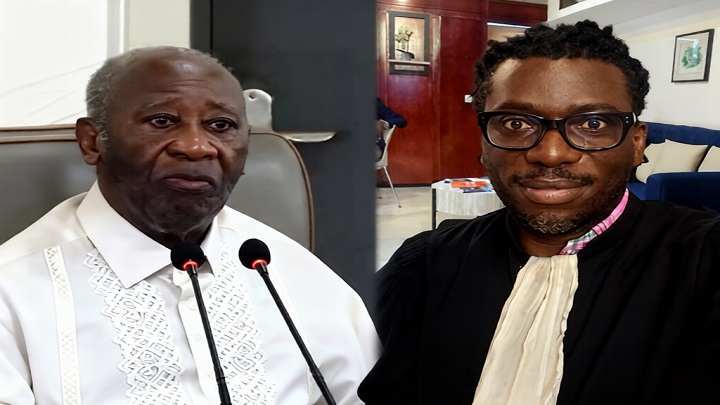
The recent reaffirmation of Laurent Gbagbo’s leadership at the helm of Ivory Coast’s Party of African Peoples (PPA-CI) has reignited debates about political longevity in the country. Following the party’s first ordinary congress in Abidjan, prominent lawyer Ange Rodrigue Dadjé has forcefully argued that criticism of President Alassane Ouattara’s decision to remain in politics is no longer tenable.
« We can no longer reproach President Ouattara for choosing to stay in politics after stating his intention to retire, » Dadjé declared on May 15, 2026, a statement that has since sparked intense discussion both in political circles and on social media.
This bold assertion comes at a time when Laurent Gbagbo’s own political future remains a focal point of Ivorian politics. The PPA-CI congress, held over two days in mid-May, saw Gbagbo re-elected by acclamation, defying earlier indications that he sought to step back from active political leadership. Just months prior, in an October 2025 interview with journalist Alain Foka on AFO Media, Gbagbo had explicitly stated his intention to refrain from holding political office after the December 2025 legislative elections.
« There is no retirement in politics, but I will refrain from holding political positions, within my party or in the state. I have given enough, » Gbagbo had affirmed at the time. At 81 years old, having been acquitted by the International Criminal Court in 2021, the former president appeared ready to pass the torch to a new generation within the PPA-CI. Yet, the party’s congress took a decisive turn when Gbagbo declared, « I remain for the fight, » under thunderous applause from delegates, effectively ending speculation about his definitive withdrawal.
Political realities versus initial commitments
The contrasting paths of Ouattara and Gbagbo have reshaped the political landscape in Ivory Coast. Ouattara’s own political journey has been marked by similar shifts. In 2020, his decision to seek a third term—after earlier suggesting he would step aside—sparked widespread controversy, with opposition figures, including those from the PPA-CI, condemning what they saw as a betrayal of his word.
Yet, by July 2025, Ouattara had formally announced his candidacy for the October 2025 presidential election, this time for a fourth term. At 83, he framed his decision as a necessity to ensure national stability amid regional security and economic challenges. « This decision, born of careful reflection, is a duty, » Ouattara stated, emphasizing that it was made in « the supreme interest of the Nation. »
The shifting dynamics of political leadership
Gbagbo’s re-election at the PPA-CI congress has, for many, underscored the weight of grassroots support in shaping political decisions. The episode raises a critical question: Can veteran leaders truly step away from politics when their followers continue to demand their leadership? The events in Abidjan suggest the answer remains elusive.
For observers, the unfolding scenario highlights a broader trend in Ivorian politics—where the demands of the moment often override prior pledges of retirement. Whether these dynamics will reshape public perceptions of leadership longevity remains to be seen, but one thing is clear: Ivory Coast’s political stage is far from static.
The lawyer’s remarks, in particular, have reframed the debate, positioning Ouattara’s continued presence not as a deviation from principle, but as a pragmatic response to the realities of governance and public expectation.