
Sahel trade routes: malian supply chains hit by rising convoy attacks
Sahel trade routes: malian supply chains hit by rising convoy attacks
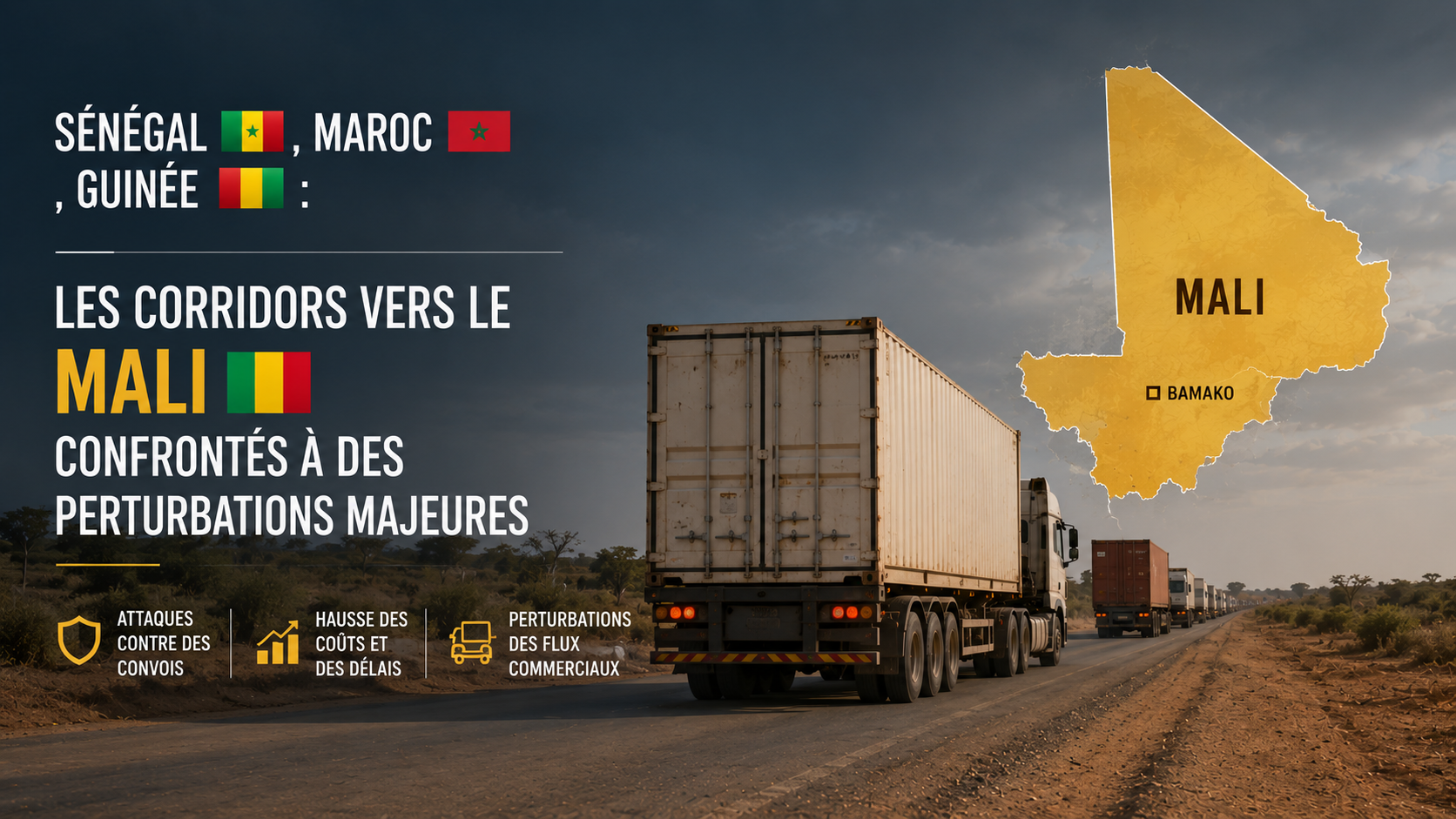
Transport operators across Senegal, Morocco and Guinea are facing mounting disruptions on critical corridors leading to Mali, with freight delays and soaring costs forcing major operational shifts.
- Transport

Regional transporters are drastically rethinking their operations as persistent attacks along key Malian supply routes escalate freight costs and delivery timelines. The combined pressure of security threats and operational uncertainties is reshaping logistics networks that connect Bamako to its primary trade partners.
Mali, a landlocked nation, relies heavily on cross-border road transport for critical imports. The Dakar-Bamako corridor remains a lifeline, handling approximately 2.6 million tons of cargo annually via the Port of Dakar. Recent security incidents have prompted transporters to reconsider viability, with at least eleven Senegalese trucks en route to Bamako burned in suspected attacks over the past weeks. Industry groups now advise drivers to curtail or halt certain routes, citing untenable economic risks.
The situation intensified on May 6 when armed groups targeted commercial convoys along the Mauritanian border route to Bamako. Reports indicate over fifteen trucks—including Moroccan, Senegalese, and Mauritanian vehicles—were ambushed, with six Moroccan trucks set ablaze. This single incident has sent shockwaves through transport networks, particularly in Morocco, where operators are now exercising extreme caution when dispatching vehicles to Malian destinations.
Financial calculations for transporters have shifted dramatically. Rising insurance premiums, vehicle immobilization costs, heightened security spending, and extensive rerouting are eroding already slim margins on long-distance hauls. The ripple effects extend beyond freight companies, with drivers facing prolonged wait times, convoy formations becoming standard practice, and families left in limbo as loved ones remain unreachable for days.
The Guinea-Mali corridor, another key trade artery connecting Bamako to the Port of Conakry, has also come under strain. Attacks reported in late April have severely slowed traffic, reducing alternative logistics options when other routes face disruptions. These constraints are exacerbating storage costs, delaying deliveries, and stifling regional trade flows. When multiple corridors are simultaneously compromised, the consequences reverberate across Mali’s supply chains, logistics timelines, and cross-border commerce.
Three years after Mali, Burkina Faso, and Niger realigned their security partnerships—moving away from Western allies and toward closer ties with Russia—the Sahel continues to grapple with entrenched instability. This volatile environment is increasingly disrupting regional trade, with transporters from Senegal, Morocco, and Mauritania voicing grave concerns over the escalating risks on Malian routes.