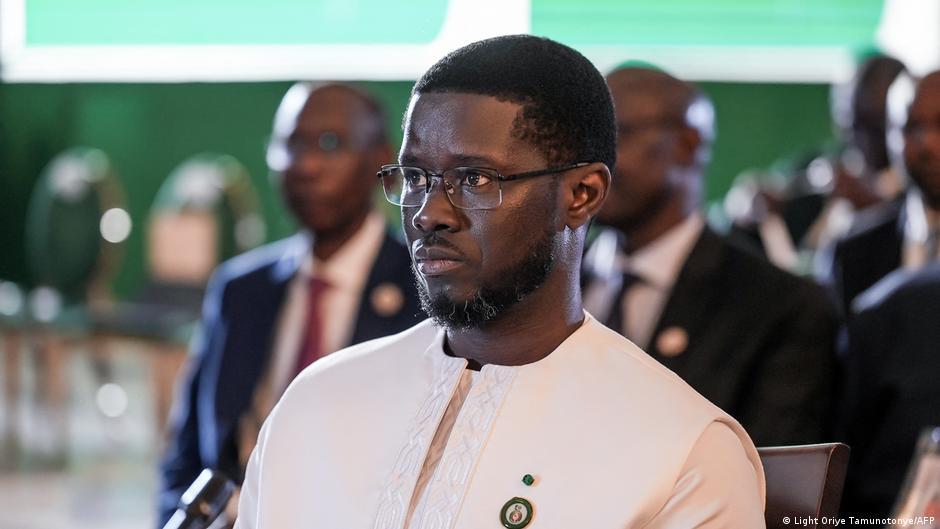

In Senegal, the political landscape is shifting as opposition forces rally around President Bassirou Diomaye Faye, creating unexpected alliances against the ambitions of Ousmane Sonko and his Pastef movement. The latest move sees the Democratic Senegalese Party (PDS), led by former President Abdoulaye Wade’s son Karim Wade, publicly opposing the constitutional reforms championed by Sonko’s camp.
The PDS has called on its supporters to vote “no” in the upcoming referendum on the constitutional amendments, despite having previously aligned with Pastef in key elections. This decision reflects deeper tensions within Senegal’s opposition, where strategic interests often outweigh ideological unity.
President Faye has taken the bold step of submitting the contentious reforms to a popular vote, allowing citizens to decide on a law that would expand parliamentary powers while curbing those of the presidency. The amendments, proposed by Pastef, have sparked intense debate, with critics accusing Sonko of seeking to consolidate power through institutional changes.
From rivals to reluctant allies
In the 2022 legislative elections, the PDS and Pastef formed an alliance to challenge President Macky Sall’s ruling coalition. By early 2024, as the presidential race heated up, the PDS threw its support behind the Sonko-Faye ticket, despite initially backing Karim Wade’s candidacy. The move was seen as a calculated effort to expand Faye’s electoral base and counterbalance the influence of the outgoing administration.
However, the partnership proved fleeting. After Faye’s victory, the PDS remained outside his government, maintaining its independence. Analysts suggest the alliance was driven more by political pragmatism than shared ideology. “The PDS was in freefall after losing power,” noted Hamadou Tidiane Sy, director of the E-Jicom journalism school in Dakar. “They saw Faye’s rise as an opportunity to reposition themselves within the political sphere.”
Shifting loyalties in Senegal’s opposition
The current rift between Faye and Sonko has presented the PDS with another chance to redefine its role. While the party opposes the substance of the reforms, it has framed its opposition as a rejection of Sonko’s alleged attempts to centralize power. In a recent statement, the PDS urged voters to “block” the amendments, accusing Sonko of undermining democratic institutions for personal gain.
Sy argued that this stance reflects a broader trend among opposition groups: “Even those who don’t openly support Faye are uniting against Sonko. They see him as an obstacle to national reconciliation and a destabilizing force.”
The analyst added that Sonko’s increasingly radical rhetoric has alienated potential allies, pushing others toward Faye’s camp—at least temporarily. “This isn’t a lasting alliance,” he clarified. “It’s a tactical move to address immediate concerns and restore dialogue.”
Faye’s path to political consolidation
For President Faye, the shifting dynamics offer a strategic advantage. With growing dissent within Pastef, he is actively seeking new alliances to strengthen his position. Sy believes Faye is already preparing for a potential second term, distancing himself from his former party: “He no longer expects support from Pastef. His focus is on building a broader coalition under ‘Diomaye Président.’”
The analyst went further, suggesting that the rift with Pastef is irreversible: “For many in Pastef, Faye is already a traitor. The damage is done.”
As Senegal navigates this period of political realignment, the PDS’s decision to oppose Sonko’s reforms—while stopping short of fully embracing Faye—highlights the fluid and often unpredictable nature of the country’s opposition landscape.



