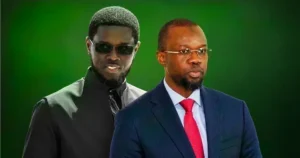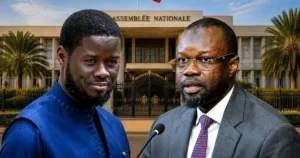

The political landscape in Senegal is witnessing heightened scrutiny as tensions between President Bassirou Diomaye Faye and Prime Minister Ousmane Sonko escalate into open confrontation. The opposition, particularly through Abdou Mbow of the Takku Wallu parliamentary group and the Alliance for the Republic (APR), has framed these dynamics as a political power struggle with deep institutional implications. Mbow, a former ally of ex-President Macky Sall, argues that the country is grappling with an institutional crisis that threatens stability.
Executive tensions: A fragile partnership
Elected together in March 2024 on a shared platform of radical reform, Faye and Sonko represented a dual leadership model championed by the Pastef party. Initially touted as a seamless division of labor between the presidency and the prime minister’s office, the partnership has increasingly shown cracks. Key areas of divergence include the pace of reforms, handling of judicial cases inherited from the previous administration, and the government’s political messaging.
Mbow’s assessment suggests these aren’t mere teething issues but signs of a hidden power struggle between two competing centers of influence. At the heart of the debate is the question of primacy: Sonko, as the undisputed leader of Pastef and victorious head of the November 2024 legislative ticket, wields significant political weight, while Faye holds constitutional authority over the executive. This tension, Mbow argues, risks undermining governance.
Opposition’s strategic narrative
The APR, led by former President Macky Sall, is leveraging these fissures to reposition itself as a guardian of institutional integrity. The Takku Wallu group, the main opposition bloc in the National Assembly, has intensified its rhetoric to frame internal government disputes as a looming institutional paralysis. By invoking the term “crisis,” Mbow shifts the debate from partisan politics to national stability—a tactic designed to undermine public trust in the executive’s decision-making.
This narrative carries weight given the stakes: critical economic reforms, including renegotiating mining and oil contracts, fiscal consolidation, and implementing the Senegal 2050 Agenda, demand cohesive leadership. Any perception of disunity risks eroding investor confidence, particularly as Dakar engages in delicate negotiations with the IMF over debt sustainability and hydrocarbon revenue frameworks.
Economic pressures amplify leadership stakes
The fragility of the executive partnership is exacerbated by Senegal’s economic challenges. Recent audits revealed public debt levels higher than previously reported, prompting tense discussions with the IMF. Managing this debt, alongside potential revisions to hydrocarbon fiscal frameworks tied to fields like GTA and Sangomar, requires a unified voice from both the presidency and the prime minister’s office.
Observers note a growing divergence in tone between Sonko’s confrontational approach toward economic actors, media, and judicial figures and Faye’s more institutional posture. While the government maintains a united front in public appearances, analysts argue this tacit division of roles—once a strength—now risks becoming a political liability for the opposition to exploit.
Despite the escalating rhetoric, neither the presidency nor the prime minister’s office has acknowledged an open rift. Official communications continue to project unity, with Pastef defending the partnership as a complementary model. Yet, Mbow’s framing of the situation as an institutional crisis is a strategic move to shape public perception and pressure the government into addressing perceptions of instability.
The stakes for Senegal extend beyond domestic politics. The executive’s ability to resolve these tensions will influence international partners and financial institutions, especially as the country finalizes new funding frameworks and structures hydrocarbon revenues. In this high-stakes environment, the narrative battle over leadership unity could prove as critical as the reforms themselves.