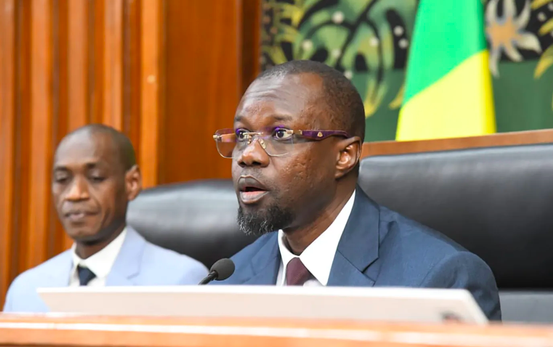

Dakar — The political landscape in Senegal has been shaken by fiery remarks from Ousmane Sonko, President of the National Assembly and leader of the Pastef party. Speaking on July 13, 2026, during the inauguration of the Pastef headquarters in Touba, he issued a stern warning to Prime Minister Al Aminou Lo, threatening to topple the government unless national interests are prioritized in upcoming oil and gas contracts.
a bold ultimatum against petroleum contract decisions
In a passionate address delivered entirely in Wolof, Sonko accused the Al Aminou Lo administration of compromising Senegal’s economic sovereignty by allegedly favoring multinational corporations in hydrocarbon deals. He specifically pointed to agreements involving energy giants BP and Kosmos, framing the situation as a return to the controversial practices of former President Macky Sall’s final years in office.
« We know perfectly well the role he played in this political crisis, » Sonko declared, referencing the Prime Minister’s past actions. This Sunday, however, he escalated his rhetoric, vowing to deploy institutional measures to prevent what he sees as a betrayal of Senegalese interests. « If they go ahead with this, if they fail to respect our nation, we will bring down this government, » he declared to a roaring crowd, signaling his readiness to introduce a no-confidence motion repeatedly until the perceived threats to national resources are neutralized.
legislative action to protect hydrocarbon assets
To counter the government’s alleged drift, Sonko announced plans to table a landmark bill within days. The proposed legislation would mandate that all future oil and gas block allocations receive prior approval from the National Assembly. « Before any petroleum block is awarded, it must first be presented to deputies for scrutiny and approval, » he asserted, drawing parallels with Norway’s transparent resource management model. This move aligns with Sonko’s long-standing advocacy for accountability in the energy sector, a crusade he began during his brief tenure as Prime Minister earlier this year.
During his time in the executive branch, Sonko spearheaded an audit of so-called « inherited contracts, » which he argued were incompatible with the national petroleum code. He hailed the renegotiation of key blocks like Yakaar-Teranga as major victories for Senegal. Now, however, he accuses the current administration of attempting to stall these renegotiations, particularly through recent leadership changes at Petrosen, the national oil company.
The unfolding standoff underscores a deepening divide between political factions over the management of Senegal’s burgeoning oil and gas wealth. As the country prepares to capitalize on its hydrocarbon potential, Sonko’s intervention signals a critical test of governance and transparency in resource governance.



