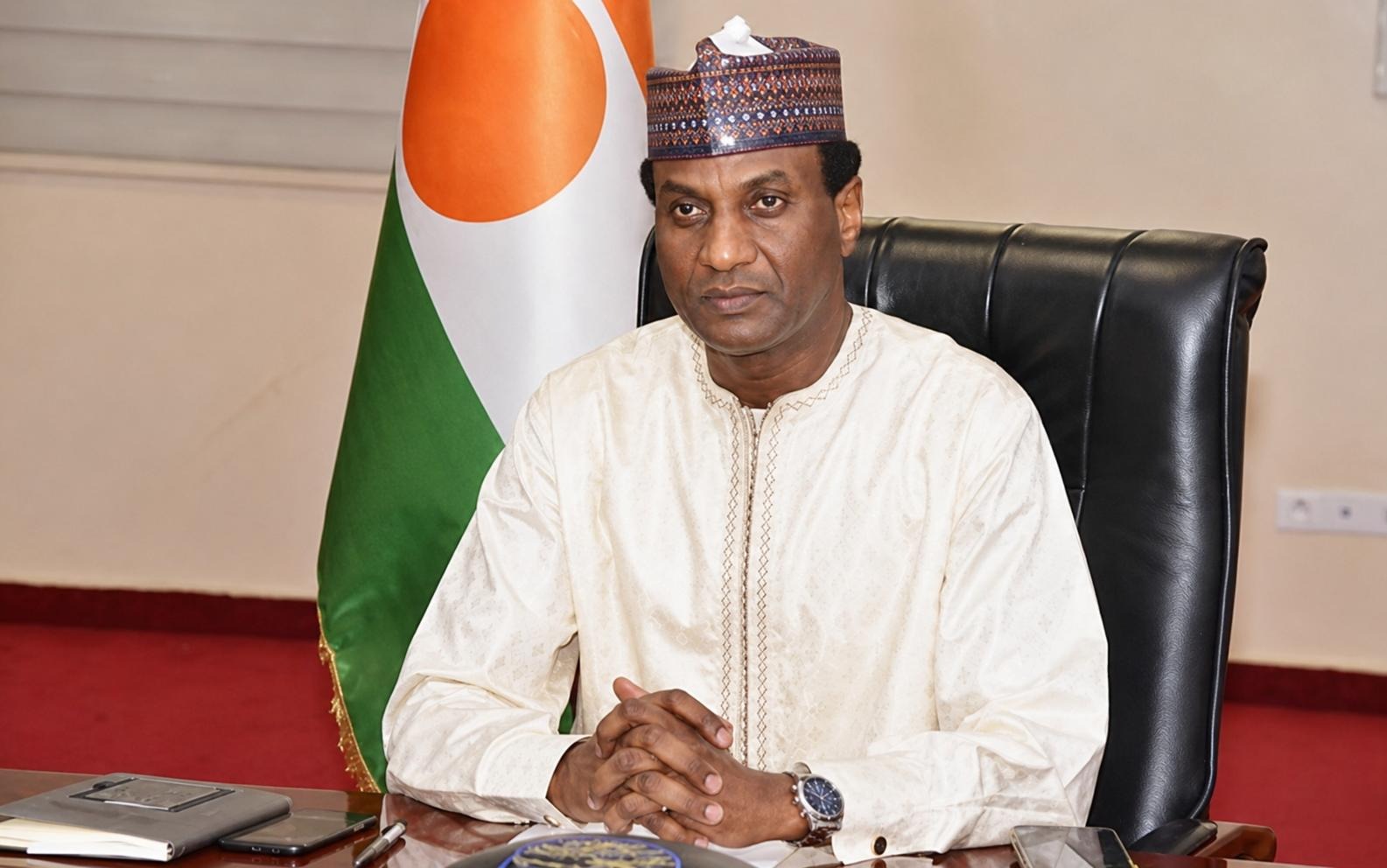

In the shifting sands of Niger’s military-led transition, the line between trusted ally and potential liability has proven dangerously thin for civilian leaders. The case of Prime Minister Ali Mahamane Lamine Zeine, once a key figure in the junta’s economic strategy, now exemplifies the precariousness of civilian roles under unchecked military rule.
Security measures or political containment?
The Prime Minister’s abrupt isolation has raised eyebrows across the capital. His usual security detail has been replaced without explanation, while even his closest associates now face stringent screenings before granted access. Officially, Lamine Zeine’s absence is attributed to a severe bout of malaria, yet behind the scenes, whispers of house arrest circulate unabated. The lack of transparency has only intensified speculation, particularly as the security measures resemble containment rather than protection.
The situation underscores a familiar pattern in Sahelian military transitions: the doctrine of absolute alignment. When civilian technocrats hesitate to toe the junta’s line—whether on policy or ideology—the security apparatus swiftly tightens its grip. Rather than risking a public purge that could spark unrest, the military prefers a subtler approach: gradual sidelining through restricted movement and heightened surveillance.
A calculated strategy of control
This method serves multiple purposes. First, it preserves the facade of institutional continuity while stripping the civilian leader of real decision-making power. Second, it allows the military to gauge reactions—from international partners, domestic factions, and public opinion—before taking more drastic steps. The approach is not just about suppressing dissent; it sends a clear message to the entire government apparatus: loyalty to the junta’s command is non-negotiable.
The Prime Minister’s predicament mirrors broader trends in the region. In Mali, former transitional leader Choguel Maïga faced similar pressures, while Burkina Faso’s Apollinaire Kyélem de Tambèla encountered obstacles that ultimately marginalized his influence. In each case, civilian leaders were valued only as long as they served as economic stabilizers or diplomatic fig leaves. The moment they diverged from the military’s agenda, their positions became untenable.
The illusion of civilian authority
For Lamine Zeine, the stakes could not be higher. His every move is monitored, his communications scrutinized, and his silence dissected. The episode underscores a harsh reality: in military-led transitions, civilian leaders may occupy visible roles, but their authority remains conditional. Trust is provisional, power is conditional, and the junta’s gaze is relentless. The current crisis is not just about one man—it is a test of how far the military will go to ensure unchallenged dominance, even at the expense of institutional credibility.