What happens after Iran’s Hormuz offer? Global reactions and the road ahead
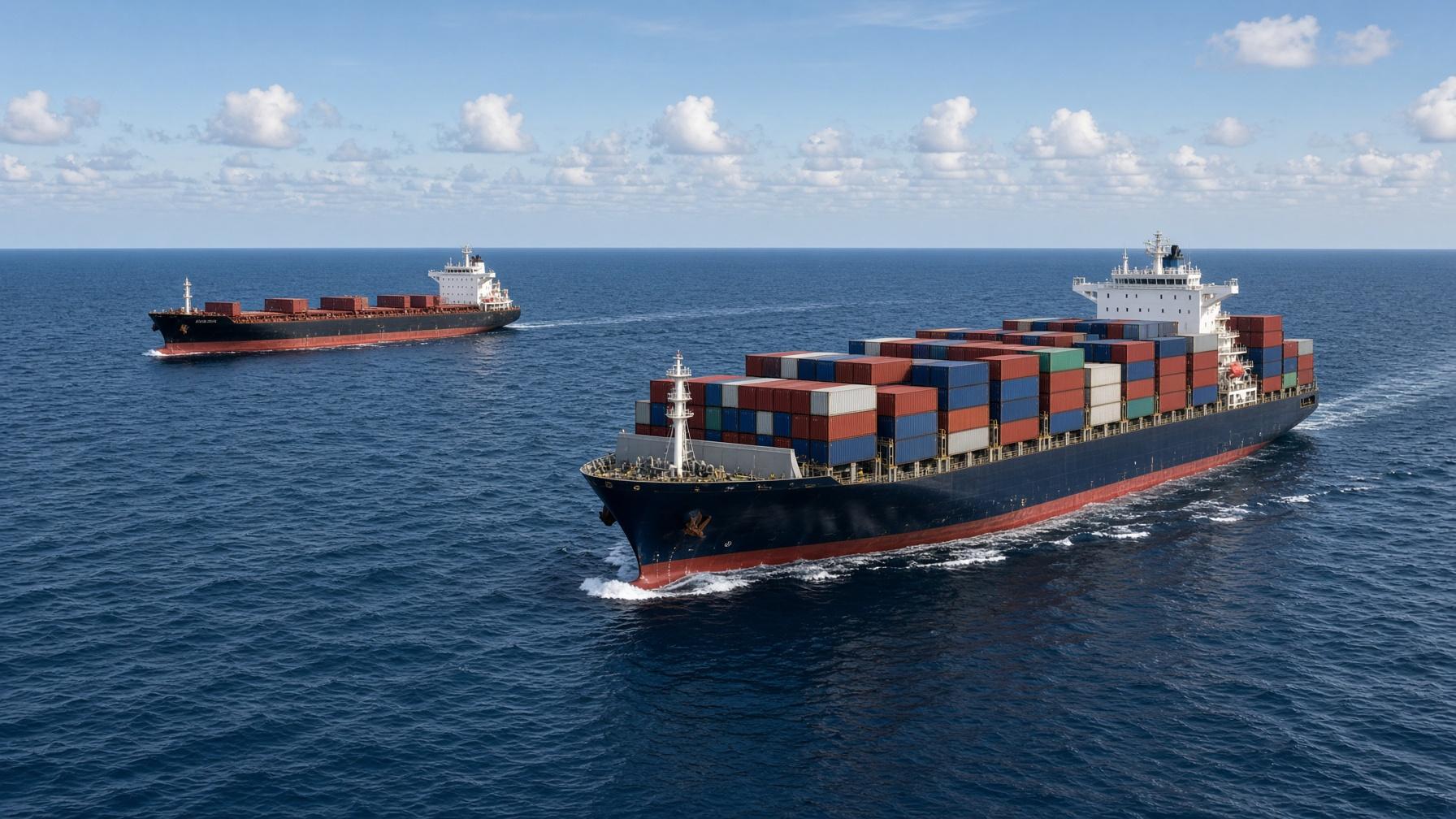
The diplomatic corridors of the United Nations headquarters in New York have rarely felt this tense. As the Middle East crisis teeters on the edge of a full-scale rupture, Iran has placed a decisive card on the negotiating table — and the world is now reacting to what could be the first real opening in weeks. Iranian Foreign Minister Abbas Araghchi told an assembled group of international media that a concrete offer has been formally handed to the United States, aimed at lifting the blockade of the Strait of Hormuz within a seven-day window.
The proposal was delivered on Tuesday to U.S. envoy Steve Witkoff, according to the Iranian top diplomat, who made clear that the next move belongs to the White House. Tehran, which has been heavily disrupting maritime traffic through the strategic chokepoint since the recent escalation, is proposing a tight timetable to defuse a crisis that threatens to drag the global economy into an uncontrolled recession.
Reactions pour in as Washington weighs its response
While the exact contents of the document remain shielded by diplomatic confidentiality, Araghchi has made no secret of the fact that a seven-day reopening would not come without significant concessions. Iran is demanding an immediate halt to strikes targeting its strategic infrastructure, a targeted easing of economic sanctions, and firm guarantees regarding the withdrawal or redeployment of Western naval forces operating in Gulf waters.
For Tehran, control over Hormuz has once again proven to be its ultimate deterrent. By threatening freedom of navigation through this vital artery, the Islamic Republic is seeking to convert its military isolation into political leverage against Washington and its allies. “We are not seeking to perpetuate the closure of the strait, but the security of our waterways is inseparable from the overall security of our nation,” the Iranian minister insisted before journalists.
International reaction has been swift. Asian chancelleries — with China, Japan and South Korea among the largest buyers of oil passing through the strait — are intensifying pressure on both sides to reach a compromise without delay. In European capitals, officials are weighing the risks of a prolonged energy shock against the political implications of appearing to yield to what some describe as maritime blackmail.
The economic fallout: oil markets on edge and supply chains under strain
The announcement of the reopening offer comes at a critical moment. Since the gradual blocking of the strait began, the global economy has absorbed a genuine shock. Measuring barely 33 kilometers at its narrowest point, the Strait of Hormuz is the planet’s most critical maritime highway: roughly 20% of global crude oil consumption and a third of liquefied natural gas (LNG) normally transit through it every day.
The consequences of the disruption have been immediate and devastating:
- Energy prices have surged: Within days, Brent crude prices spiked dramatically, crossing alarming thresholds. Fears of a sustained supply disruption are fueling speculation on financial markets, raising concerns about an oil shock comparable to those of the 1970s.
- Transport and insurance costs have exploded: Faced with threats of attacks, ship seizures and missile fire, maritime insurance companies have raised war-risk premiums to prohibitive levels — when they have not simply refused to cover tankers.
- The costly African detour: To avoid the Gulf, many shipowners have ordered their vessels to reroute around Africa via the Cape of Good Hope. This detour adds at least two weeks to journeys, generating colossal fuel surcharges and tying up the global fleet.
- The risk of widespread inflation: The combined rise in fuel and maritime freight prices is already filtering through global supply chains. For consuming nations, particularly in Europe and Asia, the specter of a new wave of inflation and fuel shortages at the pump is becoming extremely concrete.
A strategic dilemma for the White House
In Washington, the Iranian proposal places the American administration before a major strategic dilemma. Rejecting Araghchi’s offer would mean accepting the prolongation of an energy crisis that destabilizes both the U.S. and global economies, at a particularly delicate political moment. Accepting Tehran’s conditions within seven days, however, could be perceived by regional allies as a concession to Iranian maritime coercion.
So far, American diplomacy has not publicly reacted to the details of the plan delivered to Steve Witkoff. Behind the scenes, however, discussions are reportedly intense, with officials weighing the cost of inaction against the precedent of rewarding disruption.
What comes next: seven days that will shape the global economy
The coming week is shaping up to be decisive. Between the hope of a rapid diplomatic de-escalation in New York and the fear of a lasting conflagration in the Gulf, the fate of the world economy currently hangs on a few nautical miles. Markets, governments and consumers alike are watching closely — because what happens in the Strait of Hormuz over the next seven days will echo far beyond the region’s waters.