
Africa’s economic giants drive nearly 60% of continent’s gdp
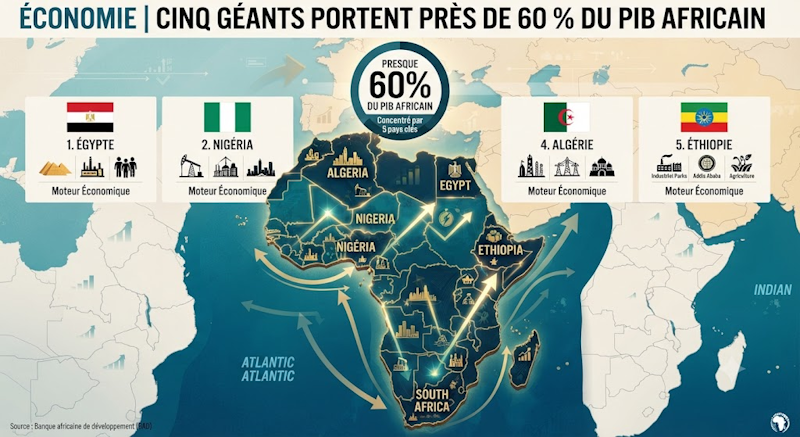
Five African nations dominate the continent’s economic landscape
Fresh data from the African Development Bank reveals that just five countries account for nearly 60% of Africa’s total GDP. The powerhouse economies leading this charge are Nigeria, South Africa, Egypt, Algeria and Ethiopia—each playing a pivotal role in shaping the continent’s economic trajectory.
This concentration of wealth isn’t coincidental. These nations leverage vast natural resources, strategic industrial bases, robust domestic markets and heavy infrastructure investments to drive their growth engines. Their combined influence extends beyond borders, setting the pace for broader continental development.
What sets these economic leaders apart?
- Nigeria and Egypt stand out for their massive populations and rapidly diversifying economies, moving beyond traditional sectors to embrace technology, manufacturing and services.
- South Africa remains the continent’s industrial and financial epicenter, with advanced sectors like mining, finance and technology leading the way.
- Algeria draws strength from its energy wealth and public investment initiatives, fueling consistent growth despite global market fluctuations.
- Ethiopia has emerged as a high-growth economy, fueled by aggressive industrialization and large-scale infrastructure projects like railways and industrial parks.
The stark contrast: uneven progress across the continent
While these five nations propel Africa’s economic engine, their dominance also exposes deep disparities among African countries. Many struggle with limited industrialization, narrow economic bases, restricted access to capital and high unemployment. The challenge now is to translate the success of these giants into broader, inclusive growth that lifts all regions.
The road ahead: balancing growth for sustainable development
Economists emphasize that sustainable progress in Africa hinges on reducing this imbalance. The goal? Ensuring that smaller economies can leverage regional trade, attract investment and build competitive industries—not just depend on the momentum of the continent’s heavyweights.
As Africa’s largest economies continue to expand, their choices today will determine whether the next decade brings shared prosperity or widening inequality across the continent.