
The decision by Niger’s transitional government to pivot from Russian mercenaries to Algerian military support wasn’t made on a whim. Behind the diplomatic maneuvering lie unaddressed security failures, shifting geopolitical priorities, and a growing financial burden that could reshape the nation’s future. But as Algiers prepares to deploy troops, questions linger about the true motivations and who will ultimately foot the bill.
From Moscow to Algiers: Why Niger’s Security Bet Isn’t Paying Off
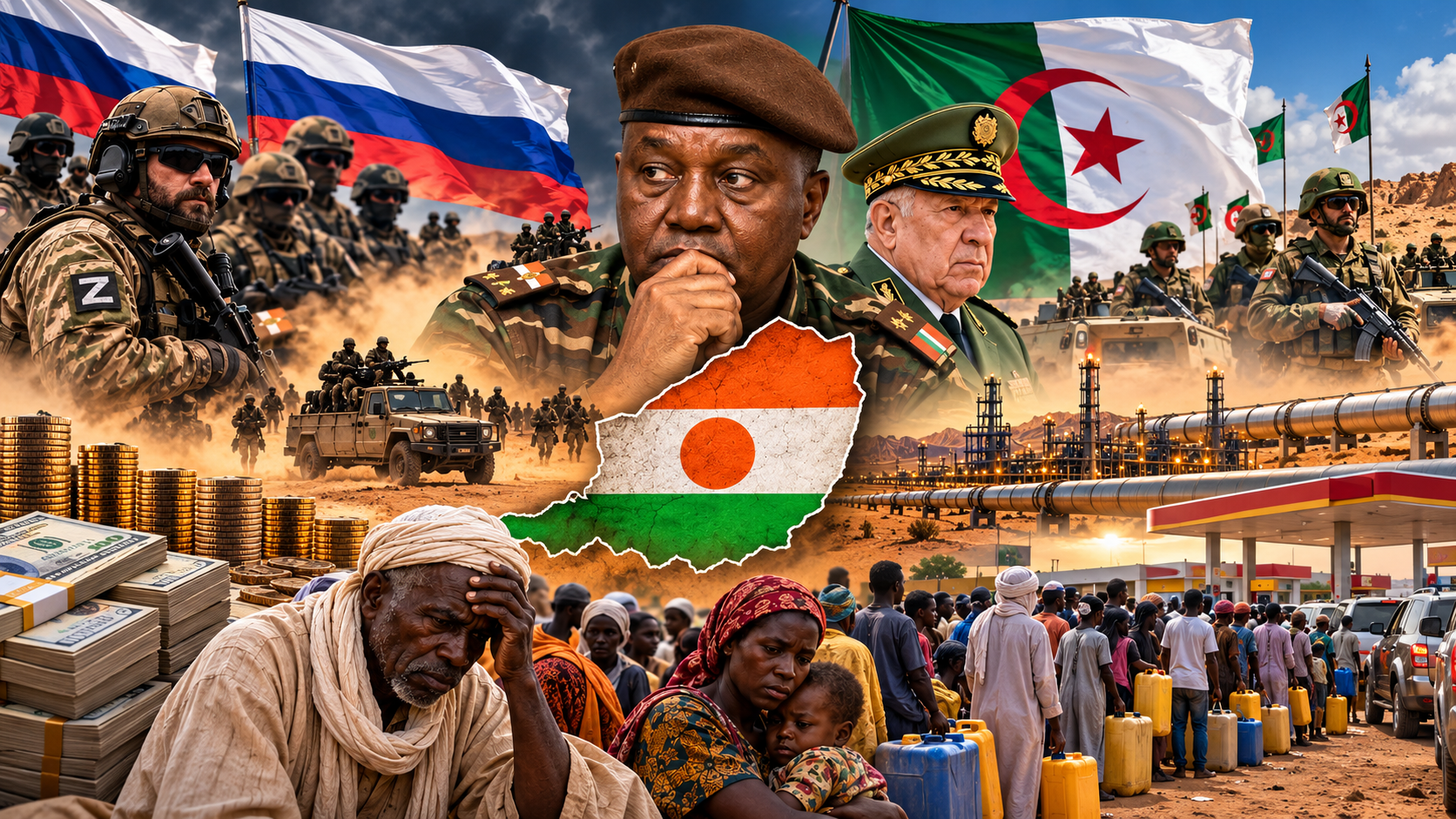
When General Abdourahamane Tiani’s regime took power in July 2023, the promise was clear: bolster Niger’s defenses by diversifying its military partnerships. Russia’s Africa Corps was supposed to fill the void left by waning Western influence, offering rapid deployment and, crucially, minimal political strings attached. Yet two years later, the results have been underwhelming.
Despite the presence of Russian contractors, the country’s security situation remains precarious. Villages continue to face attacks, key infrastructure is vulnerable, and the state’s authority is still contested in vast swathes of territory. Worse, reports suggest that the financial cost of these mercenaries allegedly reaching $10,000 per fighter per month—has placed an unsustainable strain on Niger’s already strained budget. Without verifiable contracts or measurable improvements in protection, the partnership’s value is increasingly questioned.
Unproven efficacy: No public data confirms a measurable reduction in attacks or enhanced civilian safety since Russian forces arrived.
Hidden costs: Alleged high fees per mercenary raise concerns about whether Niger’s national budget can sustain such expenses long-term.
Lack of transparency: Neither Algiers nor Niamey have clarified the exact terms of these engagements, leaving Nigerien citizens in the dark about what’s being traded for security.
Algeria’s Calculus: Energy, Security, or Both?
The October 2026 decision by Algeria’s Parliament to authorize troop deployments to Niger marks a historic shift in the region’s power dynamics. Traditionally hesitant to intervene beyond its borders, Algiers is now positioning itself as a key security actor in the Sahel. But its motivations extend beyond altruism.
Algeria’s interests in Niger are deeply intertwined with energy security. The country is a critical corridor for proposed oil and gas projects, including the Trans-Saharan Gas Pipeline a venture that would link Nigerian gas reserves to European markets via Algeria. Securing these routes isn’t just a business proposition; it’s a strategic imperative for Algiers, which views the Sahel as a buffer against instability.
For Niamey, this could mean dual benefits: enhanced military support and economic leverage. Yet the partnership’s structure remains opaque. Will Algeria’s forces focus solely on protecting energy infrastructure, or will their mandate include broader counterinsurgency operations? Who funds the deployment the Algerian government, Niger’s treasury, or a mix of both? And what guarantees exist that Algerian boots on the ground will translate to tangible safety for ordinary citizens?
The Bill Comes Due: Who Pays for Niger’s Military Realignment?
The financial implications of this new alliance are as unclear as they are potentially vast. If Algerian troops require logistical support, housing, or supplies within Niger, the costs could be substantial. Will these expenses be covered by bilateral agreements, or will they add to Niger’s national debt? And with the country’s social services education, healthcare, and infrastructure already underfunded, every dollar spent on foreign militaries reduces what’s available for development.
Transparency is non-negotiable. Niger’s government has championed sovereignty as a core principle, but sovereignty also means accountability. Citizens deserve to know:
What are the exact roles, responsibilities, and timelines for Algerian forces?
How will the financial burden be shared between the two nations?
What safeguards ensure that military spending doesn’t come at the expense of essential public services?
Without answers, the risk is real: a costly military partnership that leaves Niger’s people bearing the consequences of opaque decision-making. The government’s rhetoric of independence rings hollow if its actions are driven by desperation rather than strategy.
Sovereignty vs. Security: Can Niger Afford to Keep Outsourcing Its Defense?
Tiani’s regime has framed its military realignment as a sovereign choice a rejection of former alliances and a move toward self-reliance. But sovereignty isn’t just about rejecting partners; it’s about proving that those partnerships serve the nation’s interests. If Russian mercenaries failed to deliver security, and Algerian troops are now expected to succeed, the government must justify why this time will be different.
History offers few examples where foreign military interventions in the Sahel have delivered lasting stability. The pattern is familiar: initial promises, followed by prolonged deployments, and ultimately unmet expectations. For Niger to break this cycle, its leaders must prioritize measurable outcomes over symbolic gestures. That means:
Clear operational goals: Defining what success looks like fewer attacks, protected civilians, or secured supply routes and how it will be achieved.
Public accountability: Sharing the terms of agreements, cost-sharing mechanisms, and progress reports with citizens.
Long-term planning: Ensuring that military spending doesn’t cannibalize funds for education, healthcare, and infrastructure.
The alternative is a dangerous precedent: a government that outsources its security challenges to foreign actors, hoping for solutions while avoiding the hard work of building a sustainable, transparent defense strategy. Niger’s citizens deserve better than to be the bill-payers in a high-stakes gamble they never signed up for.
The Bottom Line: Security for Whom?
Algeria’s intervention in Niger could mark a turning point in the Sahel’s security landscape. It could also be yet another chapter in a cycle of dependence, where foreign partnerships substitute for national capability. The true measure of this alliance won’t be in the number of troops deployed or the meetings held on either side of the border. It will be in the lives of ordinary Nigeriens whether they feel safer, whether their communities are protected, and whether their government’s choices ultimately serve their interests.
Until then, the questions remain unanswered, the bills unpaid, and the shadow of doubt looms over Niamey’s military gamble.
By Moussa Samuel Coulibaly — Journalist