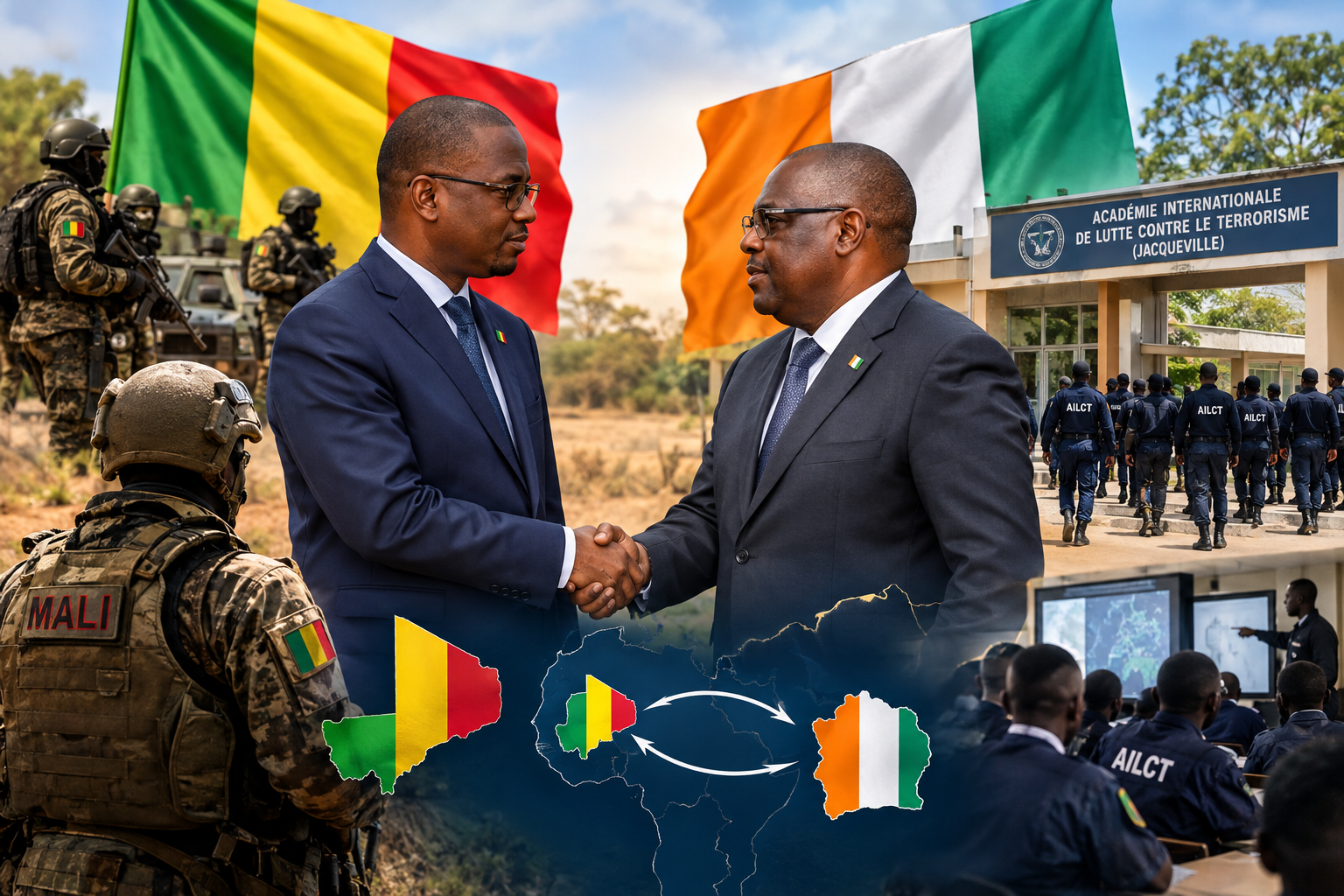

The upcoming visit of Côte d’Ivoire’s intelligence chief to Bamako is more than a diplomatic formality it’s a strategic opportunity to dissect the root causes of ineffective counterterrorism efforts in the Sahel. Scheduled for mid-October 2026, this meeting between Vassiriki Traoré and his Malian counterpart Modibo Koné, director general of Mali’s Agence nationale de la sécurité d’État (ANSE), is designed to uncover the hidden dynamics shaping regional security cooperation.
Why Bamako is looking beyond its borders for solutions
Mali’s ongoing struggle with terrorism has exposed critical gaps in its security apparatus. Unlike its neighbors, Côte d’Ivoire has managed to avert major attacks through a combination of rigorous intelligence gathering, inter-agency coordination, and specialized training. The question now is whether Bamako can adapt these methods to its own complex conflict landscape.
Key areas where Ivorian expertise could reshape Mali’s approach
The dialogue will likely focus on three core domains where Côte d’Ivoire’s experience stands out:
Intelligence-led operations: Abidjan’s security services have developed predictive models that allow for preemptive strikes against terrorist networks, a stark contrast to Mali’s largely reactive strategy.
Multi-layered training: The Ivorian counterterrorism academy in Jacqueville trains soldiers not just in combat, but in area-specific tactics, cultural awareness, and logistical planning.
Civil-military integration: Unlike many Sahelian states, Côte d’Ivoire has successfully integrated community leaders into its security framework, reducing insurgent recruitment in vulnerable regions.
The untold story of Abidjan’s counterterrorism playbook
What makes Côte d’Ivoire’s model particularly intriguing is its modus operandi. The Jacqueville academy, operational since 2021, doesn’t just teach standard counterinsurgency tactics. It focuses on:
Network analysis: Identifying and dismantling terrorist cells before they mobilize.
Cross-border collaboration: Leveraging Mali’s porous borders as both a vulnerability and an opportunity for coordinated strikes.
Judicial preparedness: Ensuring captured terrorists face swift trials with watertight evidence chains.
For Mali, adopting these frameworks would require more than political will it would demand structural reforms in a security sector long plagued by fragmentation.
Mali’s balancing act: sovereignty vs. operational efficiency
The timing of this visit is no coincidence. After years of frosty relations between Bamako and Abidjan, security cooperation is back on the table but with a twist. While Mali has historically prioritized autonomy in its counterterrorism strategy, the tide may be turning. The question now is whether Bamako can embrace Ivorian insights without compromising its sovereignty.
What real change would look like
To translate this meeting into tangible progress, Mali would need to:
Invest in a dedicated counterterrorism academy modeled after Jacqueville.
Formalize intelligence-sharing protocols with Côte d’Ivoire, including real-time threat alerts.
Expand joint military exercises to cover asymmetric warfare scenarios.
The visit alone won’t solve Mali’s security challenges, but it signals a pivotal moment: the acknowledgment that even the most robust national strategies can benefit from external expertise.
Lessons from the trenches: why borders matter in counterterrorism
Mali’s terrorism woes are exacerbated by regional dynamics. Insurgents exploit the lack of coordination between neighboring states, crossing borders with ease to evade detection. Côte d’Ivoire’s success lies in recognizing this reality and acting on it. By treating borders as active lines of defense rather than barriers, Abidjan has turned potential vulnerabilities into strategic advantages.
For Bamako, the takeaway is clear: in the fight against terrorism, isolation is a liability. Cooperation isn’t about surrendering control it’s about multiplying capabilities.
The upcoming discussions may be quiet, but their implications could echo across the Sahel. As Mali weighs its next moves, one thing is certain: the future of its counterterrorism strategy won’t be written in isolation.
By Moussa Samuel Coulibaly — Journalist