
From plan to action: Benin’s 2027 budget takes decisive leap
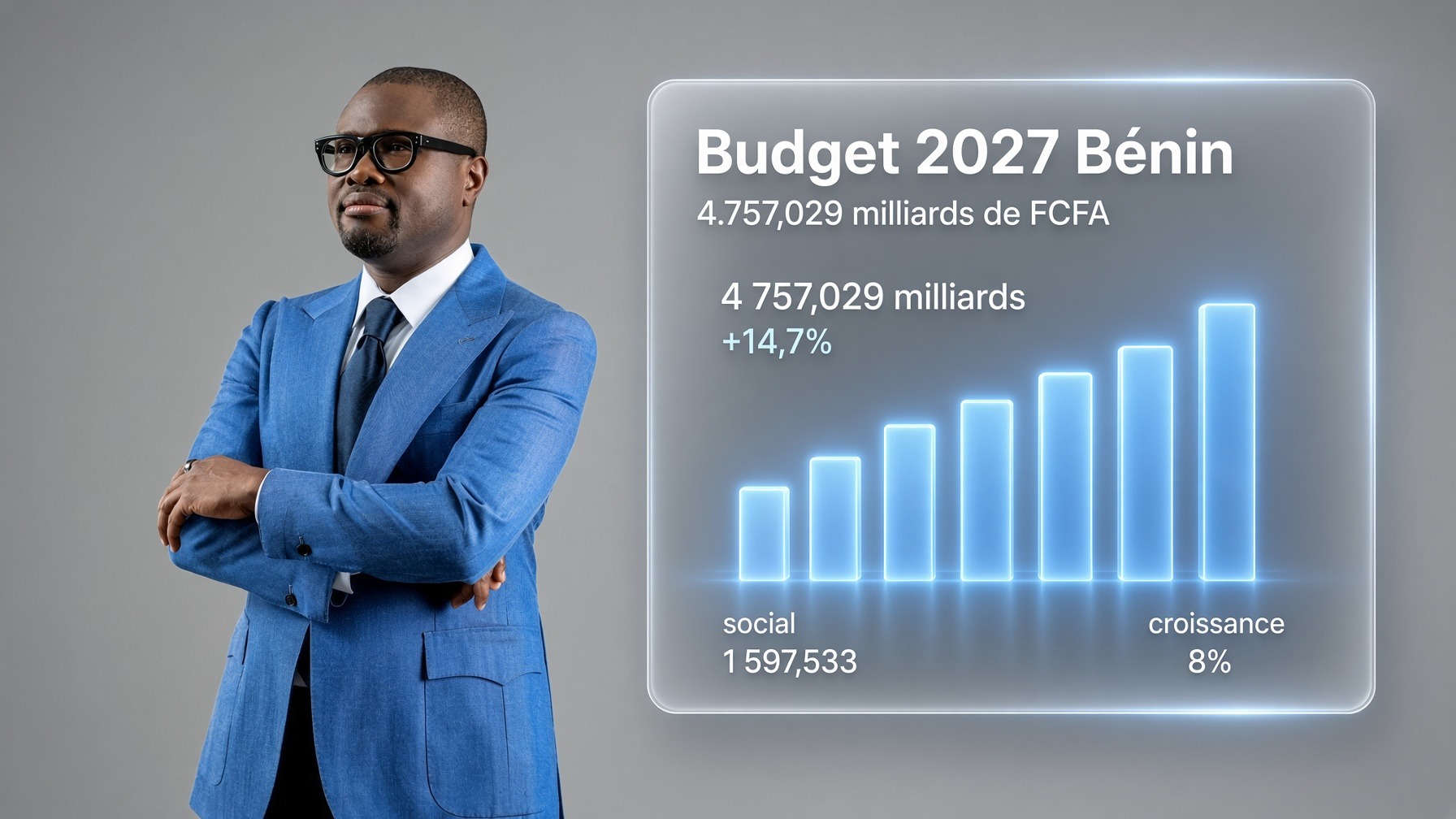
In a pivotal move for the country’s economic trajectory, the Beninese government has submitted to parliament a landmark budget proposal for 2027, setting a new high of 4,757 billion FCFA. This 14.7% increase from the previous year’s corrected budget reflects a clear commitment: accelerating economic growth, strengthening fiscal responsibility, and deepening investment in priority sectors. At the heart of this strategy lies a bold vision—to propel growth to 7.5%, cap the deficit at 2.8% of GDP, and drive structural transformation across agriculture, industry, education, and healthcare.
Investment surge targets 7.5% growth and beyond
With total resources and expenditures projected at 4,757.029 billion FCFA—an increase of 608.7 billion FCFA over the adjusted 2026 budget—the 2027 fiscal plan signals a major shift in public funding priorities. Government projections anticipate real GDP growth of 7.5%, maintaining inflation at just 2% while keeping the deficit within UEMOA’s 3% ceiling—a delicate balance that underscores Benin’s push for sustainable, inclusive progress.
Macro-level targets for 2027
The budget is built on several key economic anchors:
- Growth target: 7.5% real GDP expansion, led by private and public investment
- Deficit control: fiscal deficit capped at 2.8% of GDP in line with UEMOA standards
- Price stability: inflation projected at 2.0%, below the regional 3.0% threshold
- Macro fiscal stance: expansionary but anchored in debt sustainability and revenue mobilization
Five economic engines to power the transformation
The government has identified five strategic levers to drive this growth and ensure it translates into shared prosperity:
Agriculture: from survival to surplus
The modernization of agriculture is positioned as a cornerstone of transformation. Focused on boosting productivity, reinforcing value chains, and promoting local processing, the initiative aims to shift Benin from food import dependence to export-led growth in key agricultural value chains.
Industry: building value, creating jobs
A renewed push for industrial promotion seeks to unlock value-added production within Benin’s borders. By supporting SMEs, fostering export competitiveness, and attracting targeted foreign direct investment, the plan targets job creation in high-potential sectors such as textiles, agri-processing, and renewable energy.
Tourism and culture: leveraging Benin’s soft power
With a rising global appetite for authentic experiences, Benin is positioning its cultural and natural heritage as a new growth frontier. Investments in heritage conservation, digital tourism promotion, and hospitality infrastructure are expected to lift tourism’s contribution to GDP and create jobs in rural and coastal zones.
Technology and innovation: digitizing the future
The digital transformation agenda forms a cross-cutting pillar. From e-government platforms and fintech regulation to smart agriculture and digital identity systems, Benin is laying the groundwork for a knowledge-based economy. A national digital innovation fund and tech hubs in major cities are part of this vision.
Human capital: investing in people
No transformation is sustainable without a skilled, healthy, and empowered workforce. The government is prioritizing education reform, vocational training, youth employment schemes, and universal healthcare access as foundational investments in Benin’s most valuable asset—its people.
Public spending shifts toward high-impact sectors
The 2027 budget reallocates public expenditure toward high-leverage areas—education, health, social protection, agriculture, energy, water, digital transformation, industry, and tourism. The goal is to build durable physical and human capital capable of sustaining long-term growth and reducing inequality.
This investment strategy aims not only to enhance productivity but also to ensure equitable access to essential services, particularly for vulnerable populations and youth seeking dignified employment.
Social safety nets expanded to protect the vulnerable
Recognizing that growth must be inclusive, the budget earmarks 1,597.5 billion FCFA for social-sensitive expenditures—a 24% jump from 2026. This surge funds expanded safety nets, education, and health programs designed to lift households out of poverty and secure basic living standards.
Key social programs in 2027
- Continuation and nationwide rollout of free secondary education for girls, including technical streams
- Universalization of school feeding programs to improve learning outcomes and reduce dropout rates
- Scale-up of the ARCH (Assurance pour le Renforcement du Capital Humain) program, extending health and education coverage to low-income families
- Expansion of GBESSOKE, a cash transfer initiative for ultra-poor households, enabling economic empowerment through income-generating activities
- Launch of a national social benefits platform to streamline access to public assistance
- Institutionalization of a nationwide emergency social assistance service to respond to crises
Health sector gains momentum with five new regional hospitals
Health infrastructure takes center stage in the 2027 budget, with plans to construct five new regional hospitals and upgrade district health centers. The government is also intensifying nutrition programs, expanding childhood vaccination coverage, and reinforcing maternal and malaria control efforts. A systematic emergency care mechanism is being introduced to reduce response times and improve survival rates in critical cases.
These investments signal a determined move toward universal health coverage and a more resilient health system capable of adapting to future challenges.
Education reforms target infrastructure, equity, and employability
The education sector receives renewed focus with investments in school infrastructure, digital learning platforms, and teacher recruitment. Key initiatives include:
- Construction and rehabilitation of high schools and university facilities
- Universal deployment of digital education tools and essential school furniture
- Reform of the national scholarship system to align with labor market needs and prioritize STEM fields
- Progressive recruitment of qualified teachers and reform of automatic civil service career advancement
Local governments empowered through new funding mechanisms
In a bid to deepen decentralization, the 2027 budget reinforces financing for local authorities through the operationalization of the Fonds d’Investissement Communal (FIC) and new territorial development instruments. These tools aim to diversify revenue sources for communes, enhance project predictability, and promote transparent, equitable resource allocation across regions.
By giving municipalities greater autonomy and accountability, the government seeks to accelerate grassroots development and ensure that growth is felt in every corner of Benin.
From vision to reality: can the numbers deliver real change?
At 4,757 billion FCFA, the 2027 budget marks a turning point in Benin’s development narrative. The 14.7% increase, paired with a 24% rise in social-sensitive spending, signals a clear shift: toward economic diversification, job creation, reduced poverty, and improved public services.
Yet the true test lies not in the size of the budget, but in its execution. Success will hinge on effective project delivery, transparent governance, and continuous monitoring of outcomes. As parliament begins deliberations, the nation watches to see whether this historic investment translates into tangible progress—more jobs, better roads, stronger schools, healthier communities, and a more competitive Benin on the regional stage.