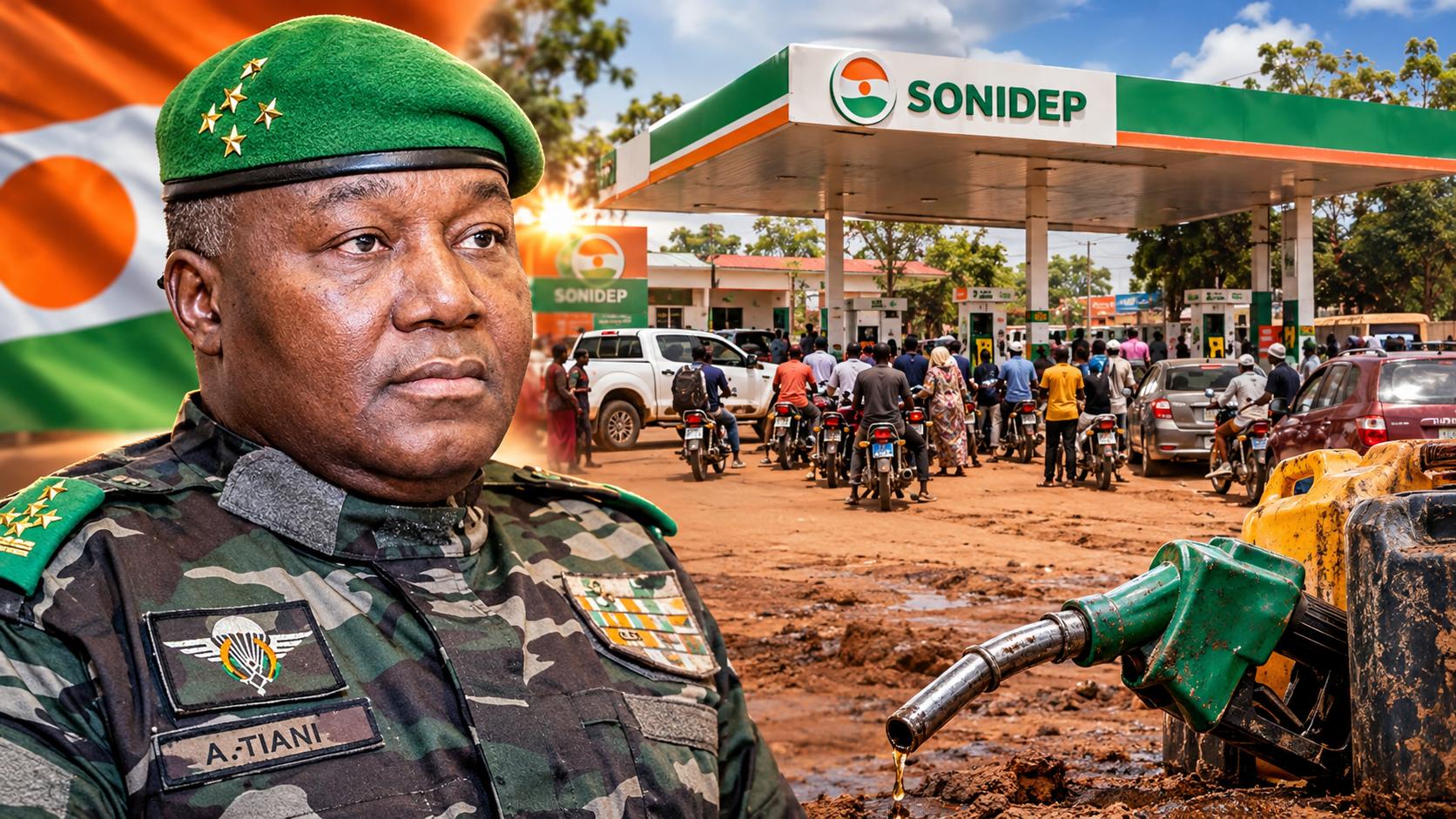

The Nigerien public is left questioning: can a fuel shortage vanish from official statements while clogging the streets?
Across urban areas, long queues snake in front of gas stations, yet state media dismiss the situation as a baseless rumor. Authorities insist no region in Niger is experiencing fuel scarcity—an assertion that stretches believability when faced with tangible evidence.
From denial to action: the tipping point in Niger’s energy crisis
Drivers and motorcyclists waiting for hours at fuel pumps are not figments of imagination. Nor are their experiences invented by digital manipulation. This disconnect between lived reality and official messaging raises a critical question: when the evidence contradicts the narrative, who should the people trust?
Lessons unlearned: how past crises failed to steer present responses
The pattern is familiar. From Bamako to Ouagadougou and now Niamey, military-led governments in the Alliance of Sahel States have grappled with the same challenge: balancing public messaging with harsh economic truths. In Mali, leaders openly acknowledged fuel supply disruptions in early 2026, attributing them to regional instability though they claimed measures had prevented severe shortages.
Yet Niger appears to have repeated the same mistake. Energy crises do not dissolve upon command; they manifest in fuel stations, transport networks, markets, and the daily lives of citizens. A policy of inexpensive fuel loses its value when that fuel becomes unattainable.
The hidden cost of cheap fuel in a strained economy
For months, Nigerien authorities championed historically low pump prices as a domestic triumph. However, a sustainable energy strategy cannot be measured solely by price tags. When supply falters, the consequences ripple through every sector: transporters, traders, farmers, businesses, and households bear the burden.
Transportation costs surge, increasing the price of goods.
Supply chains fragment as commercial vehicles struggle to refuel.
Agricultural output declines due to delayed fertiliser deliveries.
Businesses reduce operations or shut down temporarily.
Why transparency matters more than labels
The debate over whether to call the situation a “shortage” is secondary. What matters is clarity. If no scarcity exists, authorities could dispel doubt by releasing concrete data: stock levels, import volumes, operational stations, and regional supply status.
Numbers convey truth when slogans fail. The deeper issue arises when citizens observe shortages firsthand, yet are told to disregard what they witness. Across the Sahel, governments frequently condemn misinformation campaigns yet the most damaging narrative may be the one they propagate themselves.
The erosion of public trust: a crisis of credibility
When communication replaces action, distrust takes root. Populations in Mali, Burkina Faso, and Niger have faced compounded crises economic strain, security threats, and energy deficits none of which can be resolved through rhetoric alone. Governments decry external manipulation, yet their own refusal to acknowledge reality fuels internal skepticism.
The Nigerien administration can continue to deny a fuel shortage. But as long as lines persist, stations struggle to serve customers, and drivers seek alternatives, one truth will persist: denial does not erase existence.
By Moussa Samuel Coulibaly — Journaliste / Rédacteur
