
A turning point in cultural restitution: the Bénin momentum
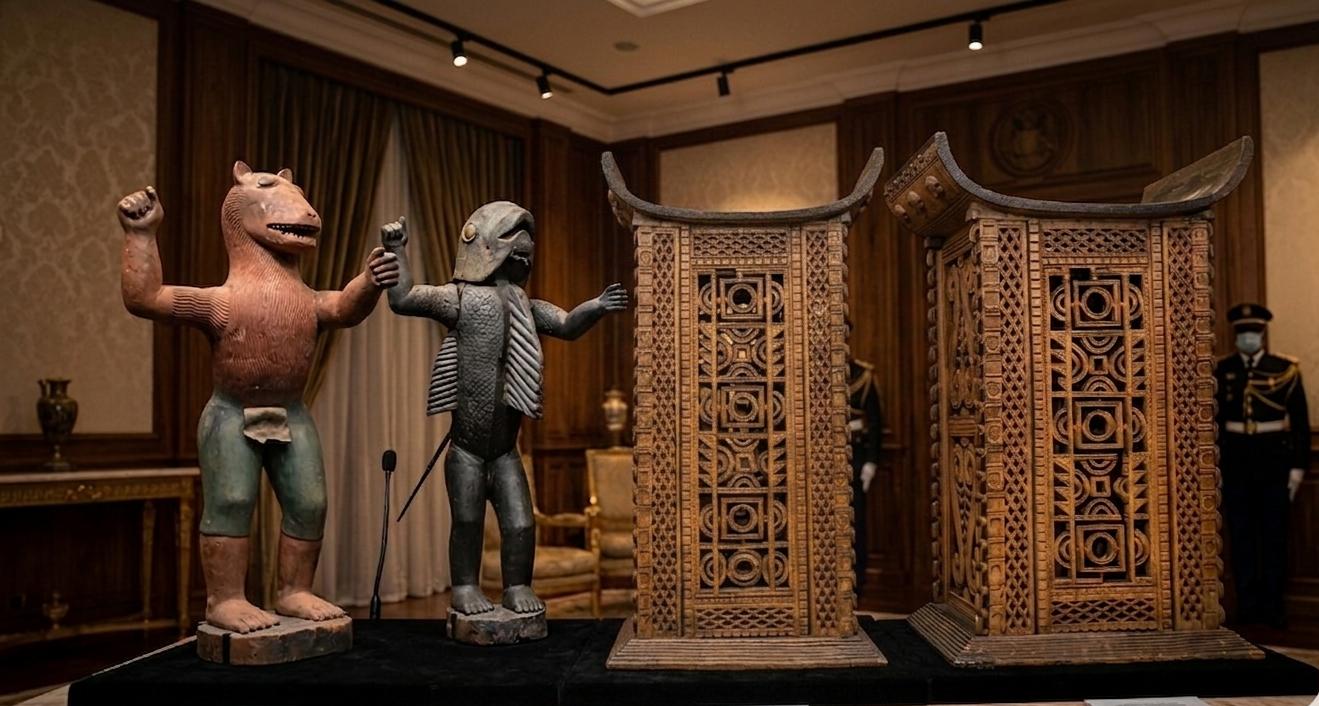
The Bénin has just launched a decisive new phase in its fight to recover its lost heritage. After the historic return of 26 royal treasures from Abomey in 2021, President Romuald Wadagni is now demanding the restitution of 35 additional cultural artifacts and historical documents held in France. This bold move marks a critical shift in the nation’s cultural sovereignty and sets the stage for a new chapter in the restitution debate.
From symbolic victory to strategic restitution
The government in Cotonou is not merely making a symbolic claim—it is executing a carefully planned strategy. The 35 requested items include royal regalia, sacred objects, and manuscripts tied to the historic kingdoms of Dahomey, Abomey, and Porto-Novo. Their return would not only restore visibility to these forgotten narratives but also strengthen Bénin’s national museums, allowing communities to reconnect with their collective past.
This initiative builds on the momentum created by the 2021 restitution of 26 royal artifacts, which electrified the country and established Bénin as a leader in the African restitution movement. That milestone proved that cultural recovery is not just about reclaiming objects—it’s about reclaiming identity.
More than memory: a cultural and economic revolution
The restitution push is part of a broader vision. President Wadagni is aligning cultural recovery with national development. The government is investing heavily in modern museum infrastructure to house the returned artifacts, including:
- The Royal Amazons and Kings of Danxomè Museum in Abomey – a flagship project dedicated to the kingdom of Dahomey
- The International Museum of Vodun in Porto-Novo – showcasing a spiritual tradition often misunderstood globally
- The Ouidah Slavery Memory Complex – highlighting the city’s pivotal role in the transatlantic slave trade
These projects aim to turn cultural heritage into economic engines—generating jobs, attracting foreign visitors, and positioning Bénin as a cultural destination. Ouidah’s museums, Porto-Novo’s architecture, and Abomey’s royal palaces are no longer just historical sites; they are assets for tourism, hospitality, and local entrepreneurship.
Preserving the past, empowering the future
But restitution is just the beginning. The real challenge lies in preservation and education. The returned artifacts require climate-controlled environments, expert conservation, and public interpretation. Bénin is training a new generation of museum professionals—curators, historians, and restorers—to ensure these treasures are not only preserved but understood.
In schools and universities, these objects are becoming teaching tools, helping students explore pre-colonial kingdoms, African resistance, and the cultural transformations that shaped the nation. The goal is clear: make heritage accessible, relatable, and meaningful to every citizen.
Shifting the global balance of cultural power
This latest demand from Cotonou also signals a tectonic shift in the global debate over African heritage. For centuries, European institutions held vast collections of African art and artifacts. Today, African nations are asserting their right to control and narrate their own histories. Bénin is not alone in this fight—but it is leading by example.
Each of the 35 items now under negotiation requires meticulous documentation, provenance research, and diplomatic negotiation. Yet, Cotonou’s message is unambiguous: the soul of Bénin’s identity cannot remain in foreign museums forever. These objects belong to the people of Bénin—and they are coming home.
Legacy as a foundation for tomorrow
The restitution of 35 cultural treasures from France is more than a political statement—it is an act of nation-building. By reclaiming its past, the Bénin is shaping its future. It is turning museums into classrooms, artifacts into symbols of pride, and heritage into hope.
As the dialogue with France advances, one thing is certain: the era of passive cultural loss is over. The era of active cultural restoration has begun—and Bénin is leading the way.