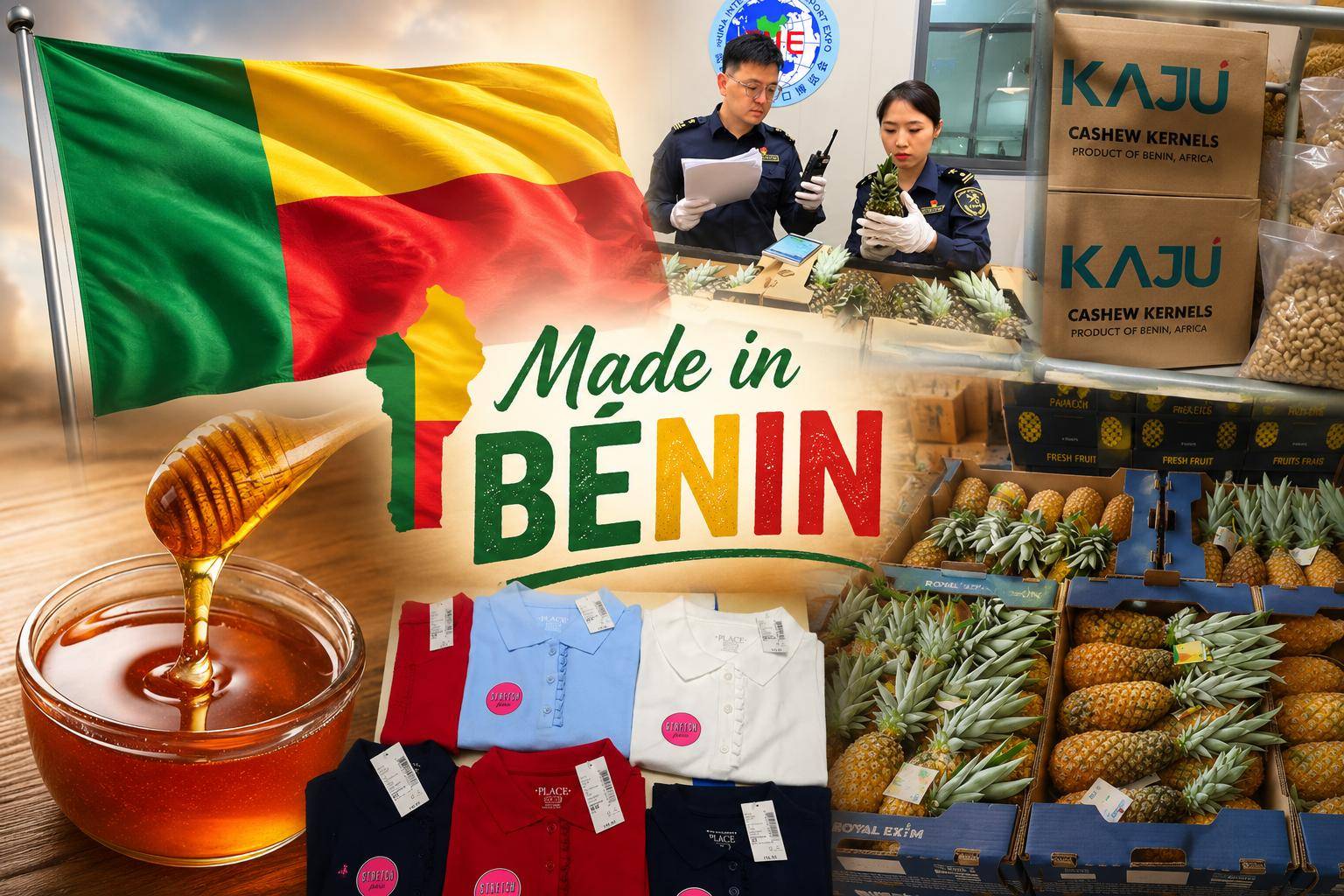

Bénin’s golden harvest: breaking barriers in global food trade
From the sugarcane-like pineapples of Allada to the soybeans of the Ouémé Valley and the honey harvested from the northern hills, Beninese agricultural products are now making waves in international markets. This surge in exports is no accident—it’s the result of a deliberate, multi-year strategy led by President Patrice Talon’s administration to meet the strictest customs and sanitary requirements. The story behind this green revolution reveals how local farmers are not only boosting their incomes but also reshaping the nation’s economic landscape.
The standard challenge: meeting global food safety demands
For years, Benin’s agricultural ingenuity was confined to domestic and regional markets, stifled by stringent phytosanitary regulations—especially those imposed by the European Union and China. The case of pineapple exports perfectly illustrates this hurdle. In 2017, Benin voluntarily suspended shipments to Europe due to compliance issues, forcing a complete overhaul of its export processes. Exporting isn’t just about supply and demand—it’s about meeting exacting standards, point by point.
Recognizing this bottleneck, the government took decisive action. Under President Patrice Talon’s leadership, substantial investments were poured into upgrading national laboratories, including the Beninese Agency for Food Safety (ABSSA). These structural reforms paid off, securing the certifications that now grant Benin permanent access to Western and Asian markets. Today, Beninese products aren’t just competitive on taste—they’re winning on traceability and uncompromising safety.
Honey: Benin’s “liquid gold” wins over Europe
The turning point came in February 2018, when the European Commission officially approved Benin’s honey for export to the EU. This milestone wasn’t just bureaucratic—it was a validation of the honey’s purity, sourced from sustainable, biodiversity-friendly beekeeping practices across the country’s north and central regions.
For Beninese beekeepers, this was a game-changer. No longer a modest local product, Beninese honey is now a sought-after luxury item abroad, prized for its unique flavors and therapeutic properties. The stable, premium pricing has made beekeeping an attractive livelihood for rural youth, offering a reliable income stream and fostering economic resilience in farming communities.
Diversified champions: global recognition for Beninese staples
While honey has been gaining traction in recent years, the pineapple sector achieved its own international milestone in October 2021. The Pineapple of Allada Plateau earned Benin’s first-ever Protected Geographical Indication (PGI) registration with the OAPI. Celebrated for its exceptional sweetness, this pineapple now reaches fresh produce aisles in the West or is exported as 100% pure juice, showcasing the freshness and quality of Beninese agriculture.
Soybeans—especially organic—are another success story, flying off shelves in Europe and Asia. Thanks to the Glo-Djigbé Industrial Zone (GDIZ), Benin has moved beyond raw bean exports, now offering high-value processed products. Even cashews are following the same upward trajectory: the gradual ban on exporting raw nuts has led to in-country processing, creating thousands of jobs and adding value before global distribution.
From farm to table: the human impact of export success
The benefits of this export boom extend far beyond macroeconomic statistics—they’re transforming lives on the ground.
“Today, we sell our crops with the confidence that we’re getting a fair price,” shares a soybean farmer from Savalou. The security of international market access has stabilized incomes, strengthened cooperatives, and reduced rural poverty. The push for compliance has also professionalized farming, with producers receiving training, adopting modern harvesting techniques, and reducing chemical inputs to protect the soil for future generations.
For Benin, this is more than an economic win—it’s a foreign exchange powerhouse and a strategic lever for balancing trade deficits. With agriculture employing over 60% of the active population, it’s clear that Benin’s fields are the engine of national development.
The “Made in Benin” brand: a seal of quality
Benin’s agricultural sector today bears little resemblance to its past. Through a combination of quality focus, institutional reforms, and certifications—from the 2018 honey breakthrough to the 2021 pineapple milestone—the country has carved out a prestigious niche on the global stage. From the golden honey of the forests to the lush pineapples of the plateaus, Beninese craftsmanship is now exported with pride.
This success story proves that with clear policy vision and the dedication of its producers, Africa can feed the world—excellently. The “Made in Benin” label is no longer just a tag—it’s a mark of prestige and trust, recognized far beyond the country’s borders.