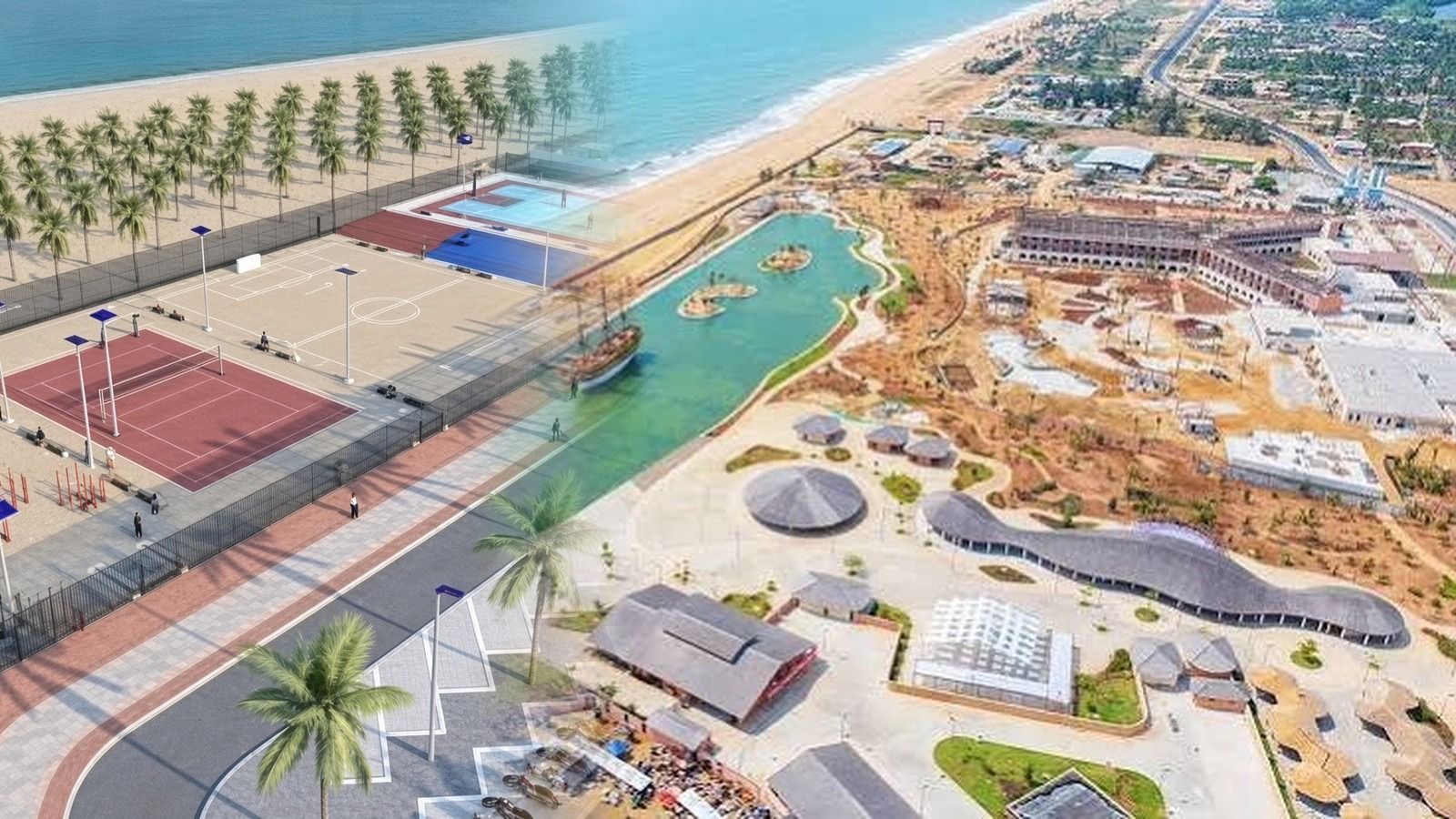

The government of Benin has taken a decisive step to reclaim control over a critical stretch of its southern coastline, launching a new authority tasked with steering the transformation of the Fidjrossè-Ouidah corridor. This initiative marks a turning point in the country’s ongoing struggle to harmonize economic growth with environmental sustainability, as urbanization and tourism expansion collide with the region’s delicate ecosystems.
Benin’s littoral at a crossroads
The Fidjrossè-Ouidah coastal corridor, once a mosaic of wetlands, fishing villages, and natural landscapes, now stands at the heart of Benin’s tourism and urban development ambitions. Once neglected, this area has become a focal point for large-scale infrastructure projects, landscaping initiatives, and hospitality ventures. Yet the rapid changes have come with a cost: the degradation of vital natural buffers like marshes and wetlands that regulate water flow and mitigate flood risks.
This tension between progress and preservation is not unique to Benin, but in this corridor, it has reached a tipping point. Unregulated land grabs and poorly managed construction have placed immense pressure on the environment. Now, with stakes this high, the government has moved to intervene—shifting from laissez-faire development to proactive stewardship.
Why wetlands are non-negotiable
At the heart of the new strategy is a recognition of the essential role played by coastal wetlands. These areas, often dismissed as “available land,” are critical to flood prevention, groundwater recharge, and coastal resilience. Their degradation doesn’t just harm biodiversity—it amplifies flood risks and undermines the very coastal defenses that protect communities.
Recent assessments revealed widespread unauthorized occupation of public natural domains in this corridor, particularly within sensitive wetlands. This encroachment reduces natural water retention capacity, turning once-manageable rainfall into destructive flooding. For Benin’s coastal management authorities, the message is clear: sustainable coastal growth cannot come at the expense of these natural systems.
A new authority takes the helm
Enter the Benin Coastal Basin Authority for the Fidjrossè-Ouidah Corridor: a multi-purpose agency with sweeping powers to coordinate land use, environmental protection, urban planning, and tourism development. Its mandate spans the entire stretch between Fidjrossè and Ouidah, with special attention to wetland-rich zones.
The Authority’s creation aligns with and strengthens the 2018 national law on coastal protection and development, which established a national littoral conservation unit. But while previous measures were broad and fragmented, this new body is designed to act with precision and speed in one of the country’s most dynamic coastal zones.
From erosion to pollution: a comprehensive mandate
The Authority’s responsibilities extend beyond land use. It will oversee measures to combat coastal erosion, design barrier systems against marine submersion, and enforce environmental standards across the corridor. Pollution control, waste discharge monitoring, and environmental impact assessments will fall under its purview—ensuring that development does not come at the cost of ecological integrity.
Special emphasis is placed on protecting dune systems and coastal ecosystems, which act as natural shock absorbers against storms and rising seas. Preserving these features is now seen as prerequisite for the long-term viability of any coastal infrastructure.
Putting urbanization in check
Unplanned construction has long been a stain on the corridor’s development. Temporary land allocations, unregulated building codes, and poorly supervised projects have created a patchwork of incompatible uses. The new Authority will enforce strict urban planning rules, with mandatory approval for all coastal development projects.The agency will review architectural and zoning standards specific to the littoral, ensuring that structures respect environmental limits. No public maritime or lagoon land can be occupied without its prior approval—a safeguard meant to curb land speculation and prevent further damage to fragile ecosystems.
Tourism gets a green light—with guardrails
Far from stifling economic opportunity, the new structure aims to channel it more wisely. The government has reaffirmed its commitment to tourism development along the historic Route des Pêches, but now under a unified regulatory framework. The Authority will evaluate and coordinate all coastal tourism projects—from resorts to cultural centers, from water sports to artisanal markets.
Its goal? To ensure that tourism growth does not overwhelm the environment or local communities. By integrating environmental safeguards into project approvals, it seeks to build a resilient coastal economy—one where sand, sea, and sustainability coexist.
The public-private equation
To fund and manage the new infrastructure, the government is betting on public-private partnerships (PPPs). The Authority will act as a bridge between state investment and private capital, negotiating contracts for hotels, marinas, recreational facilities, and environmental restoration programs.
This model offers a dual advantage: it accelerates development while sharing financial risk. But it also places the Authority in a delicate position—balancing investor interests with ecological limits. Success hinges on its ability to enforce environmental clauses in every agreement.
A new era for Benin’s coastline
With its statutes approved at ministerial level, the Coastal Basin Authority is now entering the implementation phase. The Minister of Environment and Sustainable Development, along with other key ministries, is overseeing its launch. This is more than an administrative reform—it’s a strategic repositioning of Benin’s most valuable coastal asset.
The Fidjrossè-Ouidah corridor is no longer just a stretch of land. It has become a proving ground: a living laboratory where Benin must reconcile rapid urban expansion, booming tourism, and the urgent need to protect its wetlands and coastal habitats. The choices made here will set a precedent for the entire country—and could serve as a model across West Africa.