
The Beninese military aviation school in Cana is experiencing a major transformation, marked by a decisive visit from the nation’s defense leadership. This pivotal moment underscores the country’s commitment to building self-reliance in aerial defense capabilities through cutting-edge training and infrastructure upgrades.
From classroom to cockpit: how EAM-Cana is reshaping Benin’s defense landscape
Nestled within the Cana Air Base, the École aéronautique militaire de Cana (EAM-Cana) stands as the backbone of Benin’s growing aeronautical workforce. The institution serves multiple critical functions, including:
- Pilot training and flight instruction
- Aeronautical maintenance and technical support education
- Air traffic control systems training
- Drone operation and tactical systems instruction
- Cutting-edge simulation and innovation centers
With a fresh cohort of 100 drone operators recently integrated into the national defense framework, the school has become a linchpin in meeting the expanding needs of Benin’s air force. The facility’s modern classrooms, specialized workshops, and advanced flight simulators are specifically designed to prepare military personnel for the complex challenges of modern aerial operations.
Minister’s visit reveals urgent need for infrastructure upgrades
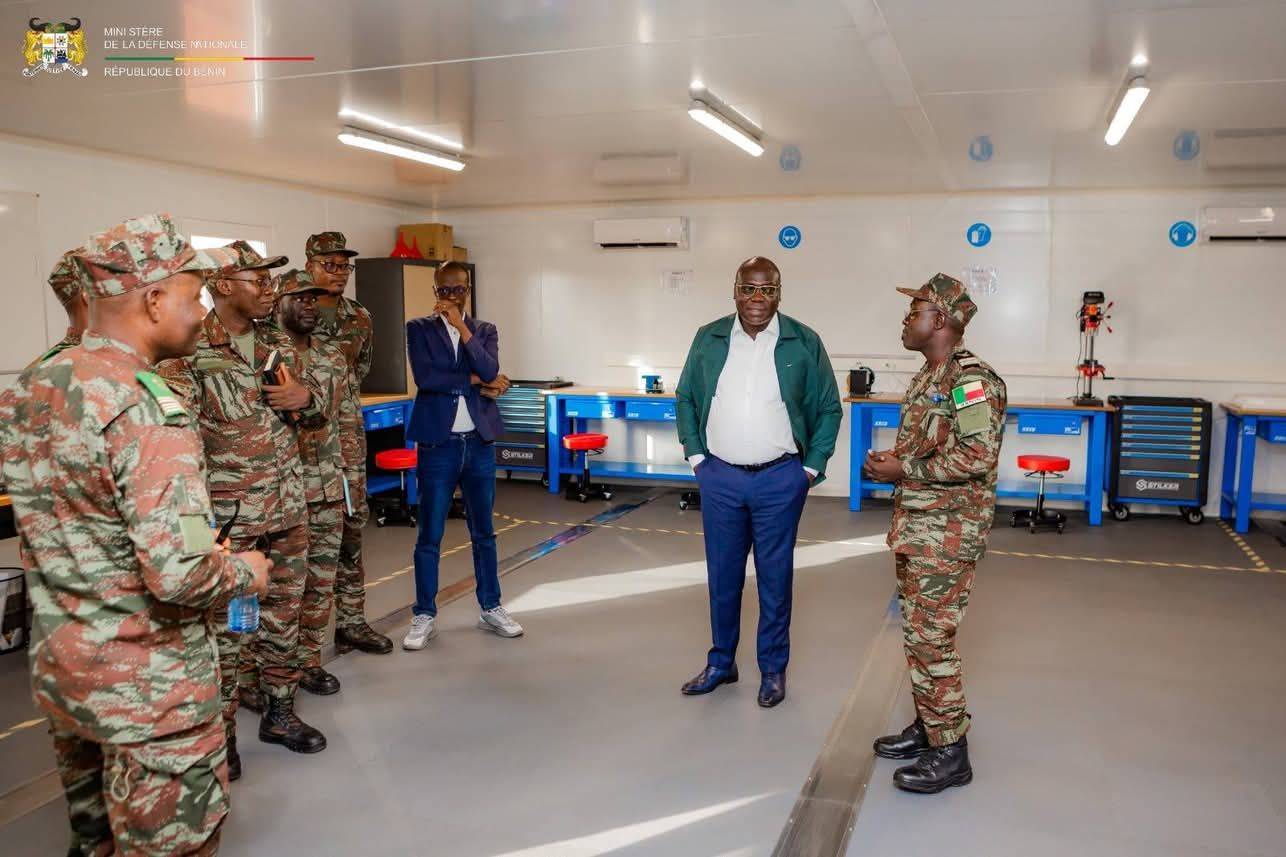
On October 9, 2026, Minister of National Defense Gildas Habib Bignon Agonkan conducted an intensive on-site assessment of EAM-Cana’s capabilities. The visit provided an unprecedented opportunity to evaluate firsthand the state of the facility, engage directly with leadership, and identify critical areas requiring immediate attention.
Colonel Olayéni Thierry Monda, Commander of Cana Air Base, personally greeted the minister and guided the comprehensive tour. The itinerary covered multiple military units operating within the base, including:
- The First Mixed Artillery Battalion
- The National Officer School
- The Peacekeeping Operations Training Center
The delegation then examined the technical and educational infrastructure of EAM-Cana, focusing on:
- Advanced flight simulation laboratories
- Mechanical and electronic maintenance workshops
- Live drone operation demonstrations conducted by student trainees
- The critically aging runway system, which no longer meets modern aviation standards
Government commits to strategic investment in aerial sovereignty
Following the comprehensive review, Minister Agonkan emphasized the strategic importance of domestic pilot and technician training for Benin’s long-term defense independence. He highlighted how EAM-Cana’s development represents more than institutional growth—it’s a sovereign imperative for maintaining national airspace security.
The minister also announced concrete government commitments to accelerate the school’s transformation into a sub-regional training hub. The envisioned upgrades span across three critical domains:
- Physical infrastructure: Modernization of technical facilities and expansion of available space
- Equipment modernization: Acquisition of state-of-the-art training tools and aircraft
- Pedagogical enhancement: Implementation of advanced curricula and certification programs
The ultimate goal is clear: to position Benin as a regional leader in military aviation education and operational readiness. By nurturing homegrown talent and reducing dependence on foreign training programs, the country is laying the groundwork for sustained aerial defense capabilities that will serve its security interests for decades to come.
A new chapter for Benin’s aerial defense ambitions
This ministerial visit marks a definitive turning point in Benin’s military aviation evolution. With a renewed sense of purpose and substantial government backing, EAM-Cana is poised to emerge as a model institution in West Africa. The challenges identified during the inspection—particularly the runway’s deteriorating condition—are now priorities on the national defense agenda, signaling a proactive approach to addressing critical gaps in the country’s aerial defense infrastructure.
The success of this transformation will depend on several key factors moving forward:
- Timely allocation of necessary funding for infrastructure projects
- Sustained collaboration between military leadership and civilian technical experts
- Implementation of robust quality assurance mechanisms for training programs
- Strategic partnerships with regional defense organizations
As Benin continues its march toward military aviation self-sufficiency, EAM-Cana’s story serves as both an inspiration and a blueprint for neighboring nations seeking to strengthen their own defense capabilities through education and innovation.