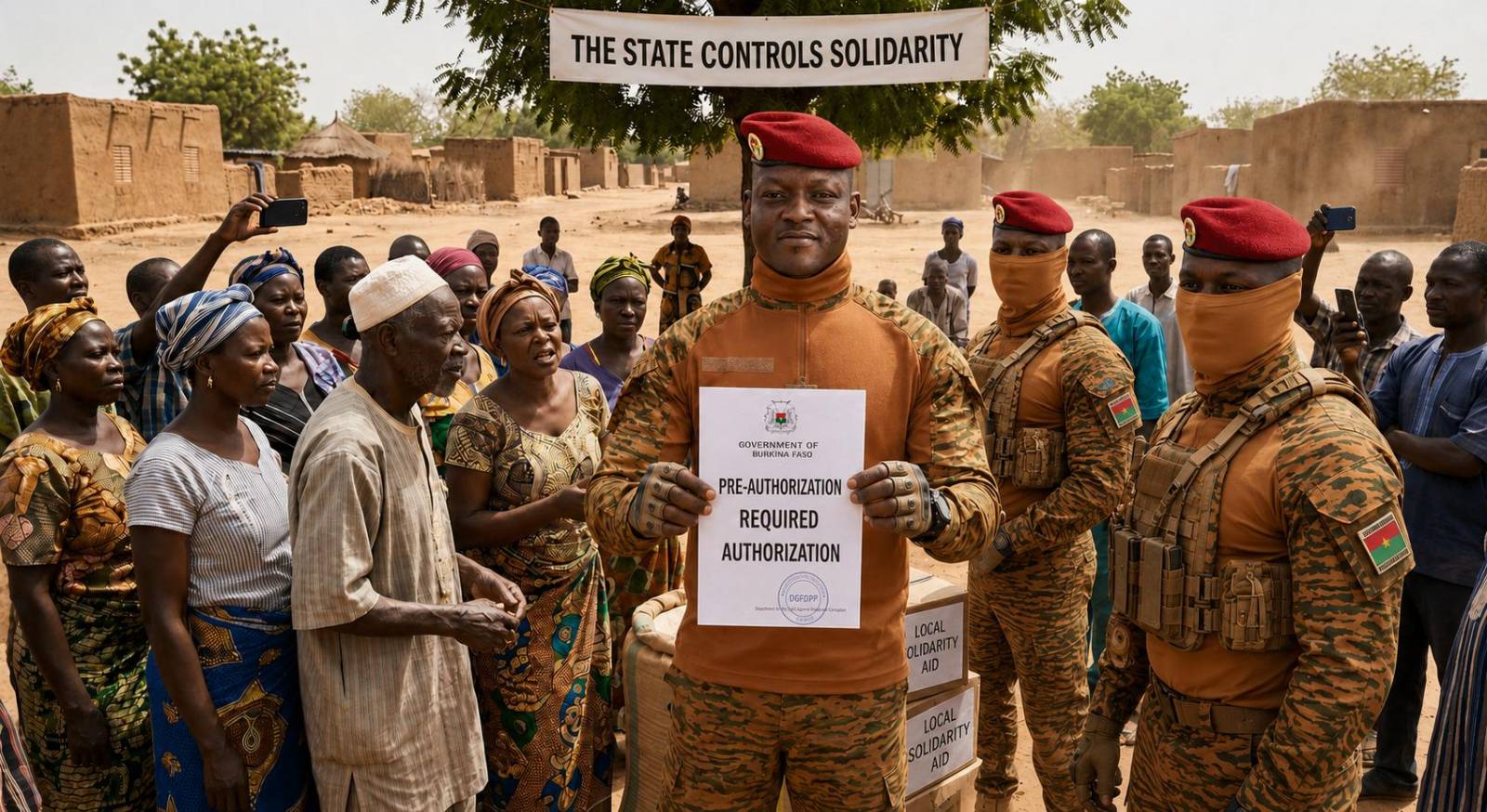

Burkina Faso has entered a new phase in its approach to charitable actions, as the Ministry of Solidarity imposes strict regulations on humanitarian efforts. Under the new directive, any form of organized assistance—whether through social media or other channels—must now receive prior government approval. Failure to comply may result in penalties, sending a clear message that the state intends to oversee all expressions of solidarity.
From spontaneous aid to bureaucratic authorization
At first glance, the crackdown on unregulated fundraising and public displays of distress may appear justified. The proliferation of online campaigns has, in some cases, reduced suffering to a spectacle, commodifying human hardship for visibility or financial gain. Yet, the sweeping nature of this regulation raises serious concerns about the erosion of civic autonomy.
By requiring administrative clearance for acts of generosity, the authorities risk conflating legitimate humanitarian efforts with suspicious activities. The message is stark: even the most basic impulse to help one’s neighbor now falls under the purview of state oversight. This shift signals a troubling centralization of compassion, where the government positions itself as the sole arbiter of who deserves assistance and under what conditions.
Eroding the foundations of social resilience
In Burkina Faso, as in many crisis-stricken nations, the first responders to emergencies are often citizens, local associations, religious groups, or the diaspora. Their rapid intervention fills critical gaps left by overwhelmed public institutions. By subjecting these spontaneous acts to bureaucratic delays, the government not only stifles grassroots solidarity but also undermines the very networks that sustain communities during prolonged adversity.
The timing of this measure is particularly problematic. With security threats, mass displacements, and economic instability straining public resources, the need for agile, community-driven support has never been greater. Yet, the new regulations transform life-saving actions into bureaucratic hurdles, ensuring that aid arrives too late—or not at all—for those in urgent need.
The paradox of dignity under state control
Proponents of the regulation argue that it protects the dignity of vulnerable populations by preventing the exploitation of their suffering. However, this perspective overlooks a fundamental truth: dignity is not preserved by silence or invisibility. When people are denied the right to seek help freely, their struggles are merely hidden—not resolved. The state’s attempt to sanitize compassion risks reducing humanitarian aid to a sterile, state-approved process, devoid of the empathy that defines true solidarity.
There exists a middle ground—one that balances ethical oversight with respect for individual agency. Transparent, consent-based fundraising, coupled with targeted measures against abuse, could safeguard both dignity and efficacy. Yet, Burkina Faso’s approach leans toward outright control, prioritizing administrative convenience over human urgency.
A policy out of sync with reality
The government’s insistence on regulating charity stems from a misguided belief that it can replace the organic, decentralized networks that have long sustained Burkina Faso’s most vulnerable. In reality, public institutions lack the financial, logistical, and human resources to fill this void. The new directive does not strengthen state capacity; it dismantles the very mechanisms that keep communities afloat.
The consequences are already visible. Families displaced by conflict, victims of economic collapse, and those facing medical emergencies now face an additional barrier: navigating a labyrinth of authorization requests before receiving help. While bureaucrats deliberate, lives hang in the balance. This is not governance; it is paralysis.
The cost of fear over generosity
Perhaps the most insidious effect of this policy is its chilling impact on civic engagement. Fear of sanctions or administrative burdens may deter individuals from providing aid, even when their resources are modest. A society where people hesitate to help out of concern for legal repercussions is a society where social bonds fray and trust erodes. Solidarity, once a reflex, becomes a calculated risk—one that fewer are willing to take.
Burkina Faso stands at a crossroads. It can choose a path of inclusive resilience, where state and society collaborate as partners rather than adversaries. Or it can double down on control, further isolating its people and deepening the very vulnerabilities it claims to address. The choice will define not just the nation’s humanitarian landscape, but the soul of its democracy.



