
From rhetoric to reality: assessing Burkina Faso’s bold diplomatic shift
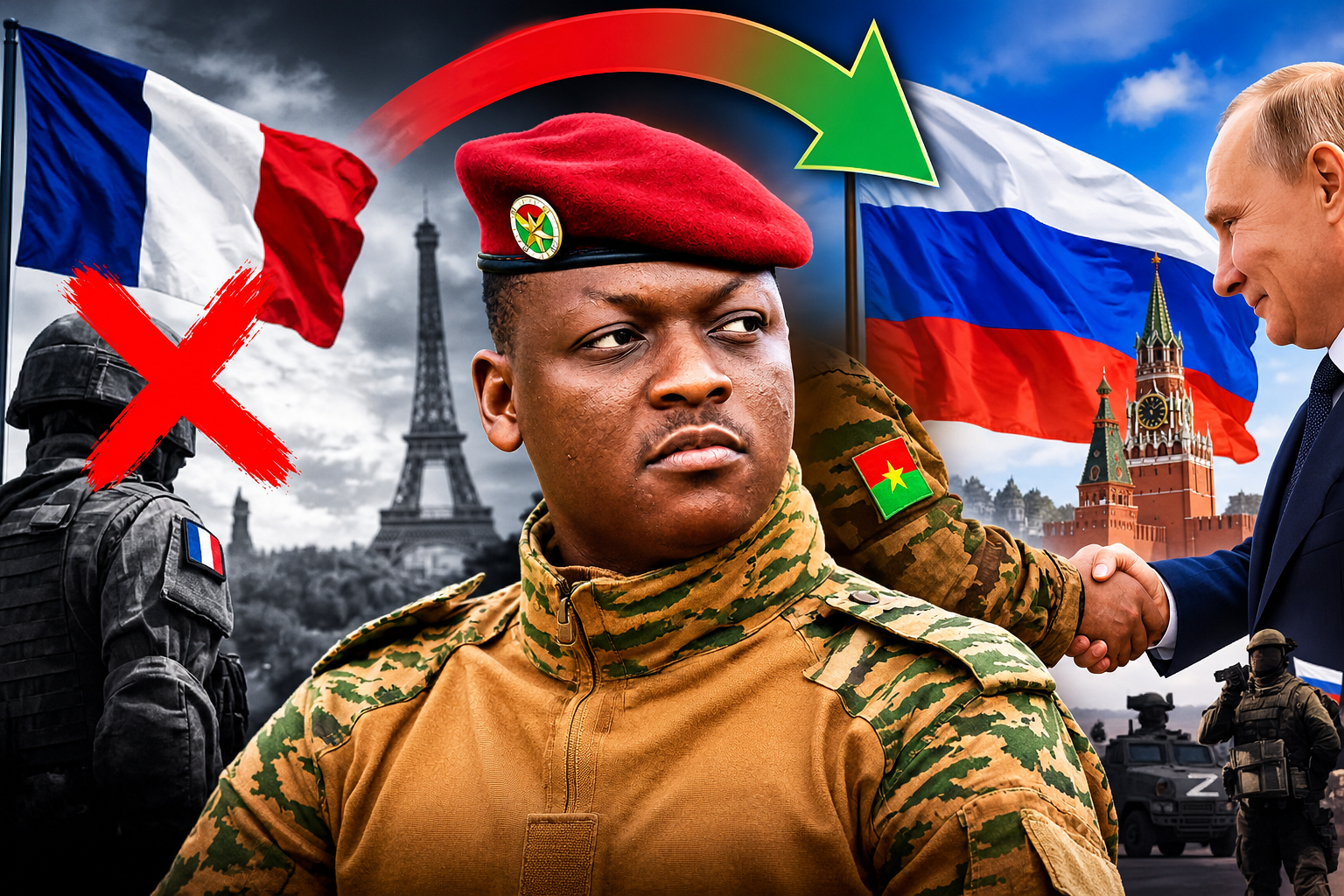
In a late September television interview on BF1 TV, Captain Ibrahim Traoré, Burkina Faso’s transitional president, delivered a stark ultimatum regarding diplomatic relations with France. His remarks left no room for ambiguity: normalization with Paris is no longer an option under his leadership. This declaration marks the latest chapter in a broader strategic reorientation that has seen Ouagadougou systematically distance itself from its former colonial power while pivoting toward Moscow as its principal new ally. Since coming to power in September 2022, Traoré has not only redefined Burkina Faso’s diplomatic priorities but has also challenged the very foundations of its long-standing relationship with France.
The rift between the two countries has deepened markedly over the past two years. The withdrawal of French military forces, the expulsion of diplomats, and the suspension of multiple cooperation agreements have reflected Ouagadougou’s unrelenting determination to sever ties. At the same time, Burkina Faso has forged closer bonds with Russia, while deepening its partnership with Mali and Niger through the Alliance of Sahel States (AES). Though framed by authorities as a bold assertion of national sovereignty, this diplomatic transformation demands closer examination beyond political slogans and symbolic gestures.
While a sovereign nation holds the right to choose its international partners, true autonomy requires more than just replacing one external influence with another. The core question remains: has Burkina Faso genuinely broken free from external constraints, or has it merely substituted Paris with a new benefactor whose interests may not align with its own?
Breaking free or trading one master for another?
Traoré’s vocal rejection of France has resonated strongly with segments of the Burkinabè population, many of whom share a long history of colonial grievances and dissatisfaction with past cooperation efforts. The anti-French narrative has become a central pillar of his administration’s political identity a stance that continues to win favor among citizens weary of perceived exploitation and interference.
Yet, the mere act of severing ties with France does not automatically guarantee sovereignty. True independence is measured not only by the absence of one external influence but by the ability to formulate independent policies, negotiate equitable agreements, and resist pressure from any foreign power. By presenting the rupture with Paris as definitive proof of national emancipation, the Burkinabè government risks oversimplifying a complex geopolitical shift into a binary confrontation between two external powers.
In this narrative, France is cast as the embodiment of past subjugation, while Russia emerges as the solution to that dependence. Such a portrayal, while emotionally compelling, overshadows a critical reality: no foreign partner whether Western, Russian, Chinese, or from another region engages in international relations out of pure altruism. Every state, regardless of its political system or stated principles, pursues its own strategic, economic, military, and diplomatic interests.
Russia as a partner: promises of security and potential pitfalls
The deepening cooperation between Burkina Faso and Russia represents one of the most visible changes in Ouagadougou’s foreign policy since Traoré’s ascension. Security cooperation has taken center stage, driven by the persistent threat of armed extremist groups that continue to plague the region. For Burkinabè authorities, diversifying military partnerships offers a path to strengthening national defense capabilities especially after years of perceived shortcomings in cooperation with France.
From Ouagadougou’s perspective, this realignment is a sovereign decision. Yet the evaluation of its success cannot rely solely on intentions. What specific commitments has each side made? What financial, military, or economic concessions are involved? How long are the agreements valid? And, crucially, what safeguards are in place to prevent foreign interference in Burkinabè affairs?
These are not minor details. Military cooperation can provide immediate operational support, equipment, or technical expertise but it does not automatically translate into sustainable security gains. The true measure of effectiveness lies in tangible outcomes: the protection of civilian populations, the reopening of critical roads, the safe return of displaced persons, and the restoration of state services in conflict-affected areas.
Until such results are clearly demonstrated, it remains premature to hail Russia as Burkina Faso’s definitive strategic savior. Conversely, without a thorough review of agreements, it is equally unfounded to assume that Moscow now dictates Ouagadougou’s every move. The central challenge lies in determining whether this partnership enhances Burkina Faso’s decision-making autonomy or merely replaces one form of external dependence with another.
Beyond security: can Burkina Faso diversify its sovereignty?
Ibrahim Traoré’s administration has framed its diplomatic pivot as a fight against foreign domination. However, sovereignty cannot be reduced to symbolic gestures against one power or rhetorical alignment with another. It encompasses far broader domains: control over natural resources, fiscal policy, economic independence, industrial capacity, food security, and the freedom to negotiate with foreign investors on equitable terms.
A country may cut ties with a former partner and still remain dependent on external actors for military equipment, technology, financing, or trade channels. This interdependence is not inherently problematic, but it becomes concerning when alternatives are scarce and national priorities are overshadowed by the demands of a new ally. The goal cannot be merely to reject the old dominant power it must be to build a genuinely balanced and self-sustaining system of international relations.
If Russia becomes an indispensable partner in key sectors, without viable alternatives available to Burkina Faso, the risk of entering a new cycle of dependency albeit under a different political banner remains real. This is not to suggest that Moscow controls Traoré’s decisions; there is no evidence to support such a claim. Rather, it is a reminder of a fundamental principle in international relations: every partner pursues its own interests, and no nation acts out of pure benevolence toward a third country.
The AES alliance: a test of regional autonomy
Burkina Faso’s alignment with Mali and Niger within the Alliance of Sahel States reflects a shared ambition to redefine power dynamics in the region. The trio presents itself as a bloc united by a commitment to sovereignty, coordinated policy, and reduced reliance on external powers. On paper, such regional cooperation could serve as a powerful lever: pooling defense resources, sharing intelligence, boosting trade, and jointly addressing Sahel-wide challenges.
Yet, the effectiveness of any alliance cannot be judged by declarations alone. It must deliver measurable benefits to the people it claims to serve. Security remains the most urgent concern. Despite intensified cooperation, persistent attacks, mass displacements, and the ongoing paralysis of local administrations in certain zones demand an honest review of strategy. Success cannot be proclaimed solely through official statements or territorial recovery rhetoric; it must be measured through verifiable progress on the ground.
Economic integration, too, is essential. The AES’s ambitions must translate into smoother trade flows, improved infrastructure, and systems that support producers, traders, and businesses across member states. Most critically, the alliance must avoid turning opposition to certain powers into a rigid ideological principle that limits its diplomatic flexibility.
A genuinely sovereign bloc is not one that simply changes allegiances it is one that preserves the freedom to negotiate, to dissent when necessary, and to prioritize national interests above all else.
The ultimate test: results for the Burkinabè people
For millions of Burkinabè citizens living with daily insecurity, displacement, economic hardship, and limited access to essential services, the debate over sovereignty cannot be confined to corridors of power or diplomatic halls in Moscow and Paris. The ultimate criterion for evaluating Traoré’s leadership must be the tangible improvements in people’s lives.
A resolute break with France and a strategic tilt toward Russia may reflect political resolve. But they are not policies in themselves. The true measure of success lies in outcomes: safer communities, restored public services, functioning schools and hospitals, and economic opportunities that empower citizens. These cannot be achieved through declarations alone, nor by simply replacing one foreign partner with another.
The sovereignty of Burkina Faso will not be proven by the number of anti-French statements, the quantity of meetings with Russian officials, or the frequency of joint communiqués. It will be demonstrated by the government’s ability to govern effectively, to protect its people, to fund its priorities, and to ensure that the interests of Burkinabè citizens not those of external patrons guide every decision.
Freedom without responsibility is not sovereignty
By rejecting any possibility of reconciliation with France, Ibrahim Traoré has underscored a definitive break in Burkina Faso’s foreign policy. Yet this decisive shift raises a fundamental question: what does sovereignty mean in practice for his administration?
A truly independent nation retains the right to choose its allies freely without being bound by their demands, the ability to maintain relations with multiple powers, and the capacity to defend its interests without fear of retaliation. France acts out of its own strategic imperatives. Russia pursues its agenda. And every other foreign partner does the same. No alliance should be evaluated solely on ideological alignment or emotional resonance.
Burkina Faso has every right to diversify its partnerships and redefine its strategic direction. But Traoré’s government must now prove that this realignment delivers real benefits for the nation. The question is not whether to support Paris over Moscow or vice versa but whether the choices made serve the long-term interests of Burkina Faso and its people.
Sovereignty is not declared in speeches or demonstrated through symbolic breaks. It is earned through the daily exercise of freedom, the courage to negotiate with integrity, and the relentless pursuit of results. That is the standard by which Burkina Faso’s current leadership and its alliance with Moscow must ultimately be judged.
By Moussa Samuel Coulibaly — Journaliste / Rédacteur