
Cameroon outlines comprehensive strategy to modernize national transport infrastructure
Driven by an unwavering commitment to development and enhancing the competitiveness of its national infrastructure, Cameroon has initiated a series of strategic actions aimed at overhauling its road, rail, urban, and airport networks.
Cameroon is actively pursuing the modernization of its crucial road, rail, urban, and airport infrastructure, driven by a strong desire for national development and enhanced competitiveness.
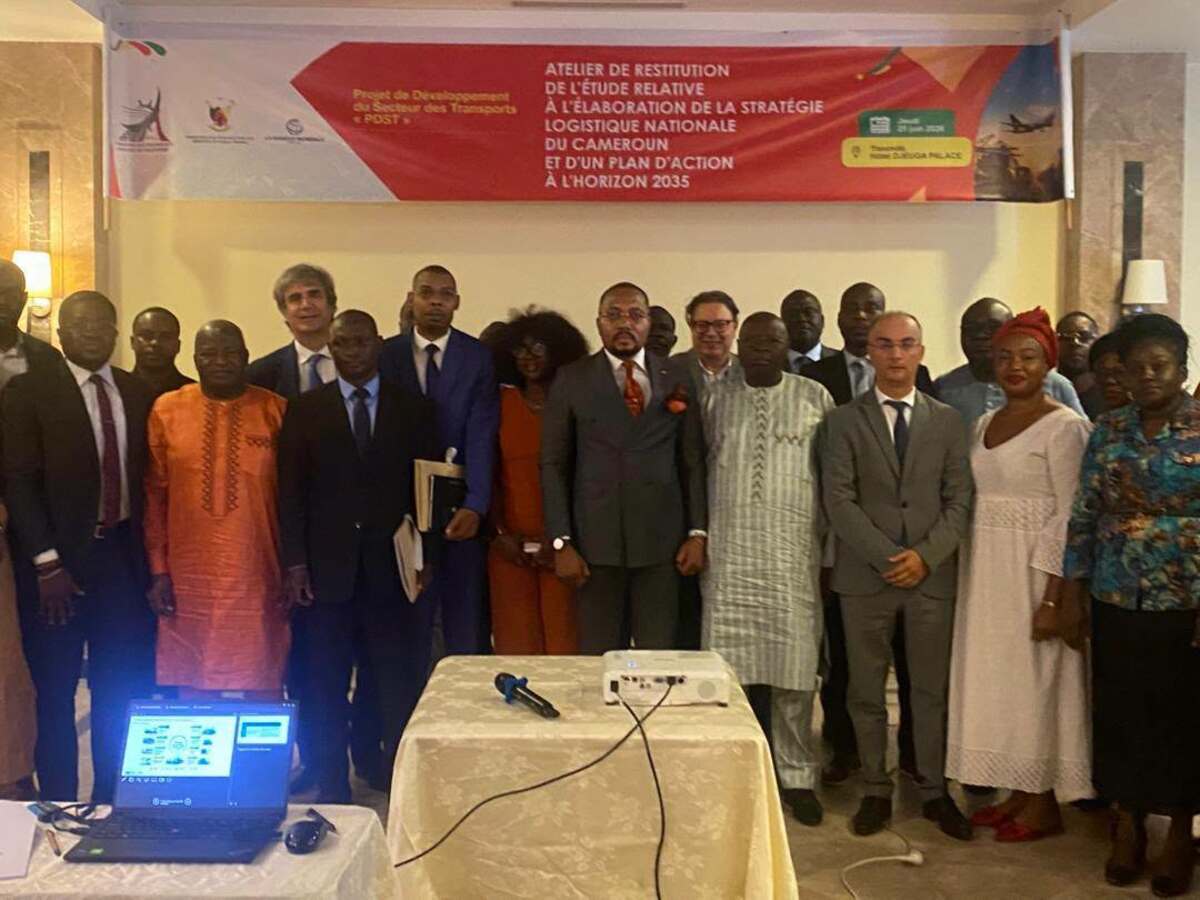
To advance these critical objectives, a significant workshop took place on June 24 and 25, 2026. The event served as a platform to present the findings of key feasibility studies: one focusing on the establishment of a Terrestrial Transport Regulatory Agency (ARTT), and the other on formulating a comprehensive National Logistics Strategy (SLN) complete with an action plan extending to 2035.
The gathering saw the participation of prominent figures, including Mbamome Nkendong Divine, Director of Road Transport (DTR), and Claude Misse Ntone, Director of Rail Transport (DTF). They were joined by a dedicated team from Idea Consult International/TRT Studi Cameroun, alongside representatives from various partner administrations and vital financial institutions such as the World Bank and the African Development Bank.
During his opening remarks, the Director of Road Transport urged all attendees to meticulously review the preliminary study conclusions. He emphasized that these findings are crucial for effectively guiding the subsequent phases of these transformative projects.
The consultants delivered detailed presentations outlining the outcomes of their extensive research. The study concerning the proposed Terrestrial Transport Regulatory Agency (ARTT) indicates that its headquarters should be established in Yaoundé. Initially, its scope of intervention would concentrate on road transport, with provisions for a gradual expansion of its mandate to other areas. The creation of this essential regulatory body is projected to require an initial investment of 260 million FCFA. This funding would cover the development of its institutional framework, the fitting out and equipping of its premises, and the acquisition of necessary IT infrastructure for its operations.
Concurrently, the study for Cameroon’s National Logistics Strategy (SLN) offered an in-depth analysis of the country’s existing logistics system. It meticulously detailed the strategic stakes involved, identified the key challenges that need to be addressed, and defined clear strategic objectives. The study culminated in the proposal of an ambitious 8-axis action plan, notably highlighting substantial investments in the rail sector, estimated at 40 billion euros. Furthermore, it recommended the establishment of a National Logistics Council, tasked with critical inter-ministerial coordination and arbitration roles.
As the workshop concluded, the Director of Road Transport commended the high quality of contributions and the richness of the discussions. He called upon all stakeholders to maintain their strong commitment, ensuring the successful execution of the upcoming stages for these foundational projects, which are vital for the future of Cameroon’s terrestrial transport sector.

Related Posts