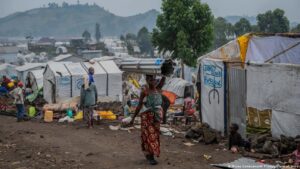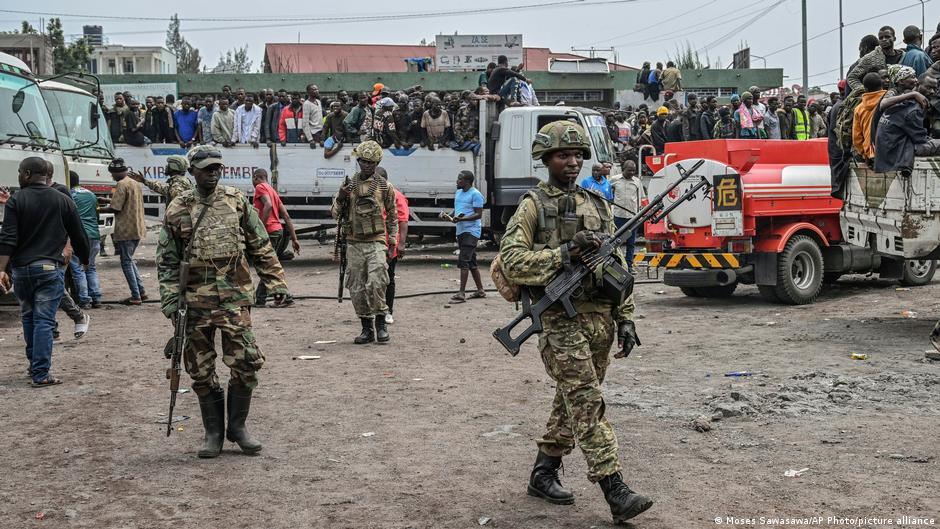

Despite repeated peace appeals, the unrelenting violence in Minembwe, South Kivu, continues to devastate civilians caught in the crossfire of relentless clashes, forced displacements, and escalating insecurity.
The Congolese and Rwandan governments recently reaffirmed their commitment to peace during a high-level meeting in London, pledging to enforce a ceasefire agreement signed in mid-2025. This accord, aimed at curbing hostilities in Minembwe, remains fragile as fighting persists on the ground.
a humanitarian crisis in the heart of South Kivu
The strategic Minembwe area remains a flashpoint for clashes between government forces and the M23-AFC rebel alliance, backed by allied militias such as Wazalendo and Twirwaneho. Daily bombardments and armed confrontations have turned the region into a battleground where even essential services are under siege.
A local resident described the grim reality: “Yesterday, the pediatric wing of the main hospital was struck by a drone attack. The Ilundu health center near the airstrip was also bombarded. Every day brings new terror—drones hover overhead, terrorizing families. People have fled, but the violence never stops.”
displaced lives and shattered communities
The surge in fighting has triggered mass displacements, leaving civilians stranded without shelter or safety. Civil society leaders in South Kivu have urgently called for an immediate halt to hostilities, emphasizing that ordinary citizens bear the brunt of the crisis.
Hypocrate Marume, a coordinator with the South Kivu Civil Society Framework, stressed the urgency of peace: “We condemn the relentless targeting of civilians by warring factions. Families are constantly uprooted, and the humanitarian toll keeps rising. As civil society, we demand that both parties lay down arms and engage in dialogue for the sake of peace and survival.”
why minembwe remains a critical battleground
Minembwe is more than a contested territory—it is a vital military and symbolic stronghold. Its vast terrain allows occupying forces to launch counteroffensives across the Grandes Plaines and the Ruzizi Plain, while also serving as a gateway to Mwenga territory.
Philippe Doudou Kaganda, director of the Great Lakes Conflict and Peace Research Center, explained: “Whoever controls Minembwe gains a strategic advantage, enabling them to dominate key regions and ethnic factions. The area has been a flashpoint for decades, and its capture often signals a territorial and ethnic victory in this protracted war.”
For the people of Minembwe, peace remains an elusive dream as drone strikes and gunfire dominate daily life, forcing families to live in constant fear and uncertainty.