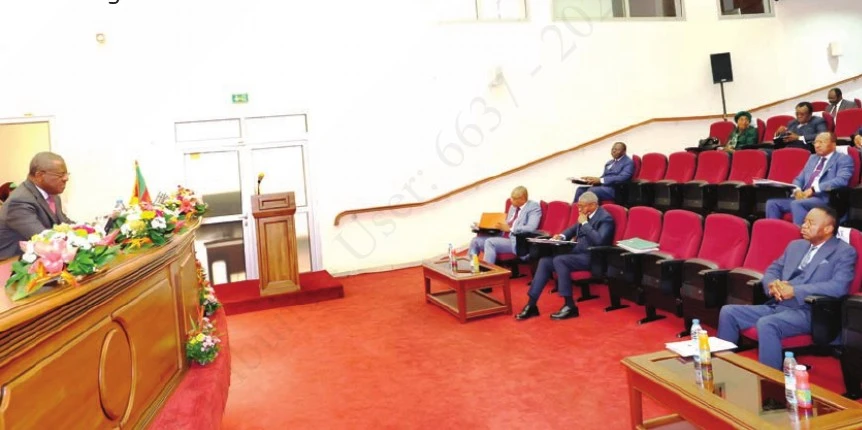

The Prime Minister of Cameroun, Joseph Dion Ngute, led a pivotal Cabinet meeting on June 26, 2026, to finalize the country’s budget framework for 2027 through 2029. This unprecedented approach bundles three fiscal years into a single strategic session, setting the stage for economic policy over the next four years. Key projections include a maintained growth rate of 3.5% for 2026 and an anticipated 3.7% in 2027, alongside strict debt management targets.
Macroeconomic foundations for the upcoming budgets
The Deputy Minister of Finance outlined the broader economic landscape, highlighting persistent global uncertainties stemming from the 2026 Middle East conflict. This crisis is expected to temper worldwide growth from 3.4% in 2025 to 3.1% in 2026, with a modest recovery to 3.2% projected for 2027. Despite these challenges, Cameroun’s economic trajectory remains robust, with steady growth anticipated at 3.5% in 2026 and 3.7% in 2027. Inflationary pressures continue to ease, reinforcing macroeconomic stability.
Central to this budgetary discipline is the anticipated renewal of Cameroon’s economic program with the International Monetary Fund (IMF). The new agreement aims to cap public debt at under 50% of GDP, with a strong emphasis on boosting non-oil revenue streams and optimizing public expenditure. These measures underscore the government’s commitment to fiscal prudence and sustainable development.
Sectoral investments and public welfare initiatives
The Minister of Economy, Planning, and Territorial Development presented the Priority Investment Program for 2027-2029, targeting critical sectors such as digital infrastructure, transportation, energy, water resources, agriculture, and industry. A key focus is accelerating digital infrastructure deployment and enhancing electricity generation capacity to meet rising demand.
Social priorities remain at the forefront, with plans to expand the universal health insurance system to underserved populations. Additionally, the Special Fund for Women’s Economic Empowerment and Youth Employment will see accelerated implementation, reflecting the government’s dedication to inclusive growth.
The Cabinet adopted the Economic and Budgetary Programming Document for 2027-2029, which will be submitted to Parliament as part of the Budget Orientation Debate. This formal step establishes a binding framework for ministries, ensuring alignment with national priorities. Prime Minister Ngute has directed the Ministry of Finance to finalize the document swiftly, in close collaboration with the Ministry of Economy, while expanding the use of performance contracts for public projects.



