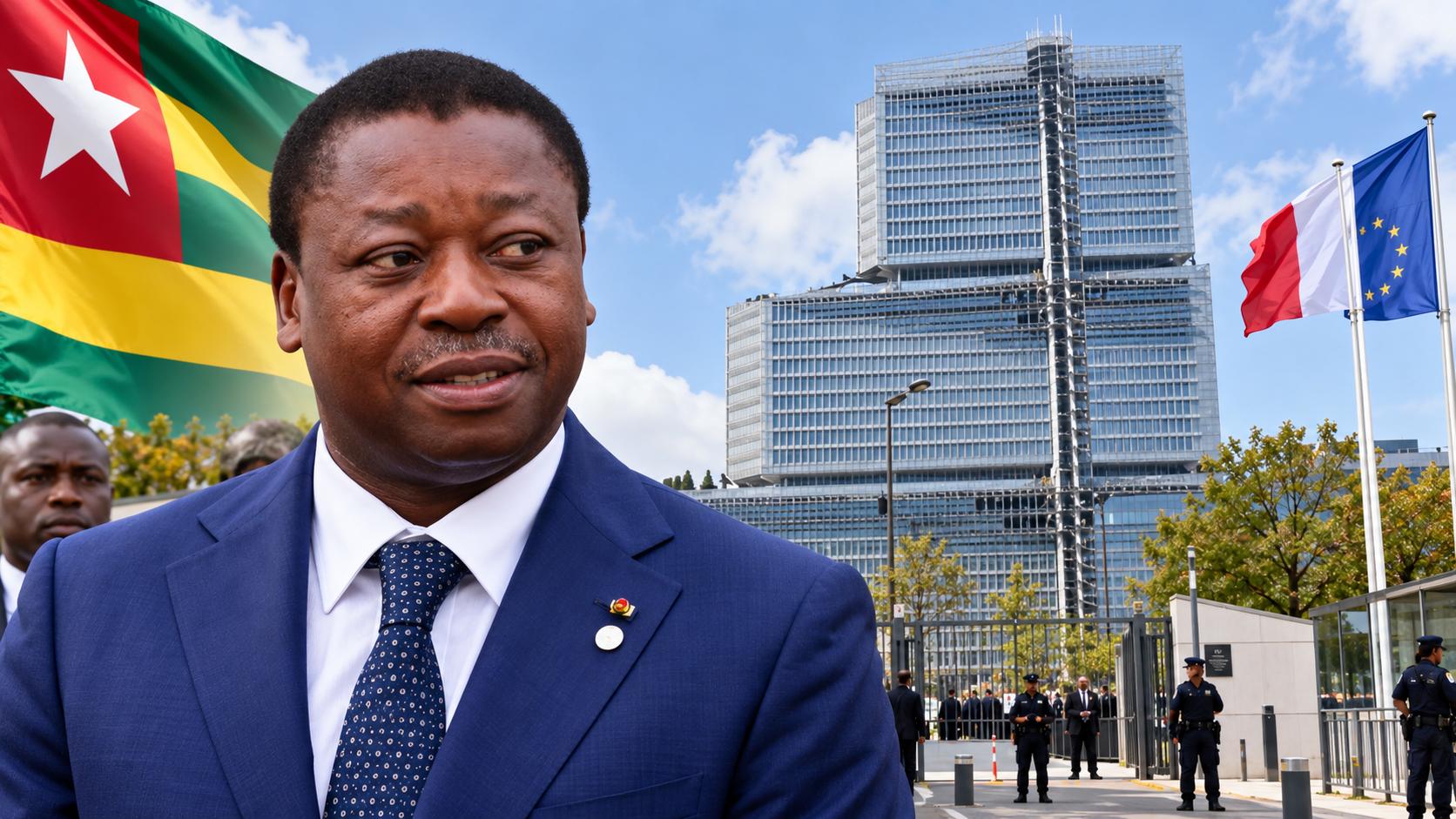

In recent years, France’s Financial National Prosecutor’s Office (PNF) has been accelerating its probes into the assets of foreign officials held on French soil. Among the most scrutinised names is that of Togo‘s President, Faure Gnassingbé, alongside associates whose real estate portfolios have come under intense legal and media scrutiny. From opaque property management structures to lavish private estates and accusations of money laundering, this financial case intertwines with Franco-Togolese diplomatic relations, raising serious questions about the origins of considerable wealth.
This ongoing legal saga resurfaces periodically—not just in the refined circles of Paris’s sixteenth arrondissement but also within the corridors of the Palais de Justice. Unlike high-profile cases involving Central African leaders such as Théodorin Obiang or the Bongo family, Faure Gnassingbé now faces legal repercussions tied to assets allegedly acquired through embezzled public funds from Togo.
Luxury properties under suspicion: a web of financial opacity
At the heart of the investigation are several prime Parisian and Île-de-France properties suspected of being purchased using diverted state resources. These include high-end residences whose acquisition methods raise red flags.
Key findings of the financial investigation
The Central Office for the Repression of Financial Crime (OCRGDF), operating under the PNF, is dissecting a complex financial trail involving:
- Sophisticated real estate transactions: eight Haussmann-style apartments and five standalone mansions acquired through real estate investment companies (SCI) and using frontmen to obscure ownership.
- Elaborate financial engineering: deployment of offshore accounts located in places like the Fiji Islands and channelling through intermediaries in low-tax jurisdictions to mask fund origins.
- Allegations of money laundering and corruption: Investigators are probing whether these luxury assets—valued at tens of millions of euros—were acquired using public funds diverted from Togo‘s treasury. They are also comparing these acquisitions against Faure Gnassingbé’s declared official income, reported at approximately 70 to 80 million FCFA annually, raising serious inconsistencies. Journalistic and independent investigations have even estimated the family’s total wealth at over 3,000 billion FCFA.
- Networks of intermediaries: central figures such as former Togolese Minister of State Barry Moussa Barqué, and complex financial schemes linked to high-profile contracts like the Port of Lomé concessions involving the Bolloré Group.
A legacy of dispute: from family feud to legal battles
The origins of the Gnassingbé family’s property portfolio in France trace back decades, to the era of Faure’s father, Étienne Eyadéma Gnassingbé. Upon his passing in 2005, a bitter struggle erupted among heirs over the control and ownership of these assets—compounded by court actions involving seizures and property disputes.
Investigative journalists and anti-corruption NGOs have repeatedly highlighted several key addresses, including luxury buildings on avenue du Maréchal-Maunoury in Paris, upscale residential units in Hauts-de-Seine, and additional acquisitions linked to official visits.
The shifting landscape of French jurisprudence on stolen assets
For over a decade, French legal action on illicit assets has primarily targeted families such as the Bongo (Gabon), Nguesso (Republic of the Congo), and Obiang (Equatorial Guinea). However, recent legal reforms—including mechanisms for restitution of confiscated assets to affected populations—have expanded judicial vigilance. Courts are now applying stricter scrutiny to any foreign leader whose French assets appear disproportionate to legitimate income streams, placing the Gnassingbé family under the same legal magnifying glass.