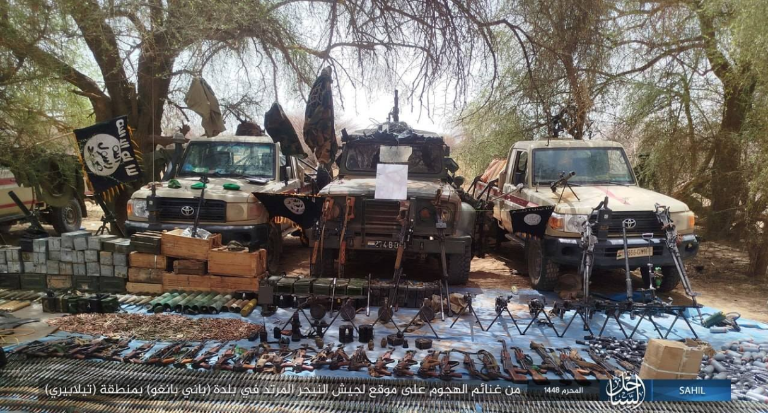

On Wednesday, June 24, 2026, Niger experienced a horrific day as the Islamic State in the Sahel (EIS) claimed responsibility for two simultaneous and exceptionally violent assaults. Military detachments in Inates and Banibangou bore the brunt of these coordinated attacks. Initial figures, as stated by the attackers, indicate a tragic toll of at least 80 fatalities, alongside the destruction of dozens of vehicles and the capture of substantial heavy equipment. Beyond these stark statistics of extreme violence, the daily lives and the vital local economy of these border regions are now grappling with the suffocating grip of terror.
A coordinated and deadly offensive
The synchronized nature of the June 24, 2026, attacks leaves little question regarding the extensive preparation undertaken by the terrorists. The assailants launched their devastating strikes against Nigerien defense and security forces at a time when anticipating such movements proves most challenging. In Inates, a locality sadly familiar with high-intensity confrontations within the volatile “three borders” zone—encompassing Niger, Mali, and Burkina Faso—the impact was particularly severe. The EIS asserts the deaths of at least 70 soldiers, the obliteration of 22 military vehicles, and the seizure of 24 more. Shortly thereafter, in Banibangou, a second terrorist column executed a parallel assault, resulting in at least 10 fatalities, 16 vehicles destroyed, and 6 more captured. Military analysts observe that this dual offensive underscores the armed group’s alarming continued capacity for projection and freedom of movement, despite ongoing joint operations across the region, effectively exploiting the porous borders.
Economic impact: deserted markets and severed routes
Beyond the profound losses suffered by the Nigerien military, the June 24 attacks have delivered a devastating blow to the economy of the Tillabéri region. Banibangou and Inates are not merely strategic military outposts; they serve as critical economic hubs vital for supplying civilian populations. As one local observed, “When weapons speak, markets fall silent. Goods trucks no longer move, and basic food prices have doubled within 48 hours.” The economic repercussions of this dual tragedy manifest in three primary areas:
- Paralysis of weekly markets: These essential financial engines of the region, facilitating the trade of livestock and cereals, are now deserted due to fears of further raids.
- Blockade of crucial roadways: The theft and destruction of nearly 70 vehicles in total—both military and logistical—deprive the region of secure transport, further isolating these communities from the rest of the nation.
- Abandonment of agricultural lands: With the rainy season approaching, farmers and herders are reluctant to venture far from secured urban centers, posing a direct threat to medium-term food security for the local population.
Grief and resilience of local populations
In both Niamey and Tillabéri, a palpable sense of grief and anguish prevails. Families of the fallen anxiously await answers, while survivors from Banibangou recount harrowing scenes of devastation. The EIS strategy extends beyond merely targeting the state’s security apparatus; it aims to shatter the morale of local populations, coercing them into submission or mass exodus. Yet, amidst the pervasive fear, courageous voices are emerging, advocating for resilience and a strengthened national solidarity. Appeals for blood donations are escalating in the capital’s hospitals to support the evacuated wounded, and civil society actively urges the government not to neglect these peripheral territories in favor of solely urban centers.
What future for Niger’s security strategy?
The recent Inates and Banibangou attacks acutely highlight critical questions regarding the effectiveness of surveillance systems and early warning mechanisms. For the ruling junta and the military high command, this significant setback necessitates an urgent reevaluation of ground tactics. A paramount focus must be placed on re-establishing trust with the local populace. Without fundamental economic security and the restoration of commercial routes, military presence alone will prove insufficient to stabilize the region. The challenge for the coming weeks is therefore twofold: to repel the terrorist threat through substantial counter-offensives, while simultaneously injecting economic lifeblood into regions teetering on the brink of financial collapse, a critical aspect of Sahel current affairs and Mali Niger Burkina reporting.



