
Diplomatic revival between Benin, Niger, Burkina Faso and Nigeria explained
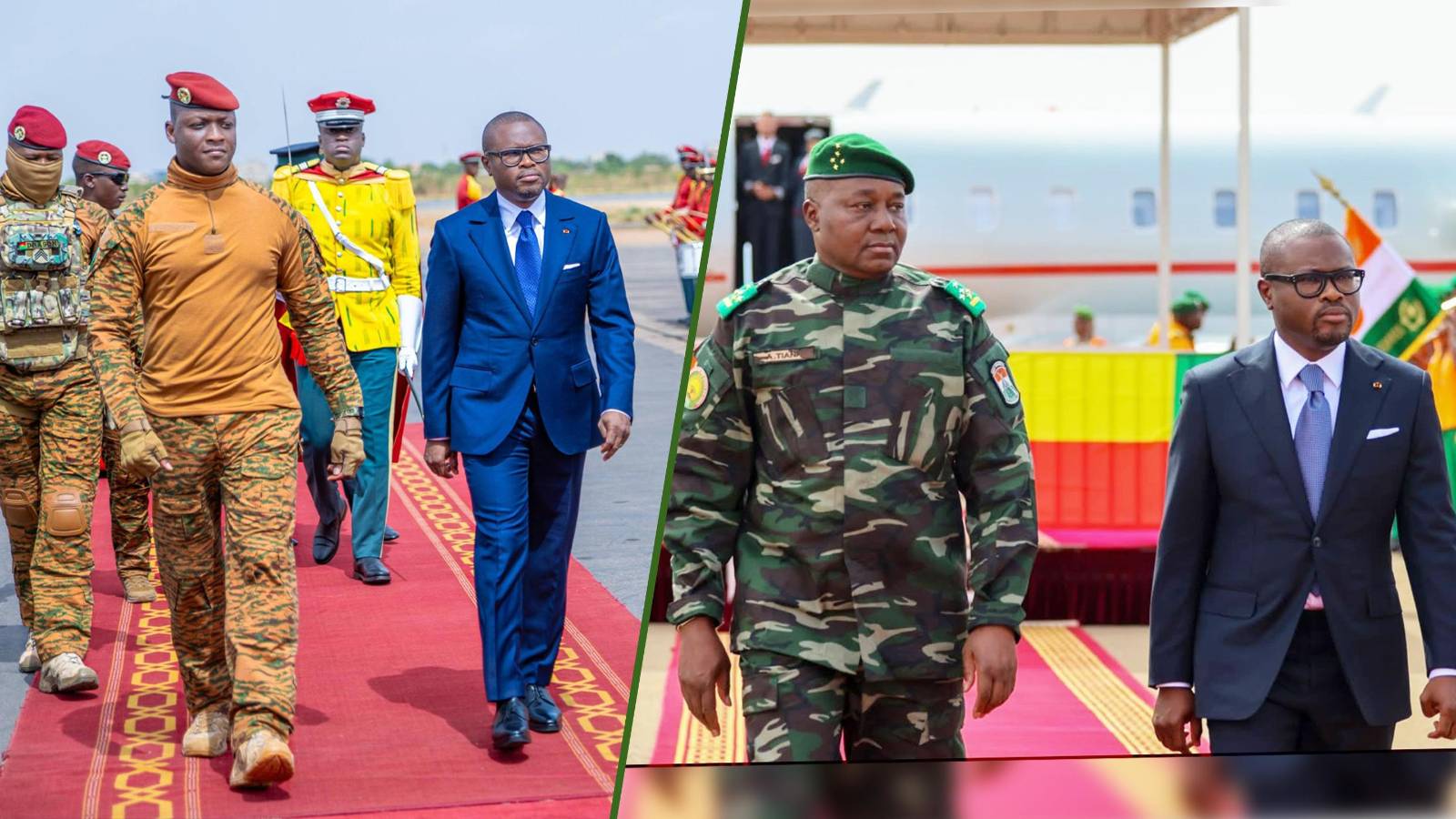
The recent official visits by Benin’s President Romuald Wadagni to Abuja, Niamey and Ouagadougou signal a decisive shift toward restoring and strengthening cross-border relations in West Africa’s core economic corridor. This renewed diplomatic momentum is driven by a convergence of economic necessities and shared security imperatives across the subregion.
Following a prolonged period of strained ties—rooted in political transitions and regional policy shifts—Benin’s leadership has taken proactive steps to reopen direct dialogue with neighboring states that share critical infrastructure and security challenges.
Strengthening economic interdependence across borders
The economic fabric of Benin, Niger and Burkina Faso is tightly woven through trade, logistics and energy networks. For landlocked Niger and Burkina Faso, access to global markets hinges on efficient transit through coastal partners—in particular Benin—via key corridors such as the Cotonou-Niamey route and road networks extending toward Ouagadougou. Meanwhile, Benin’s economic vitality, including the performance of the Port Autonome de Cotonou and domestic logistics industry, relies heavily on the volume of goods transiting to and from Sahelian markets.
Energy integration further deepens this interdependence. The pipeline linking Agadem’s oil fields to the Sèmè-Kpodji terminal is a strategic asset: Niger exports crude through Benin’s infrastructure, while Benin benefits from transit revenues. A newly formed technical committee—tasked with identifying and removing cross-border trade barriers within 15 days—underlines the urgent need to preserve these reciprocal benefits, which are vital for regional economic fluidity.
Unified security efforts to counter regional instability
Security threats from armed groups and cross-border crime continue to challenge stability across the W Park region—a shared ecological and geopolitical zone linking Benin, Niger and Burkina Faso. The recent diplomatic outreach responds directly to the need for coordinated counter-measures that no single nation can implement alone.
Reinforcing bilateral security dialogues enables the three countries to share real-time intelligence, clarify operational misunderstandings and reactivate joint patrols and information exchanges. Such collaboration is not optional but essential to safeguarding national sovereignty and maintaining territorial integrity, especially given Benin’s exposure to spillover risks from Sahelian insecurity.
Balancing regional commitments with bilateral action
The timing of these visits—beginning with Nigeria, then proceeding to Niger and Burkina Faso—reflects a strategic alignment with broader regional dynamics. Abuja, as a central CEDEAO hub, serves as a natural starting point, while the follow-up engagements with Niamey and Ouagadougou aim to restore functional bilateral channels.
In a context of shifting political alliances, including the emergence of the Alliance of Sahel States (AES), preserving direct negotiation pathways helps mitigate geopolitical risk, sustain economic flows and protect local communities. This approach demonstrates a balanced commitment to both regional frameworks and pragmatic bilateral cooperation—essential for navigating the complexities of West African integration.
The normalization currently underway is not merely symbolic; it is a technical necessity born of geography, shared security concerns and the operational realities of interconnected economies. As Benin reasserts its role as a regional facilitator, the stage is set for renewed cooperation that benefits all four nations.