
DRC government and ICRC strengthen detention and humanitarian ties
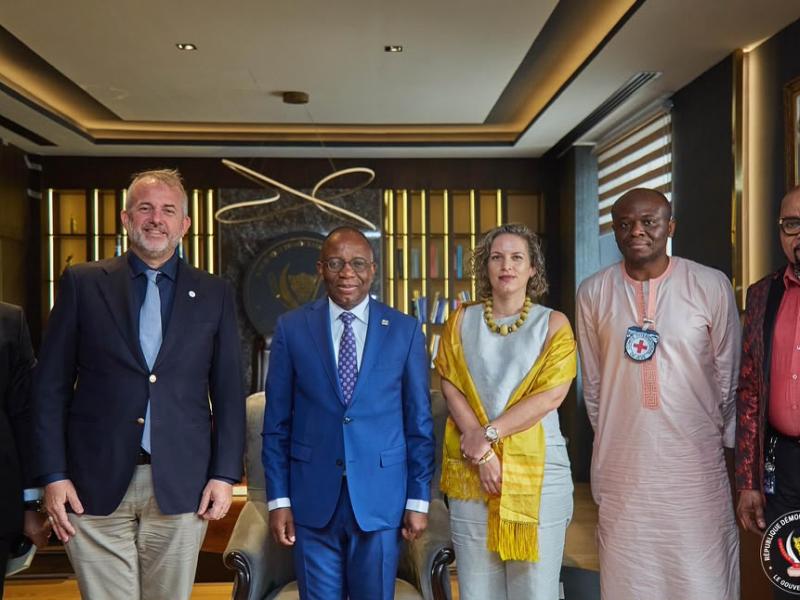
The International Committee of the Red Cross (ICRC) and the Democratic Republic of the Congo (DRC) government have reaffirmed their commitment to deepening cooperation aimed at improving detention conditions and expanding humanitarian efforts, particularly in the eastern regions of the country. This pledge was made during a high-level meeting on July 14, 2026, between ICRC delegation head François Moreillon, concluding his mission in the DRC, and the Minister of State for Justice and Keeper of the Seals, Guillaume Ngefa Atondoko Andali.
Key outcomes of the meeting
The discussions centered on evaluating the existing partnership between the DRC government and the ICRC, with both parties acknowledging significant progress in addressing critical humanitarian challenges. Key areas of focus included:
- Detention conditions: Efforts to improve living standards and legal protections for detainees, especially in conflict-affected eastern provinces.
- Humanitarian access: Strengthening coordination to ensure aid reaches vulnerable populations amid ongoing violence.
- Legal protections: Enhancing compliance with international humanitarian law and national judicial frameworks.
ICRC delegation head praises collaboration
François Moreillon highlighted the quality of dialogue and cooperation with the Ministry of Justice, noting that the partnership has evolved into a robust framework for tackling shared challenges. “My visit to the Ministry of Justice was primarily to express gratitude for the collaboration over the past years,” Moreillon stated. “It was also an opportunity to reflect on our work after more than three years in the country and identify ways to further strengthen our partnership with the ministry to improve detention conditions and ensure the rights of detainees in the DRC’s eastern regions.”
He emphasized the critical issues discussed, including prison funding, detainee nutrition, and systemic reforms to address overcrowding and inadequate facilities. “We share a close and high-quality relationship with the Ministry of Justice,” he added.
Challenges and future outlook
The meeting also addressed persistent challenges in the DRC’s penal system, including:
- Insufficient funding for prison infrastructure and operations.
- Poor nutritional standards and healthcare for detainees.
- Limited capacity to manage overcrowding and ensure humane treatment.
Both parties expressed determination to address these issues through sustained joint efforts. Moreillon underscored the ICRC’s ongoing support for the DRC government, aiming to develop durable solutions for detainee welfare and humanitarian access in conflict zones.
ICRC’s long-term commitment to the DRC
The ICRC has been active in the DRC since 1978, providing critical support to populations affected by armed conflict and violence. Its work includes:
- Mediating the release and transfer of detainees between conflicting parties, such as between government forces and armed groups like the AFC/M23.
- Facilitating humanitarian operations, including the transfer of over 1,300 DRC government soldiers and their families from Goma to Kinshasa in May 2025—a 2,000-kilometer journey through active conflict zones.
- Promoting adherence to international humanitarian law and integrating these principles into national legal frameworks.
Moreillon concluded the meeting by reaffirming the ICRC’s dedication to the Congolese people, particularly those enduring decades of hardship in the eastern DRC. “I feel a deep sense of satisfaction,” he said. “This is a message of resilience and support to the people of the Congo, who have suffered for over three decades, especially in the eastern DRC. In our relationship with the Ministry of Justice, we’ve seen significant progress in recent months, with new ambitions that we hope will lead to sustainable solutions for detainees and better protection of their rights.”
Photo: Illustration of detention conditions in eastern DRC