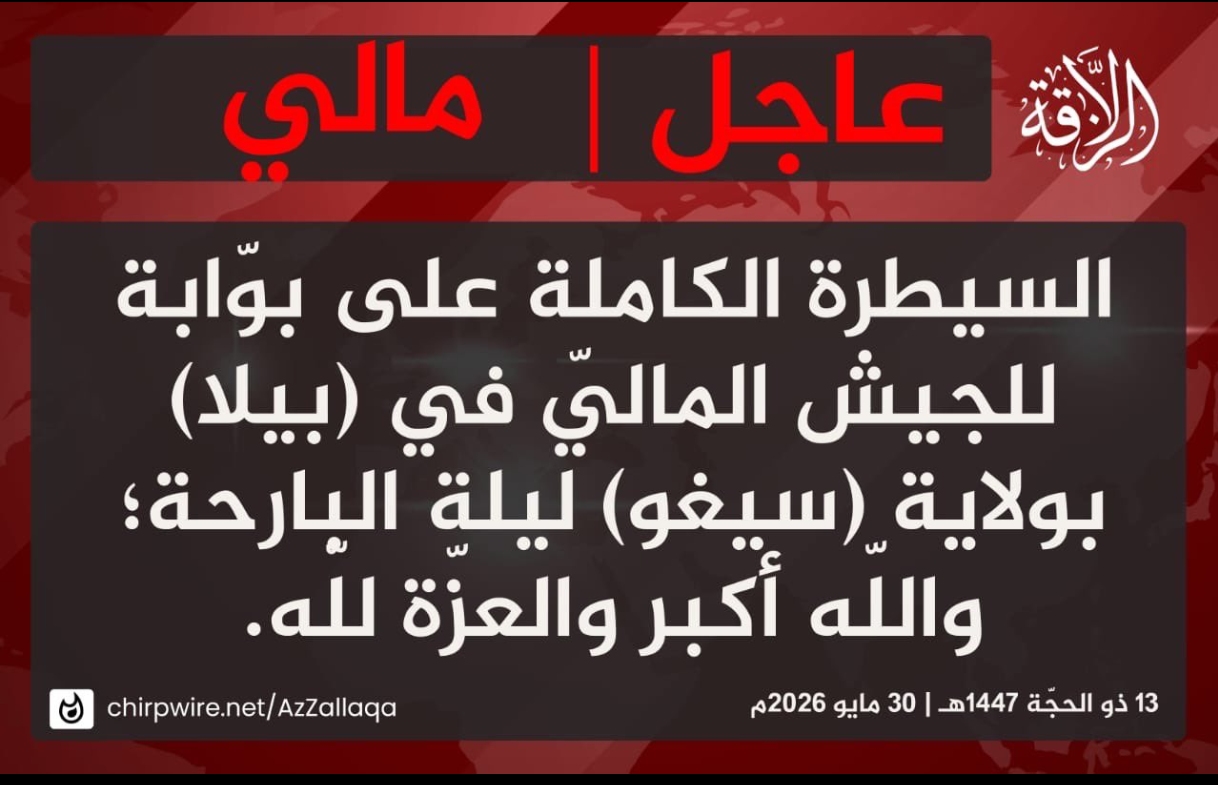

The heart of Mali, specifically the Ségou region, has once again become the epicenter of a brutal confrontation between state forces and armed factions. In the early hours of May 30, the Group for the Support of Islam and Muslims (JNIM), an al-Qaeda affiliate operating in the Sahel, claimed responsibility for a daring overnight raid on a Malian military outpost. The assault, described as a well-coordinated operation, resulted in the temporary seizure of the facility and the seizure of substantial military equipment, including weapons and ammunition.
a night of chaos in central Mali
Local testimonies confirm the intensity of the clashes that unfolded between dusk and dawn, painting a picture of intense firefights and deliberate targeting of strategic infrastructure. While official statements from Bamako remain cautious and sparse, the JNIM’s propaganda channels quickly disseminated graphic footage and statements, reinforcing their narrative of tactical victory. The attack underscores the persistent threat posed by armed groups in regions that authorities claim to have secured, raising serious questions about the effectiveness of current counter-terrorism strategies.
military partnership with Russia falls short
The Malian junta, which came to power through a coup, had pinned its hopes on a dramatic shift in security policy following the departure of Western forces and the arrival of Russian military advisors and contractors. Yet, the assault on Ségou serves as a stark reminder of the limitations of this approach. The Russian-backed strategy, heavily reliant on aerial superiority and large-scale sweep operations, has proven ill-equipped to counter the nimble, decentralized tactics employed by the JNIM. Rather than diminishing, the insurgency continues to evolve, exploiting gaps in security and governance to expand its influence across central Mali.
The failure to curb these attacks has exposed the fragility of Bamako’s control over its territory. Despite repeated assurances of progress, the military’s inability to protect civilians or maintain control over key regions suggests a systemic breakdown in strategy and execution.
from violence to starvation: the human cost of conflict
The security vacuum in Ségou is not just a military concern—it is a humanitarian catastrophe in the making. The region, once a vital agricultural hub thanks to its fertile lands along the Niger River, now faces severe food shortages as a direct consequence of the ongoing violence. Fields lie fallow, livestock markets have been looted, and improvised explosive devices (IEDs) block critical trade routes, preventing the movement of goods and people.
The JNIM’s deliberate strategy of targeting food supplies has turned hunger into a weapon of war. With local production crippled and supply chains severed, families are left with no choice but to abandon their homes in search of safety and sustenance. The humanitarian response has been woefully inadequate, as state resources are diverted to military campaigns rather than addressing the growing crisis.
families flee as the crisis deepens
The human toll of this conflict is most visible in the mass displacement of civilians. Entire villages in the Ségou region have been emptied as residents flee to urban centers or overcrowded camps in Bamako, where conditions are dire. These displaced families, many of them women and children, face overcrowded shelters, lack of clean water, and no access to basic healthcare. Local NGOs, overwhelmed by the scale of the crisis, are struggling to provide even the most essential services.
The collapse of public services, compounded by the junta’s preoccupation with military operations, has left these displaced populations in a state of utter vulnerability. Without urgent intervention, the social fabric of Mali could unravel entirely, leaving behind a landscape of despair and instability.
a fractured nation at a crossroads
The JNIM’s latest attack in Ségou is more than just another skirmish—it is a symbol of Mali’s unraveling security and governance. The junta’s reliance on a purely military solution, coupled with an ineffective foreign partnership, has failed to deliver the promised stability. Without a holistic strategy that prioritizes civilian protection, restores public services, and addresses the looming famine, Mali risks sinking deeper into chaos. The question now is whether Bamako can pivot from a failing war strategy to one that safeguards its people and rebuilds a nation on the brink.



