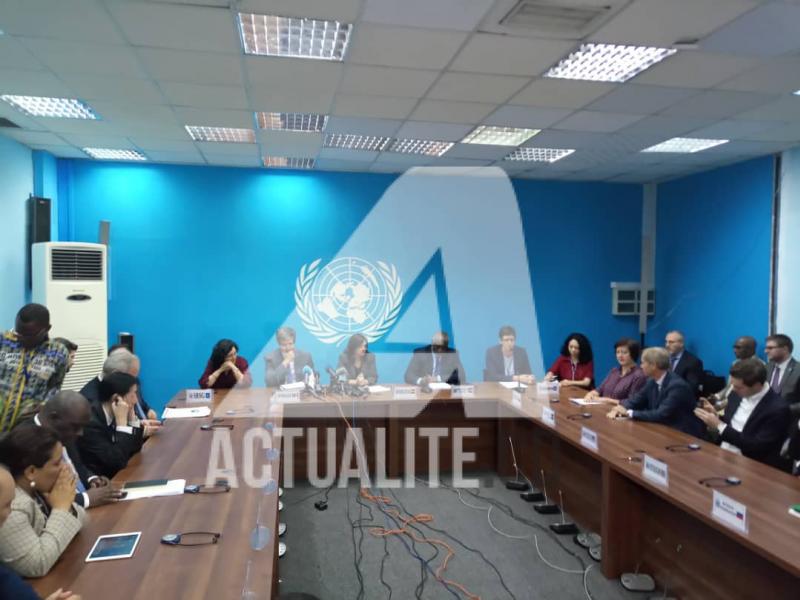

The Democratic Republic of Congo (DRC) is leveraging its current presidency of the United Nations Security Council to elevate an urgent global concern: the governance of natural resources and its direct link to peace and security. On Monday, July 13, Kinshasa hosted a high-level Arria-formula meeting in New York, drawing international attention to what it describes as a critical governance gap in resource management amid conflict zones.
This diplomatic initiative will culminate on July 22 with a landmark high-level debate chaired by President Félix Tshisekedi, themed “Natural Resource Governance: The Foundation of Peace, Security, and Prosperity.” The DRC’s foreign affairs ministry, led by Thérèse Kayikwamba Wagner, argues that existing frameworks—such as mineral traceability, corporate due diligence, and conflict financing prevention—remain fragmented and ineffective. Kinshasa is advocating for a unified international approach that integrates resource governance with conflict prevention and global security strategies.
At the heart of this push is a paradigm shift: natural resources should no longer be viewed solely through an economic lens but as strategic pillars for sustainable peace and security. The DRC has positioned this issue at the top of the Security Council’s agenda, emphasizing that unchecked exploitation fuels instability, particularly in conflict-affected regions like the eastern provinces.
France has thrown its full diplomatic weight behind this initiative. Speaking at the UN, Jérôme Bonnafont, France’s Permanent Representative to the United Nations, underscored Paris’s commitment to supporting the DRC’s efforts:
“Natural resources must serve as engines for equitable and sustainable development, benefiting the populations and countries that host them. They must be shielded from exploitation by predatory actors and diverted for malicious purposes. France aligns with the DRC’s goal to strengthen and harmonize international initiatives aimed at ensuring responsible resource governance. We are fully prepared to contribute to the Security Council’s work that will follow the high-level debate next week, in the presence of President Félix-Antoine Tshisekedi.”
This diplomatic momentum comes amid a complex regional landscape. The DRC’s presidency follows a July 8 briefing on conflict-related sexual violence, chaired by Prime Minister Judith Suminwa Tuluka, which highlighted the human cost of war economies and the urgent need for accountability, survivor protection, and reparations. These priorities reflect the DRC’s broader strategy to address the root causes of instability in the region.
The timing is significant. The DRC is navigating delicate diplomatic engagements, including a strategic minerals partnership with the United States and a recent agreement with Rwanda aimed at de-escalation and the withdrawal of Rwandan forces from Congolese territory. However, the security situation remains precarious. The AFC/M23 rebellion, which Kinshasa and international partners accuse Rwanda of backing, continues to control key cities like Goma and Bukavu, while diplomatic efforts—including the Doha process mediated by Qatar—have yet to yield tangible progress.
As the DRC pushes for a more coherent international framework on natural resource governance, the world watches closely. The July 22 debate at the UN Security Council could mark a turning point in how the international community addresses the nexus between resource extraction, conflict, and global stability.