
Gabon pushes for economic transformation to break free from raw material reliance
Libreville, June 26, 2026 – As global powers engage in fierce competition to secure supplies of critical minerals, a more decisive battle unfolds in resource-rich nations: the shift from raw material export to value creation.
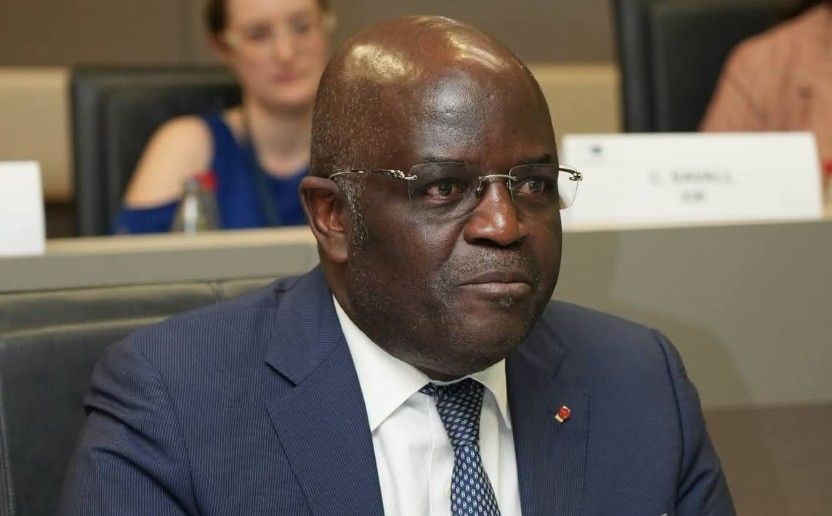
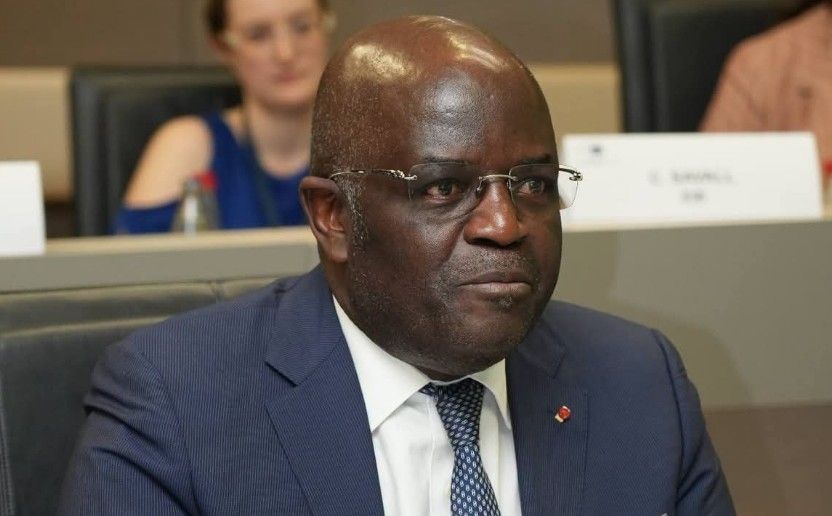
For decades, countries abundant in natural wealth have functioned primarily as suppliers of unprocessed commodities. Yet today, Gabon is leading a bold initiative to rewrite this economic narrative. During a high-level conference in Brussels, jointly organized by the African, Caribbean, and Pacific States and the European Investment Bank, Gabon’s ambassador to Belgium and the European Union, Eudes Régis Immongault Tatangani, championed a transformative vision.
His proposal centers on a new economic framework—one that moves beyond exporting raw materials to fostering local processing and full integration into global industrial value chains.
Ending the era of extractive dependency
The surging global demand for critical minerals—driven by the energy transition, digital revolution, and emerging technologies—has intensified pressure on resource-rich nations. Electric vehicle batteries, renewable energy systems, artificial intelligence, and advanced infrastructure all depend on minerals that Africa holds in abundance.
Eudes Régis Immongault Tatangani argues that this moment presents Gabon with a historic opportunity to escape the cycle of extractive economics that has shaped its development for generations. He emphasizes that a nation’s wealth is not measured by the volume of its natural resources alone, but by its capacity to transform those resources into sustainable growth, skilled employment, and industrial development.
This perspective aligns with the findings of leading international economists. Countries that limit themselves to exporting raw commodities capture only a fraction of the value generated. The real economic gains lie in industrial processing, manufacturing, and technological innovation—processes that currently occur predominantly outside these nations. Gabon is determined to change that imbalance.
Building African value chains
The Gabonese ambassador advocated for an integrated approach spanning extraction to industrial processing. This vision requires substantial investments in energy, rail, port, and logistics infrastructure—cornerstones for competitive industrialization.
Libreville’s commitment to this strategy is reflected in domestic policy. Over recent years, Gabon has launched multiple initiatives to promote local processing of its natural resources, particularly in timber, mining, and manufacturing sectors.
The goal is twofold: gradually reduce dependence on unprocessed commodity exports and cultivate industrial activities capable of generating greater domestic wealth. Beyond economics, this strategy responds to a new geopolitical reality. Producer nations are increasingly asserting their role as equal partners in global negotiations—not as mere suppliers of essential resources, but as industrial collaborators shaping the future of international trade.
The need for equitable partnerships
While infrastructure and investment form the backbone of this transformation, the ambassador underscored a critical requirement: the quality of partnerships.
He stressed that alliances between governments, private investors, and financial institutions must incorporate mechanisms for technology transfer, local skill development, and capacity building. This principle has become central to global discussions on critical minerals, where economic sovereignty hinges not just on resource ownership but on technological mastery and innovation.
Through this intervention, Gabon reaffirms its ambition to reshape international economic relations. The country seeks to convert its natural potential into industrial strength, embedding its growth within the new dynamics of the global economy. The struggle for critical minerals will not be won in mines alone—it will be decided in factories, research centers, logistics hubs, and training institutions. It is this conviction that Gabon took to Brussels, signaling a potential economic milestone for the continent in the decades ahead.