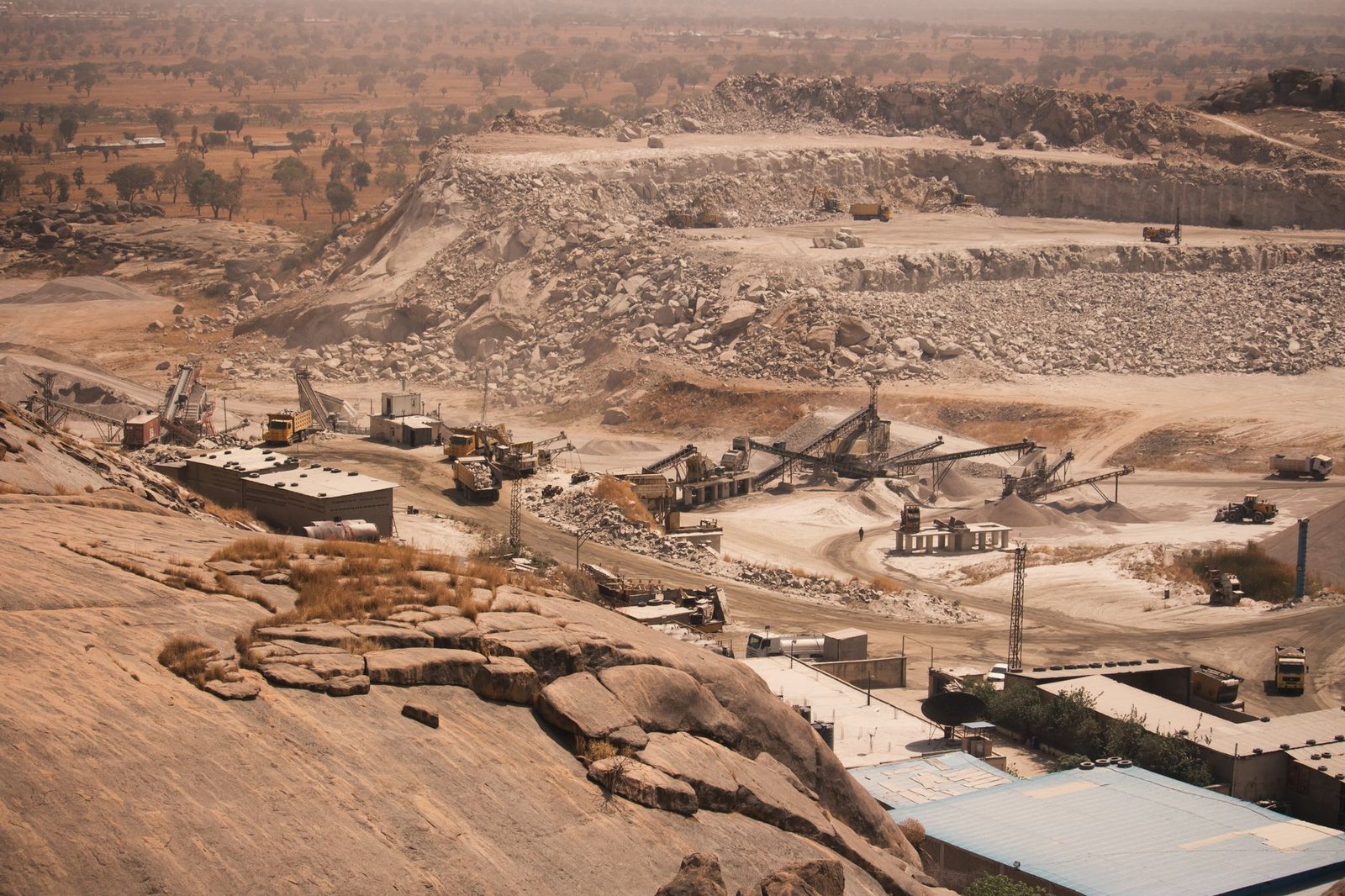

Gabon’s gold mining sector is entering uncharted territory with an unprecedented inspection campaign. The Ministry of Mines has launched a sweeping verification process requiring all gold mining permit holders nationwide to submit complete administrative, technical, and financial documentation to a dedicated review commission starting July 16, 2026. This initiative marks a significant shift toward stricter oversight of an industry long criticized for its opacity.
Mandatory compliance review for all gold mining licensees
The audit will examine every active mining company holding exploration or exploitation permits in the gold sector. The evaluation will focus on three critical dimensions: the legal validity of permits, the operational rigor of mining activities, and the financial capacity of licensees to fulfill their contractual obligations. Authorities aim to verify strict adherence to the terms agreed upon during permit allocation.
Beyond accounting checks, this campaign seeks to identify genuine industry players versus those accumulating permits without actual development—a practice known as ‘dormant titles’ that blocks geologically promising areas while depriving the state of tax revenue. This Gabonese initiative aligns with a regional trend, as neighboring Central and West African nations have recently tightened permit renewal conditions.
Transforming a key sector for public revenue
Gold has become increasingly vital to Gabon’s economic diversification strategy, traditionally reliant on oil and manganese. The country is working to formalize a gold sector dominated by informal artisanal mining, whose trade networks evade fiscal oversight. By bringing industrial and semi-industrial operators into the formal economy, authorities hope to capture a larger share of production currently exported through untraceable channels.
The implications extend beyond tax collection. Post-transition governance has prioritized natural resource sovereignty as a cornerstone of policy. This audit serves as a litmus test for the administration’s ability to enforce regulations against operators potentially linked to foreign groups or cross-border artisanal networks.
Consequences for non-compliant mining companies
Businesses failing to comply or unable to validate their permits face potential permit revocation. Similar campaigns in other African jurisdictions have led to dozens of permit cancellations, freeing up mining blocks for reallocation through competitive bidding. For Libreville, this process could enable targeted reissuance under stricter financial solidity and local content requirements.
International investors are closely monitoring the audit’s execution. In extractive industries with decades-long investment cycles, legal predictability is paramount. A methodical, transparent audit with clearly justified sanctions could enhance Gabon’s mining appeal. Conversely, a perceived arbitrary process might deter private capital at a time when the country seeks to attract new industrial partners.
The announced timeline gives mining companies weeks to compile documents and prepare for the commission’s scrutiny. The coming months will reveal whether this initiative triggers a fundamental reshaping of Gabon’s gold mining landscape or remains a mere administrative exercise.