
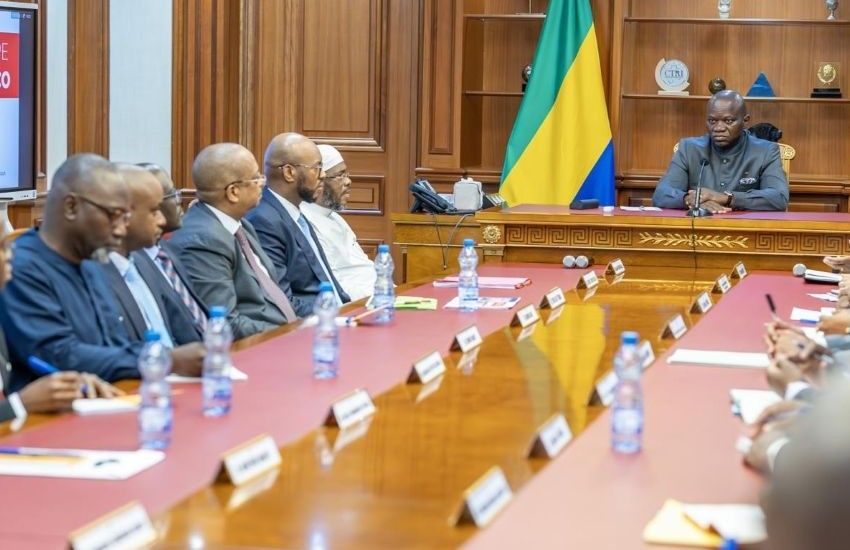
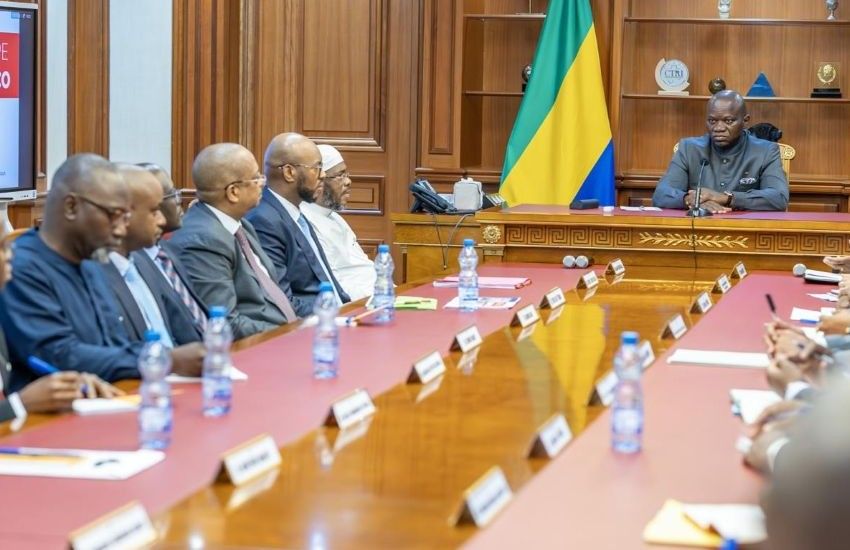
Libreville, June 10, 2026 — Gabon may have just turned a decisive page in its economic transformation. The reception of a Guinean delegation from the SONOCO group, led by CEO Abdoul Karim Diallo, by President Brice Clotaire Oligui Nguema marked the operationalization of an ambition first outlined during the Kigali Forum.
This ambition revolves around building a new development model grounded in productive sovereignty, intra-African cooperation, and wealth creation on the continent.
Far from a routine diplomatic engagement, this meeting symbolizes Gabon’s successful appeal to African investors to support its economic repositioning. The response from SONOCO—one of West Africa’s largest private conglomerates—sends a powerful signal of growing confidence in Gabon’s trajectory as it accelerates its diversification strategy.
Driving food sovereignty through agro-industry
The selection of the agro-industrial sector is deliberate. For years, food security has emerged as a critical challenge for African economies. Despite vast agricultural potential, many nations remain heavily reliant on imports to feed their populations. Gabon is no exception. A significant portion of its poultry consumption is still met through foreign sources, placing a heavy burden on national trade balances.
This is where SONOCO’s initiative comes into play. The project extends beyond mere production units—it aims to replicate a proven integrated model already deployed in multiple African countries. The strategy centers on full control of the value chain.
The plan includes local cultivation of plant-based raw materials for animal feed, construction of a modern poultry feed mill, establishment of hatcheries, brooding facilities, layer farms, broiler chicken farms, and an industrial abattoir meeting international standards.
Building a large-scale industrial value chain
The integrated approach is one of the project’s most strategic aspects. In many African countries, agricultural value chains suffer from fragmentation that undermines competitiveness. By controlling every production stage, SONOCO aims to enhance economic efficiency and strengthen the entire sector’s resilience.
The announced targets are ambitious. With annual production expected to exceed 15 million broiler chickens, Gabon could achieve self-sufficiency in this segment and drastically reduce import dependency. For a country still importing a substantial portion of its food needs, the stakes are high.
The impact extends beyond food security. Like in Guinea, where SONOCO’s operations already generate nearly 4,000 jobs, the Gabonese project is expected to create thousands of direct and indirect jobs across agriculture, livestock, industrial processing, transport, logistics, and services.
This aligns perfectly with the vision of Gabonese authorities. The goal is no longer just resource extraction but local transformation, adding greater value and fostering a sustainable industrial fabric to support long-term growth.
Symbol of an Africa investing in Africa
The geopolitical significance of this partnership cannot be overstated. As African states seek to deepen intra-continental trade, the collaboration between Libreville and Conakry exemplifies a new economic paradigm—one where Africa invests in Africa, shares expertise, and builds its own value chains.
Administrative and land procedures are now underway with relevant ministries, and initial infrastructure is expected to become operational in the coming months. If timelines are met, the SONOCO project could quickly become a flagship symbol of Gabon’s new economic policy.
In a global context marked by food insecurity, supply chain disruptions, and the urgent need to bolster local production, this initiative takes on broader significance. It reflects a growing conviction across the continent: Africa’s economic sovereignty will be built not only on its mines and infrastructure but also on its ability to nourish its people sustainably.
The Gabon-SONOCO partnership embodies this conviction and could serve as a leading example of South-South cooperation driving Africa’s economic transformation.