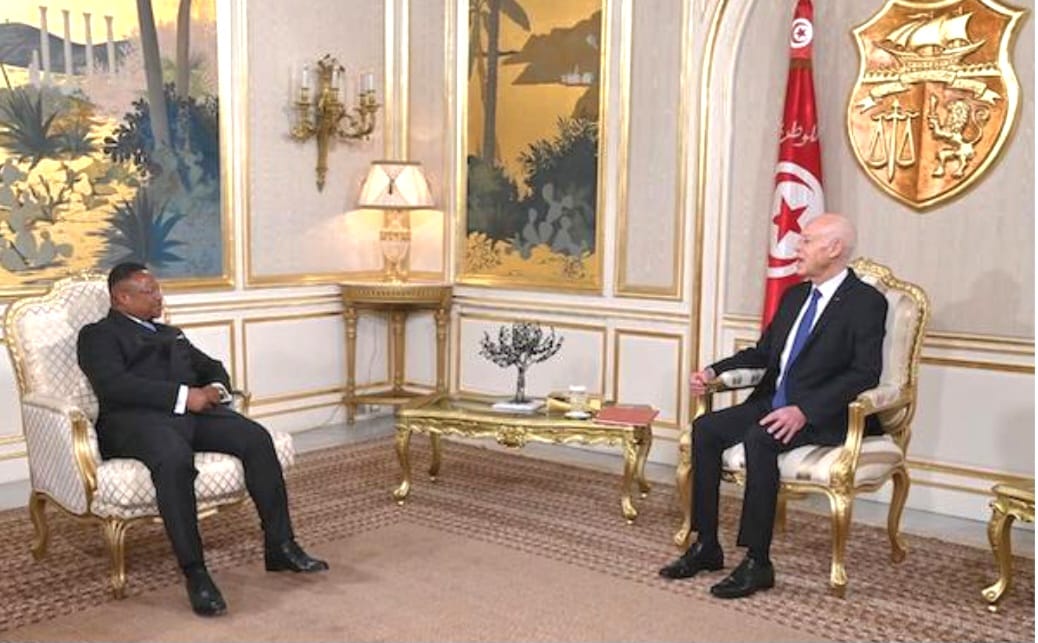

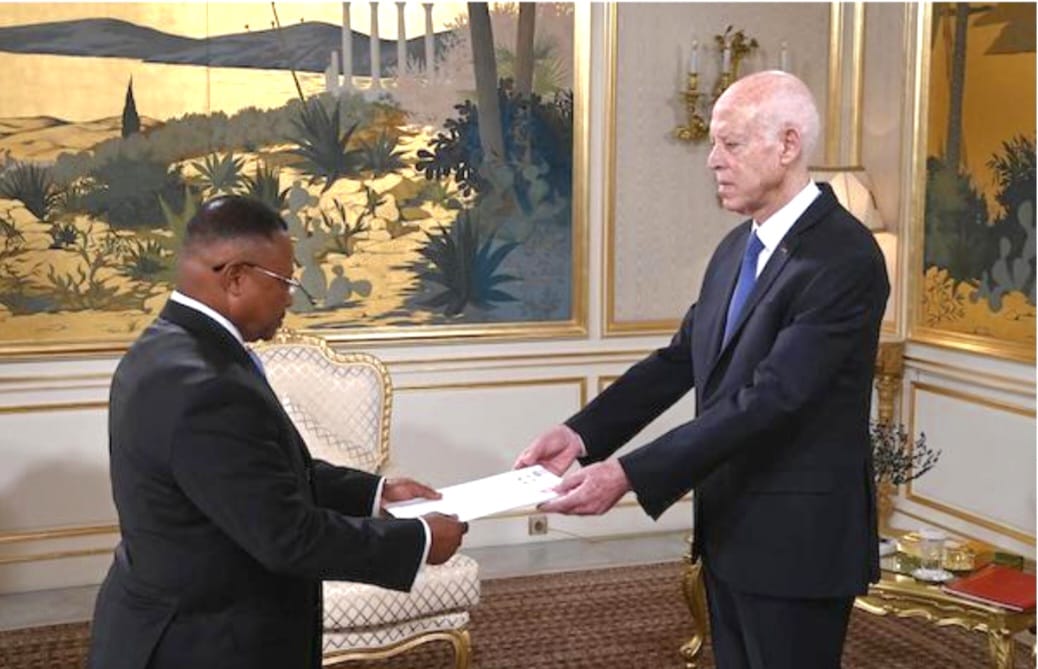
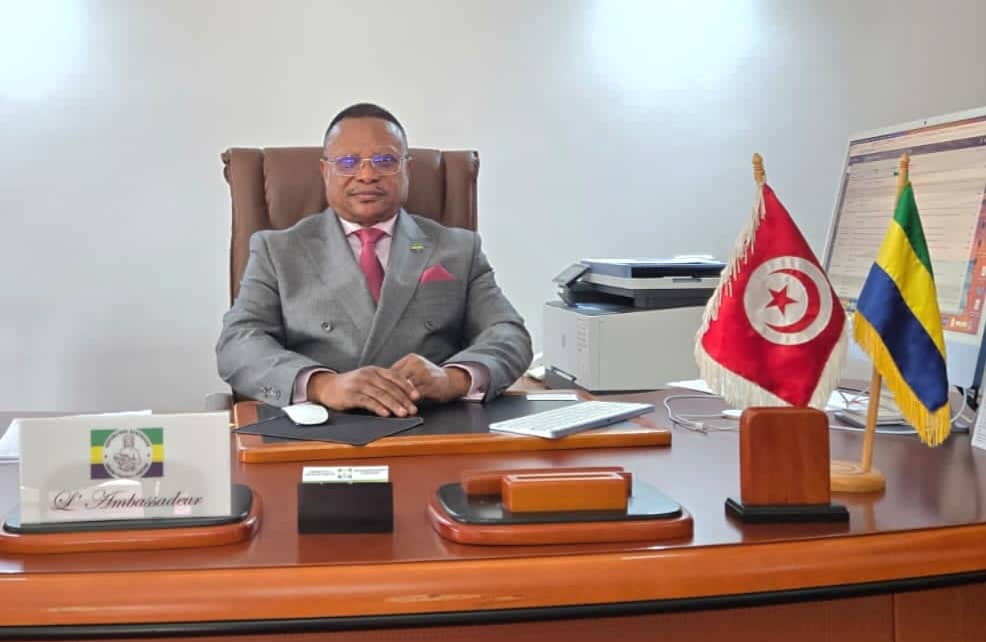
Following his appointment in March 2024 and the formal presentation of his credentials to President Kaïs Saëd on November 6, 2025, Pierre Ntsiet Ngolo, Gabon’s Ambassador Extraordinary and Plenipotentiary to Tunisia, has defined the core objectives of his diplomatic mission. A seasoned diplomat, Ngolo is committed to fortifying the friendship and cooperation between Libreville and Tunis while prioritizing the welfare of the Gabonese community residing in the North African nation.
One of the primary initiatives launched by the new diplomatic leadership in Tunisia has been the promotion of community cohesion. Similar to Gabonese diaspora structures elsewhere, this effort has led to the creation of two essential platforms for dialogue and mutual support.
The first is a federative body known as the “Council of Gabonese in Tunisia” (C.G.T.), which brings together the approximately 1,000 Gabonese citizens in the country—including students, interns, professionals, and families—around the principles of solidarity, equity, and brotherhood. The second, the “Association of Gabonese Students and Interns in Tunisia” (A.E.S.G.T.), focuses specifically on the needs of the youth population.
The tangible results of this newfound unity were evident during the inaugural Gabon Cultural Days held on April 24 and 25. This event showcased the community’s ability to unite around shared values and national pride, a milestone that Ambassador Pierre Ntsiet Ngolo views as a significant achievement.
Strengthening existing foundations
A cornerstone of the bilateral relationship between Gabon and Tunisia is academic cooperation. With a high concentration of Gabonese students across various Tunisian university hubs, there is an urgent need for consistent support. Many of these young people face significant challenges, particularly regarding strict local immigration policies.
In a context where migration issues are increasingly complex, some students struggle with administrative hurdles, such as renewing residency permits. These difficulties are often exacerbated by delays in settling tuition fees. To address this, the Ambassador has issued a call for action to families and the National Scholarship Agency of Gabon (ANBG), urging them to ensure timely support to alleviate the pressures faced by citizens under Tunisian regulations.
Health cooperation also remains a top priority. This is facilitated through an agreement between Gabon’s National Health Insurance and Social Guarantee Fund (CNAMGS) and Tunisian medical specialists. Tunisia’s high-quality medical infrastructure and technical expertise make it a key partner for medical evacuations and specialized care.
The mission ahead involves consolidating these gains while forging new partnerships that align with the development goals of both nations. The strategy focuses on intensifying institutional dialogue and shifting the spotlight toward economic diplomacy. By exploring new, mutually beneficial sectors, both countries can leverage their unique potential for shared growth.
Economic diplomacy and future prospects
The diplomatic roadmap emphasizes the role of economic actors who share a Pan-African vision for sustainable prosperity. Recent economic missions led by Tunisian operators to Gabon are seen as a positive indicator, with expectations that these will soon result in formal investment agreements and strategic partnerships.
Beyond high-level diplomacy, the establishment of robust consular assistance mechanisms has been a point of pride for the new administration. This renewed focus on support has been warmly received by the Gabonese community in Tunisia, addressing a long-standing sense of isolation and fostering a stronger sense of national belonging.