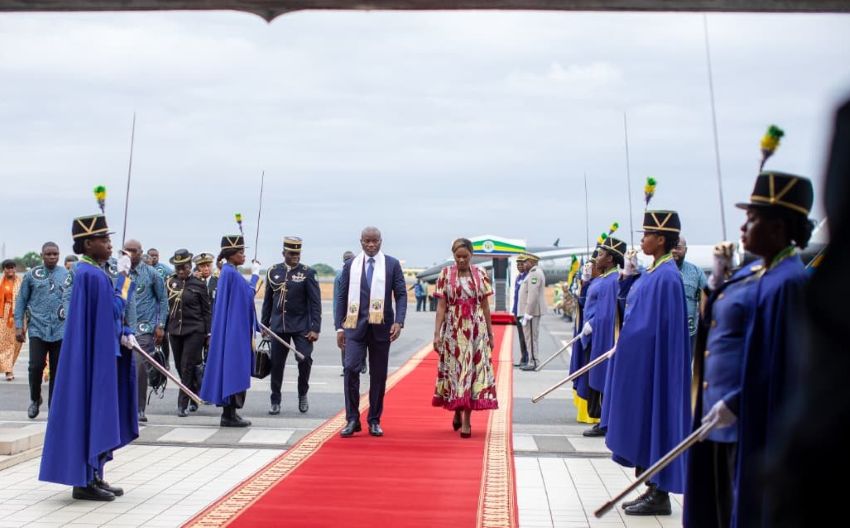
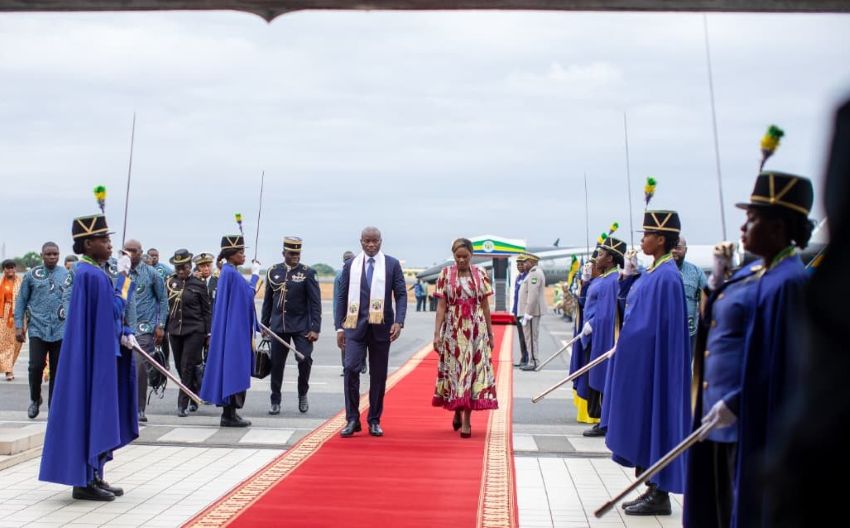
Libreville, August 8, 2026 — President Brice Clotaire Oligui Nguema’s recent African tour, spanning from July 27 to August 7, marked a clear departure from conventional diplomatic formalities. Upon his return to Libreville, the Gabonese leader faces a critical phase: transforming diplomatic gestures into tangible economic outcomes.
The tour’s success will no longer be measured by the number of handshakes or signed agreements, but by its ability to convert commitments into investments, infrastructure projects, job creation, and expanded market opportunities for Gabon.
From symbolic gestures to actionable partnerships
The diplomatic agenda was notably comprehensive, blending high-level political exchanges with focused discussions on infrastructure, energy, agriculture, vocational training, trade, and investment. This shift underscores Gabon’s evolving foreign policy, now positioning itself as a tool for economic transformation rather than mere representation.
A standout moment was the visit to Côte d’Ivoire, where President Oligui Nguema examined industrial and urban developments, toured key infrastructure projects, and engaged with economic actors like NSIA and Aurion Capital. These interactions placed investment and energy at the forefront of bilateral priorities.
A strategic move, indeed. For a nation aiming to diversify its economy and maximize resource value, diplomacy must now align with efforts to attract capital, technology, expertise, and new markets. This tour served a dual purpose: reinforcing state relations while positioning Gabon as a prime business destination.
African solidarity meets economic interdependence
The tour’s narrative also reflects Gabon’s ambition to deepen ties with African partners and contribute to a continental integration driven by mutual economic interests. Côte d’Ivoire emerged as a compelling case study—demonstrating how infrastructure development, industrialization, and private-sector mobilization can reshape a nation’s economic influence.
Observing Côte d’Ivoire’s factories, major projects, and urban planning systems, President Oligui Nguema wasn’t merely performing a diplomatic duty. He was seeking actionable models to inspire Gabon’s own development trajectory. This approach elevates cooperation beyond state-level camaraderie, positioning it as a platform for learning, financing, industrial partnerships, and skills transfer.
The same principle applies to other agreements forged during the tour. Whether in agriculture, energy, infrastructure, or education, progress hinges on converting political commitments into tangible outcomes. The real test begins now.
The moment of accountability
The president’s return to Libreville signals the start of a new evaluation phase. A results-driven diplomacy cannot be judged solely by the promises made; it must be measured against concrete achievements. How many investments will materialize? How many jobs will be created? Which projects will break ground? What technological transfers will materialize? Which new markets will open for Gabonese businesses?
This is where the presidency’s true challenge lies. The tour reinforced Gabon’s diplomatic positioning and unlocked cooperation prospects, but ambitious foreign policy must translate into real-world economic benefits. The white presidential sash, a symbol of national identity worn during the trip, encapsulates Gabon’s dual ambition: preserving heritage while embracing continental openness. Yet symbols alone won’t suffice.
The president’s next journey may well be judged not by miles traveled, but by projects delivered. Gabon now holds a diplomatic window to attract partners, negotiate investments, and adopt best practices from successful African models. The task ahead is clear: prove that diplomacy can be a catalyst for economic transformation, not just a showcase for the nation.